![]() |
| Weeding in the rice paddy |
![]() |
| Washing my muddy feet in a narrow canal that runs besides the rice paddy |
![]() |
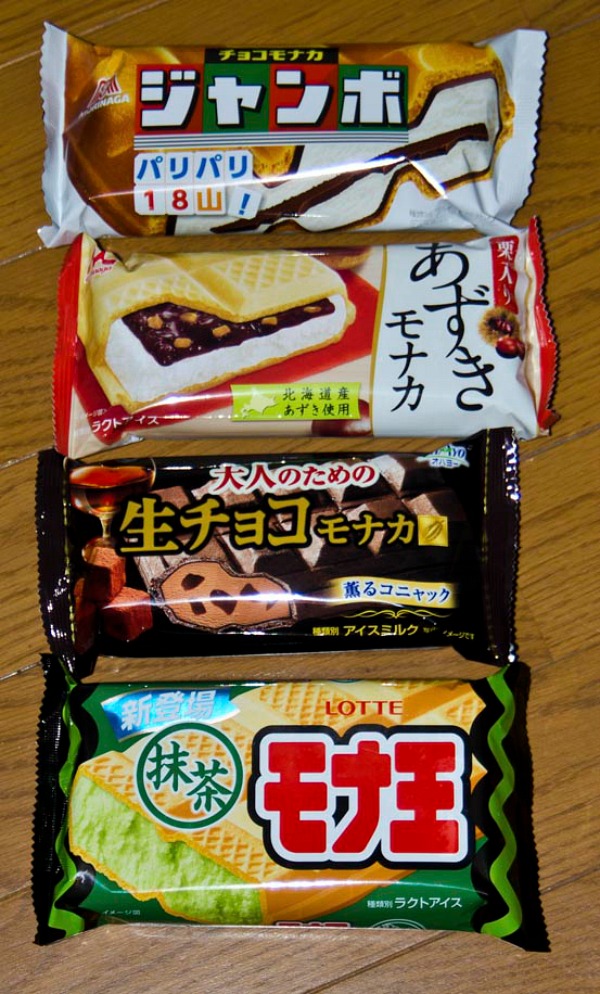
| Ice cream sandwiches found at convenience stores in Japan. The one I ate was second from the top. Source: |
![]() |
| Weeding in the rice paddy |
![]() |
| Washing my muddy feet in a narrow canal that runs besides the rice paddy |
![]() |
| Ice cream sandwiches found at convenience stores in Japan. The one I ate was second from the top. Source: www.foodbeast.com |
![]() |
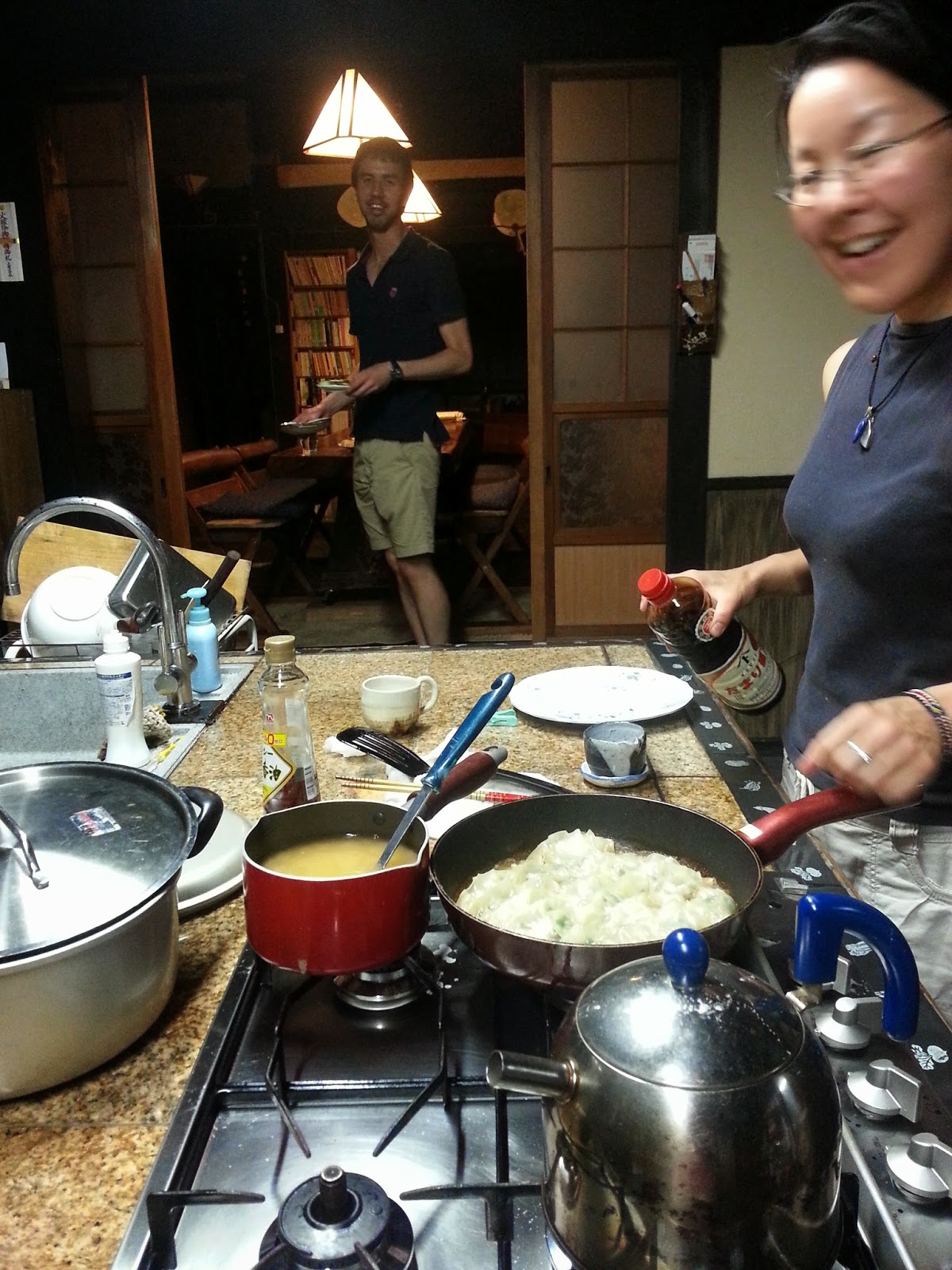
| Cooking dinner: Sayaka-san, my host on the left and Celso, my co-wwoofer in the background |
![]() |
| Our beautiful and delicious final product: Gyoza dumplings! |
![]() |
| The smaller tool used for weeding |
Nara is a little town known for its temples and deer park. Although I wasn’t particularly interested in seeing more temples, such towns often offer more of a cultural atmosphere of the real Japan as opposed to cities. It used to be the capital of Japan at one point. Nara is 45 minutes away from Kyoto by train and costs as much as my one way commute within Tokyo. The scenery on the way there was lush green and I got a glimpse of the Japanese countryside on the way. Houses got more traditional as I moved further away from the city.
I got to my hostel in Nara to find more interesting travelers to talk to and a very well set up common room where I spent a lot of time. I met people from Australia, the US, Denmark and Hong Kong. I wished I was spending more than one night in Nara, just so that I could spend some more time hanging out at the hostel. Nara in general was a quiet place apart from the tourists there, and it struck a good balance between a developed place and a cultural one. Its definitely makes a great getaway.
I spent my time in Nara at the Nara park (AKA the deer park) and the Todaiji temple. The bus system in Nara is great, and its very easy to get around the tourist places using a circular bus service. The deer park was beautiful. There was moss growing on the side and it was a great place to walk. The deer were fearlessly walking around, getting close to the people who offered them food. Deer biscuits were being sold at several stands in the deer park. Apparently, there is an antler cutting ceremony that occurs every year to ensure that the deer aren’t able to harmfully attack tourists. As a part of the deer park was the Kasuga-taisha, a shrine that is a UNESCO world heritage sight.
![]() |
| Nara Park: The fearless deer roam freely in the souvenir shopping and food street that runs from Nara Park to the Todaiji Temple. I even found one inside a souvenir shop! |
Next, I walked to the Todaiji temple (built in the 8th century) which houses the Great Buddha (locally called the Daibutsu), a national treasure of Japan. I had already seen the Great Buddha at Kamakura, but this one was bigger and of a different color. It was indoors unlike the one at Kamakura.
![]() |
| The Diabutsu (Great Buddha) at Nara’s Todaiji Temple |
Another attraction of Nara is a five story pagoda which is the oldest wooden structure in the world. Unfortunately, due to limited time (and rain), I was unable to see that. I felt like a complete tourist walking around Nara, taking pictures of things that I didn’t know much about. I missed having my host mum and dad or my professor around to answer all my questions and tell me more about what I was looking at. Still, it was nice to be able to chat with people, since english was spoken quite commonly by tourists and locals alike.
I ate udon for lunch at one of those awesome vending machine places (where you chose what you want to eat and pay for it at a vending machine in the front of the restaurant). Udon is supposed to be slightly different in the Kansai region. I think the difference lies in the broth (kansai has lighter colored broth), but having limited experience with udon, I couldn’t tell. Surprisingly, it was served with fried rice (which is strange, since noodle and rice are normally interchangeable food items that aren’t served together).
While checking out from my hostel in the afternoon, I met a spanish couple who were travelling around the world. They were on the last month of their travel and said they were exhausted. I’ve met other such travelers during this trip and I’m quite surprised by the large number of RTW (Round the World) travelers.
![]() |
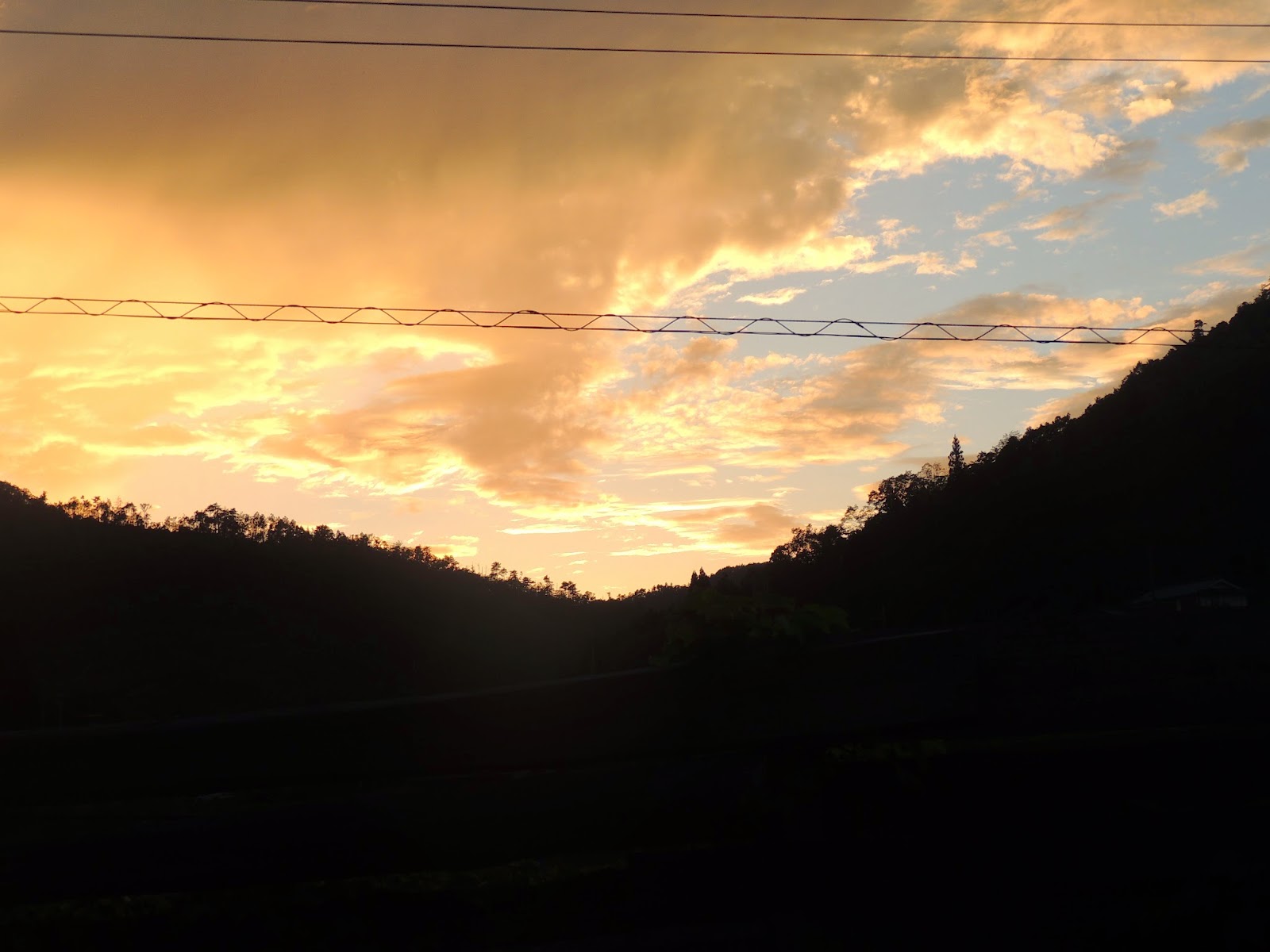
| A view of the sunset from my host’s house |
![]() |
| My beautiful room for the next two weeks |
![]() |
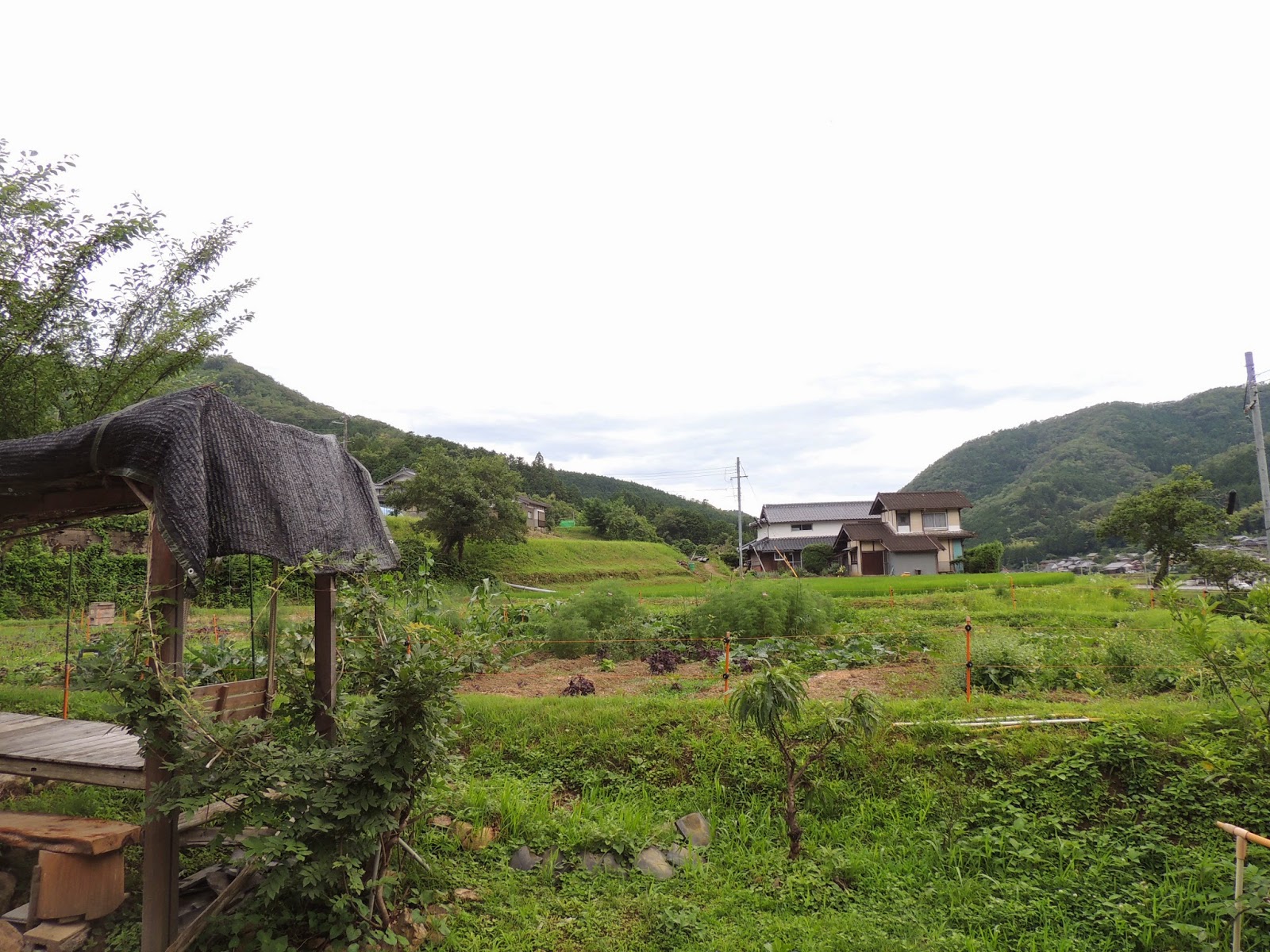
| Part of the farm where I’ll be working. The one in the picture is a vegetable garden. |
![]() |
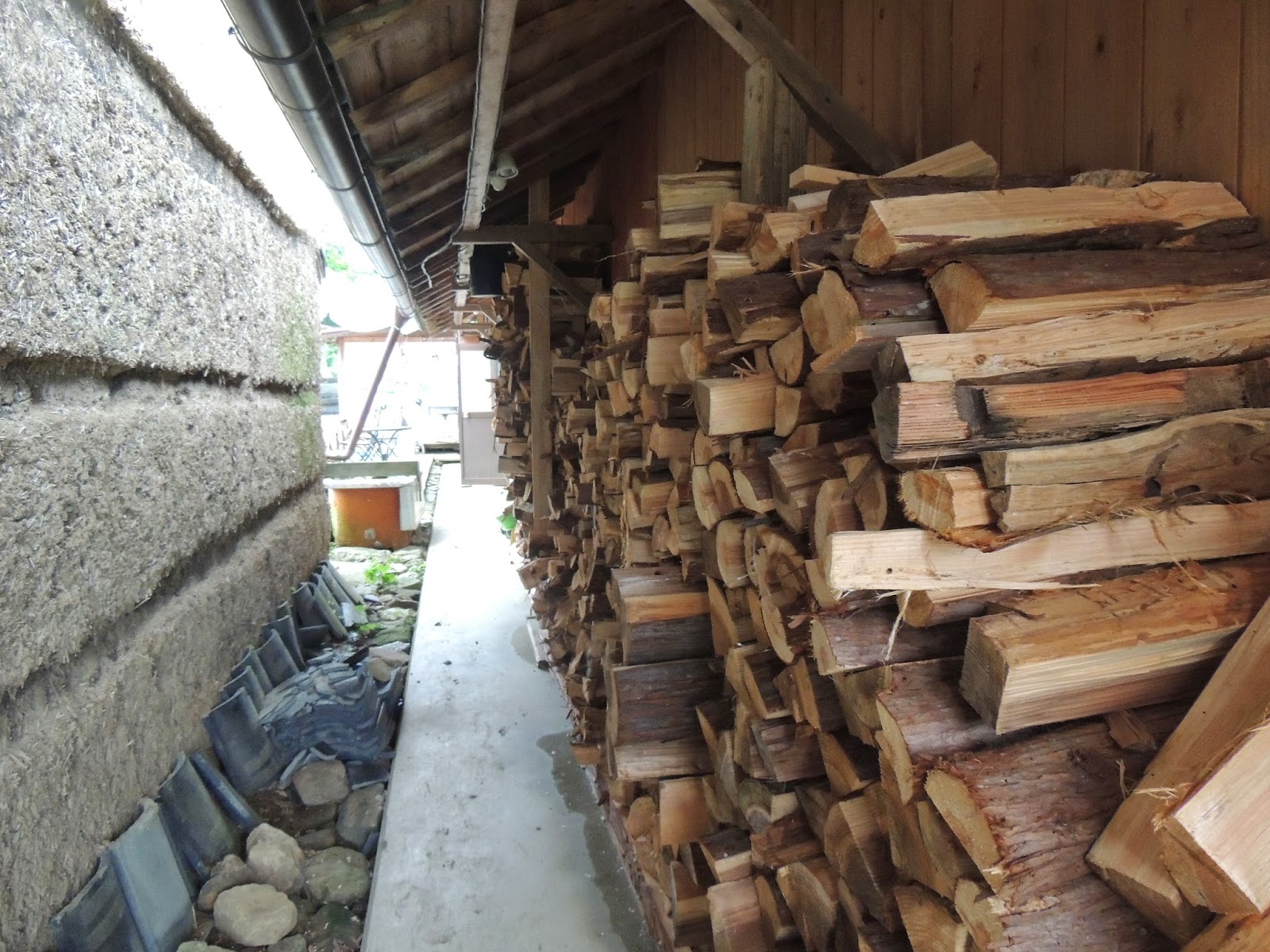
| Wood used as firewood in the winter and for carpentry |
After a 3 hour sleep night, I walked around Kyoto excited to explore the city on my own. Kyoto is not as confusing as Tokyo in its geographic layout. It’s a grid (like New York City) and its quite easy to navigate with a map. That isn’t to say that I didn’t get lost. I did, which was great because I discovered some great places on the way.
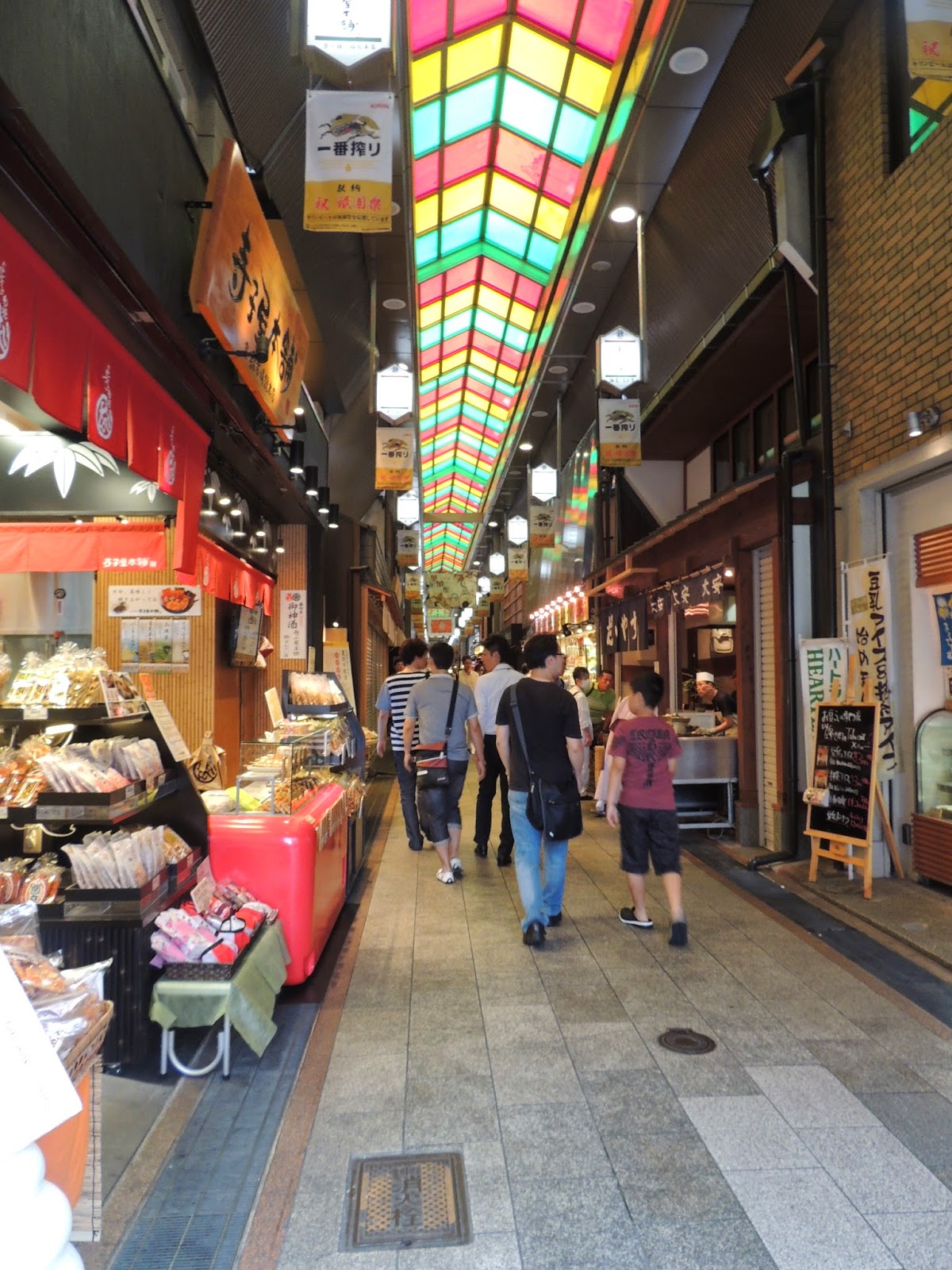
I headed towards the Nishiki food market which was a twenty minute walk from my hostel. It was a thin row of little shops selling cooking ingredients, fish, spices, etc. I saw a diverse crowd of people there from seemingly local housewives to tourists. I loved walking around and looking at all these alien foods. I walked till the end of the lane and found myself once again at Shijo street.
![]() |
| Nishiki food market, Kyoto |
![]() |
| A shop selling local snacks and sweets in Nishiki market |
![]() |
| Inside Ippudo, a popular ramen restaurant. The decor was very well done and the restaurant played peppy music to add to the liveliness of its chatty customers. |
![]() |
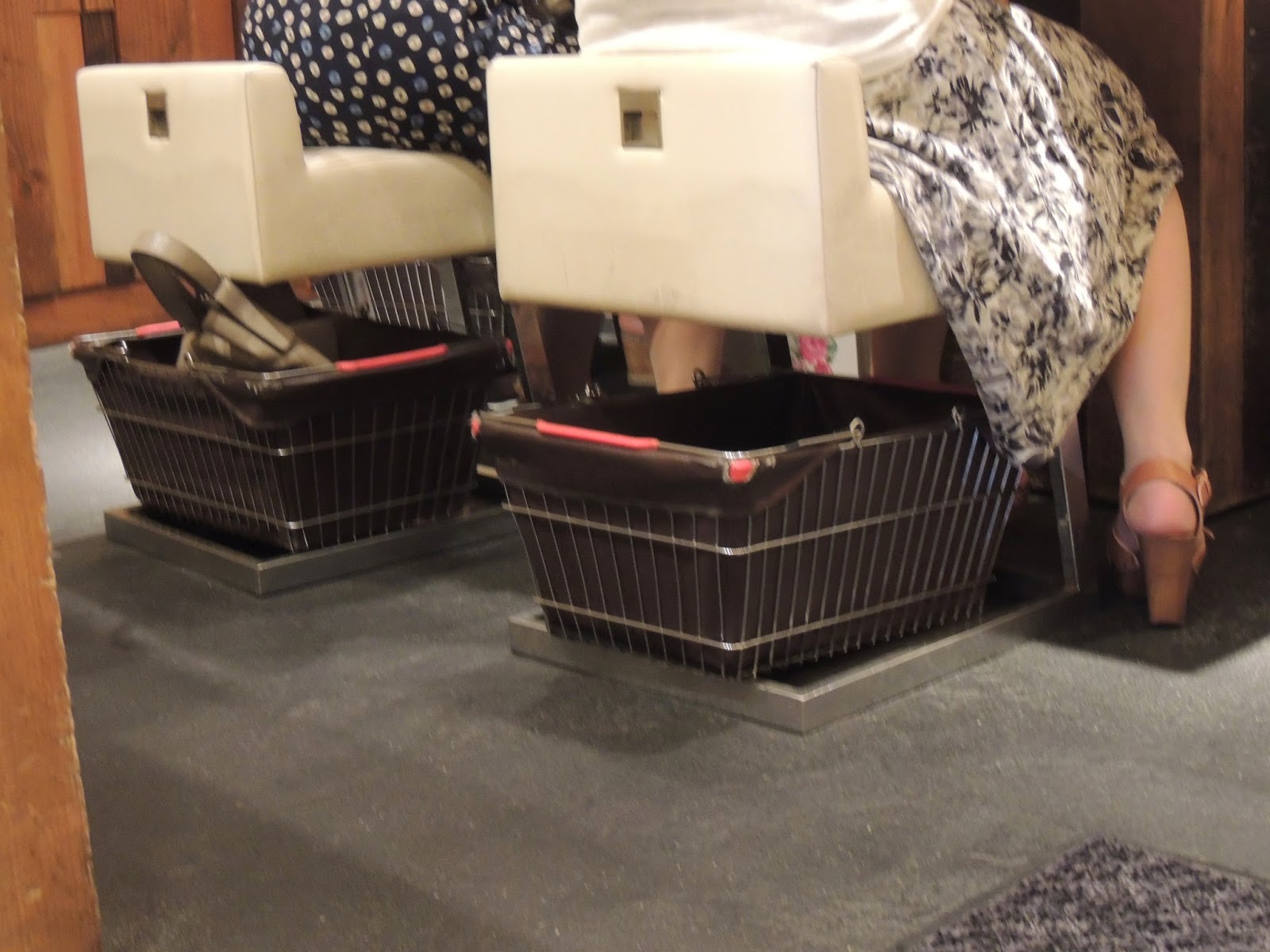
| Below the chairs at the ramen restaurant,t here were baskets where you could place your bags and carry items. Neat, isn’t it? |
![]() |
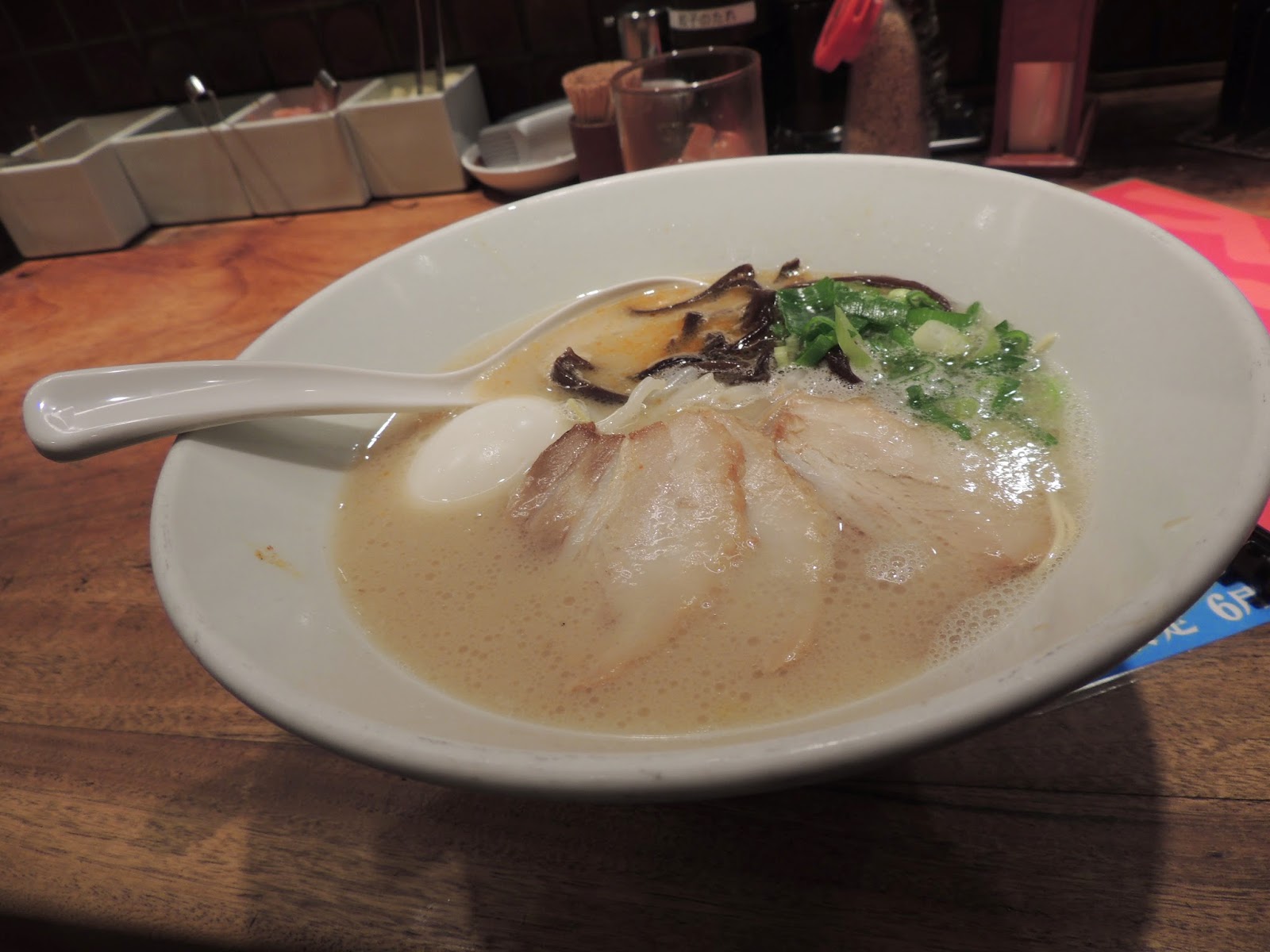
| Ippudo’s original Tonkotsu broth (pork bone) with Hakata style ramen (one of the many types of ramen) |
After lunch I walked back towards my hostel, stopping by at a beautiful temple and Kyoto museum.
I got back to my hostel around 4 p.m. To my surprise, I met an NUS student from Singapore there and spoke to him for some time before collecting my luggage and heading to the train station, from where I went to Nara.
Despite two and a half more weeks in Japan, goodbyes were imminent with the end of my study abroad program. It has been exactly five weeks since I flew into Narita Airport and arrived in Tokyo. Now, I had to say goodbye to the comfort my new home and family and leave Tokyo.
Since it was a Saturday and Masaki-san was off from work, my host parents accompanied me all the way to Tokyo Station from where I would take the Shinkasen (bullet train) to Kyoto. I loved having a few last moments with them before I had to leave. It was good they came, even for practical reasons, since the ticketing machine at the train station thoroughly confused me. There were different kinds of tickets, and there were several different trains, much of which was explained in Japanese.
![]() |
| Goodbye Tokyo and new family! |
After having said goodbye to Tokyo and to my host parents, I was on my own. This was my first time solo travelling. As I always am when I’m alone, I was more alert and more open to interacting with new people, whether through words or gestures.
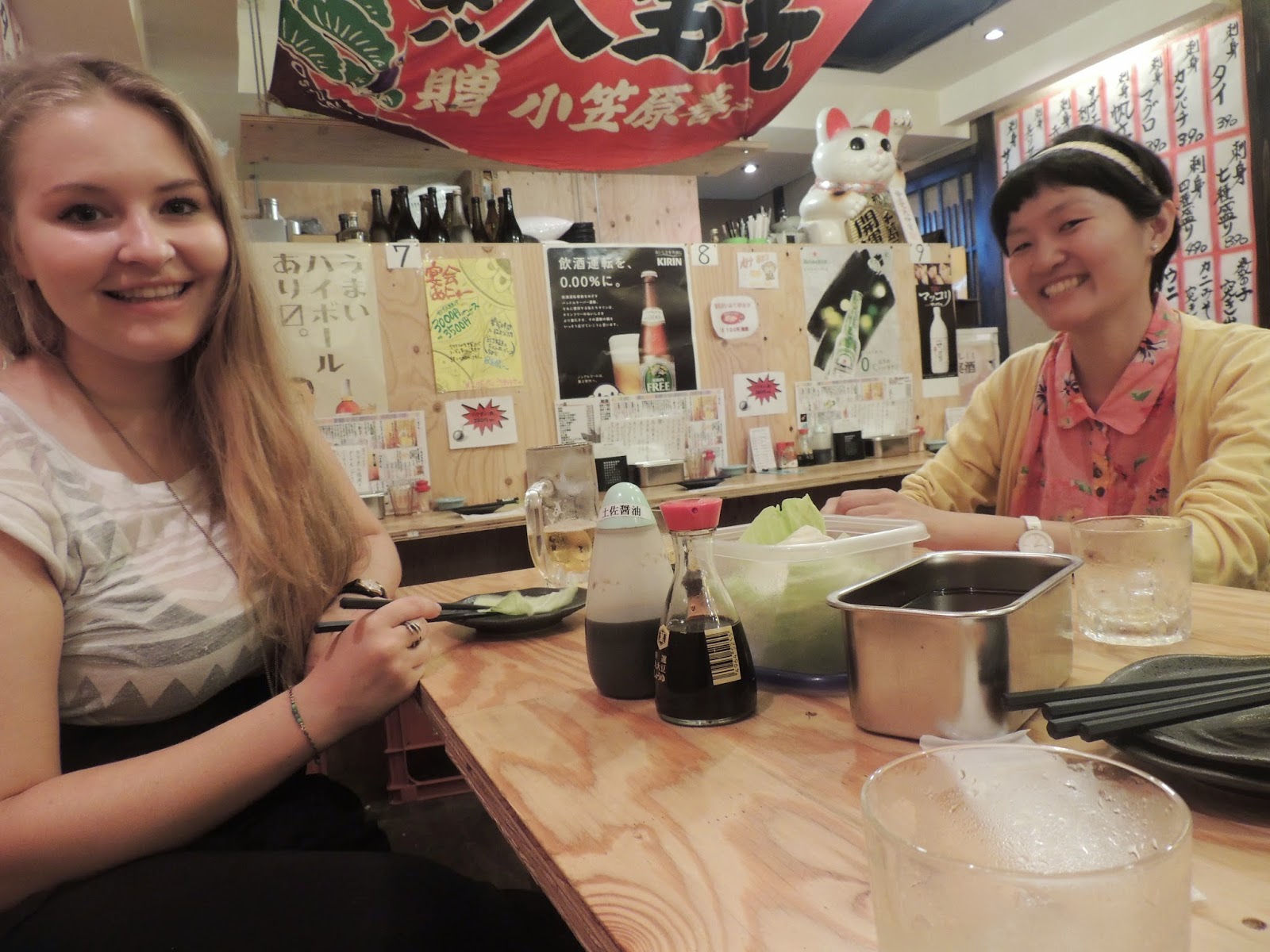
I reached Kyoto around 4 p.m. in the evening and took a cab to my hostel, which was in an obscure lane of the city. Nevertheless, the hostel was cozy and comfortable, and I met some other solo travelers there. A middle aged Japanese lady who was staying at the hostel taught us how to make paper cranes. Even though she couldn’t talk to us because of the language barrier, we spent a considerable amount of time with her. After the origami session, I went to an izakaya for dinner and drinks with my three new friends: a girl from Taiwan, another from Holland and one from Germany. We were quite an internationally diverse group, also very different in personalities. That made it all the more fun. We had a lot to learn about each other and from each other.
Kyoto, unlike Tokyo, closes pretty early, and we had a hard time finding a lively izakaya. Later, we went to a convenience store and picked up some astonishingly cheap alcohol to drink back at the hostel. The sake was packaged like fruit juice. The choice of alcohol at the convenience store was incredible-there was whisky, wine, beer, everything. After spending some time drinking at the hostel, we decided that we didn’t want to leave each other’s company just yet and decided to go out clubbing. So we walked towards downtown Kyoto hoping to find a lively street. Finally, we found a place with throbbing music of different kinds and alleys leading to more bars and clubs. We made some local friends and ended up at a karoake bar, which was amazing. Even though people at the bar were all strangers, after some time, it felt like we had all known each other a life time. People were handing each other the mike as they sang global hits and people danced on top of tables. At 5 a.m. Sophie (my dutch friend) rushed to a sports bar to watch the world cup match in which Holland was playing. Bianca (my German friend) and I stumbled back to our hostel and fell asleep around 6 a.m., in the hope of catching some sleep before our checkout time at 11 a.m. I was exhausted but so satisfied. Within twelve hours of solo travel, I had already made amazing new friends and had new unexpected experiences. If there is one thing I learnt from this, it is that travelling alone can potentially be the most social part of your life if you want it to be.
![]() |
| Origami at the hostel in Kyoto |
![]() |
| Dinner and drinks with my new friends Sophie (left) and Lu (right) at an izakaya in Kyoto |
![]() |
| My dinner: a sushi bowl, with pieces of raw fish on top of some rice |
![]() |
| Bianca, Sophie and I with some of our new friends (blurry in the background) at a Karoake bar |
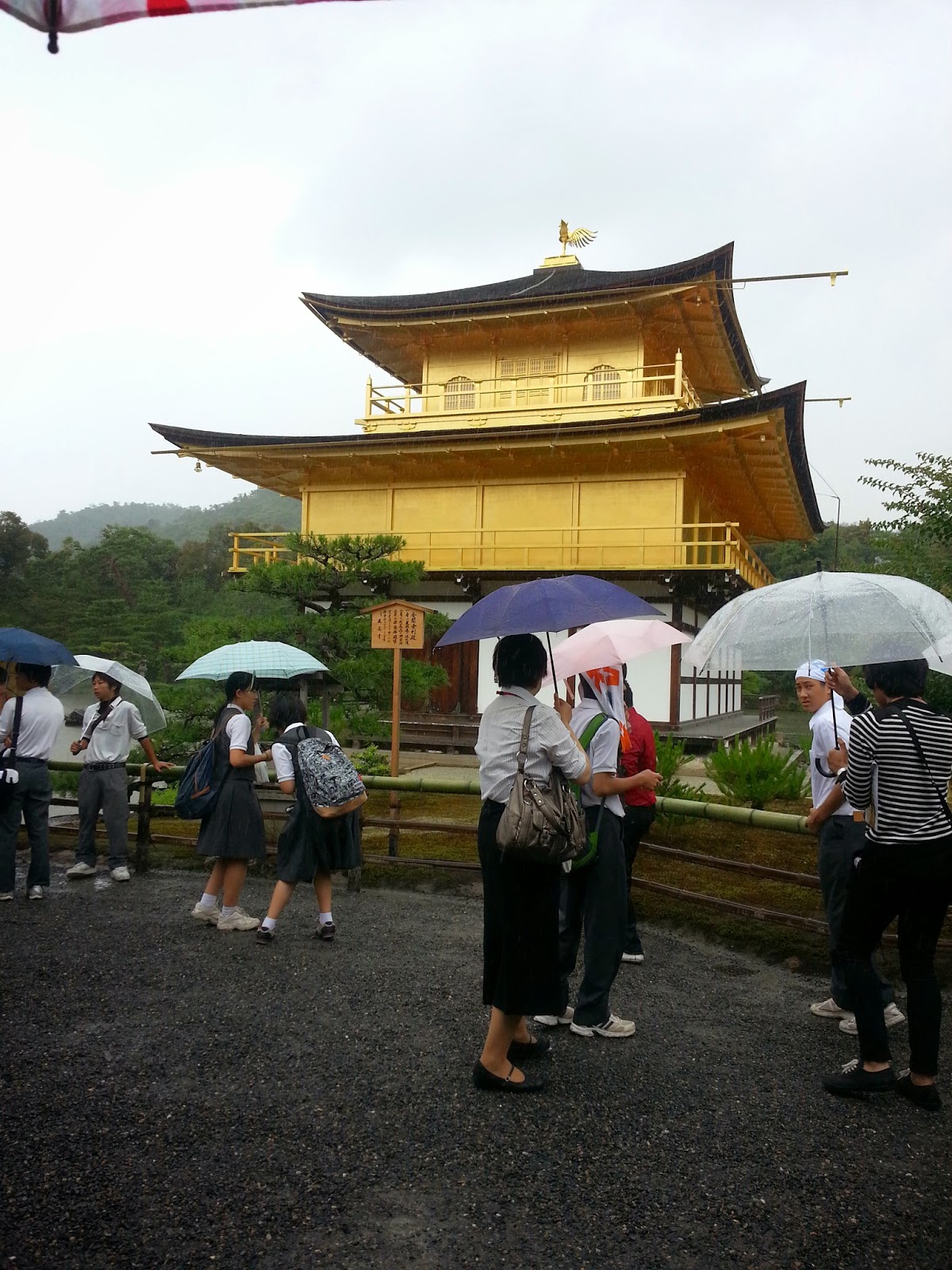
Our field trip in Kyoto started with the popular tourist attracted called Kinkaku-ji temple. It is a world heritage sight and is know for its garden designs. The Kinkaku-ji complex was huge and included a place to learn some calligraphy and do tea ceremony. I chose to spend my time on calligraphy.
![]() |
| The Golden Pavilion at Kinkaku-ji temple |
![]() |
| Calligraphy at Kinkaku-ji temple:I was asked to write my name and age on one side of a thin wooden stick in katakana and hiragana respectively, and on the other side write a wish in kanji characters (the most advanced Japanese script). There was a sheet with some standard wishes written in kanji characters that we could choose from. I chose the one which wished for meeting new and interesting people in the future. I had the option of leaving the wooden stick there at the temple which would be subsequently burnt at the next festival with other sticks for my wish to come true. Of course after the hard work, I chose to take the risk of my wish not coming true and kept the wooden stick with me. |
![]() |
| Gion, a popular shopping district of Kyoto |
![]() |
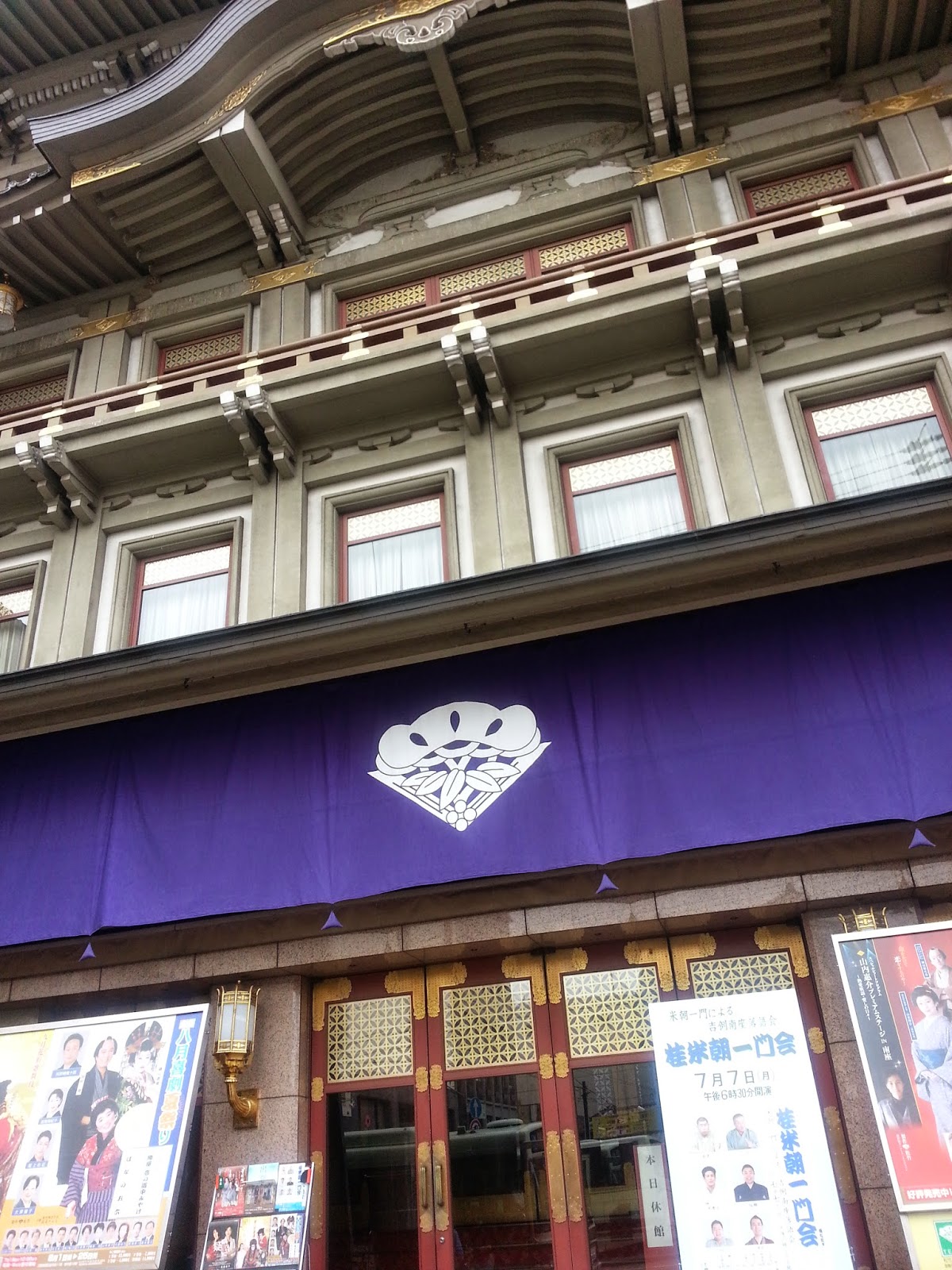
| A kabuki (Japanese form of drama) theater at Gion |
![]() |
| Shirakawa River, by the Gion and Shoji area |
![]() |
| Yatsuhashi, a sweet from Kyoto. The white outer part is mochi and it is filled with red bean paste inside. Picture Source: content.time.com |
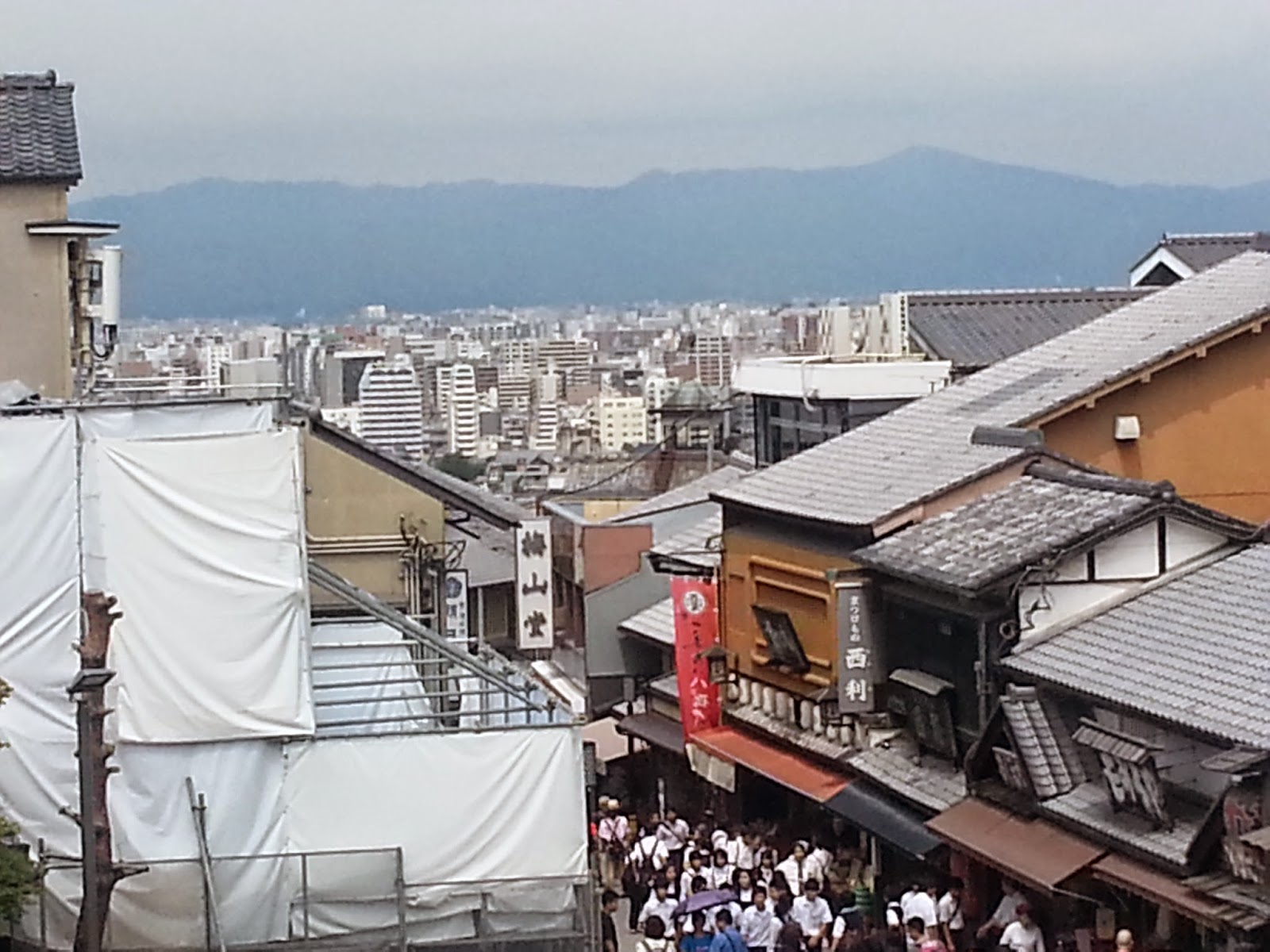
Another stop was Kiyomizu temple (literally meaning clear water). It is on a hill top and has a beautiful view. A shrine that is next to the temple is famous for its love stones, which are basically two rocks situated a few meters apart. As per tradition, you should touch one rock and with closed eyes walk in a straight line to the other rock. If you do so successfully, your love life will apparently be a success.
![]() |
| The view from Kiyomizu temple |
![]() |
| One of the two love stones at Kiyomizu temple |
![]() |
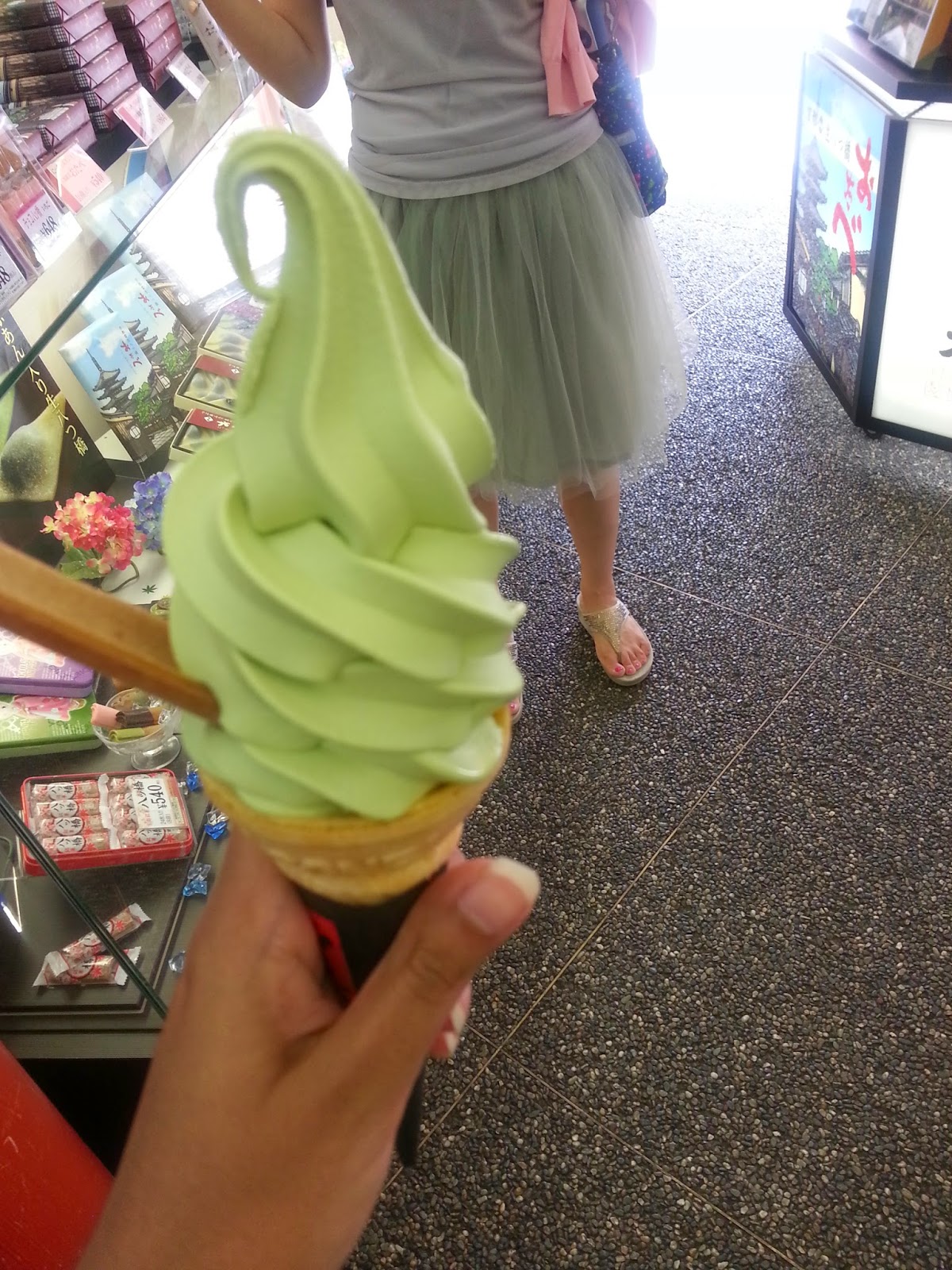
| Matcha ice cream with a baked cinnamon stick |
In the evening, we took the train back to Tokyo. Our program officially ended and my classmates and the professor said goodbyes in a corner at the Tokyo station. The study abroad program was an exceptional learning experience for me and it had passed by so quickly. I headed home for one last night with my lovely host family.
![]() |
| For my last dinner with the Oi family, we ate tuna and avocado with rice and seaweed-once again a new dish. It’s amazing that my host mum made something different on each day of my five weeks. |
![]() |
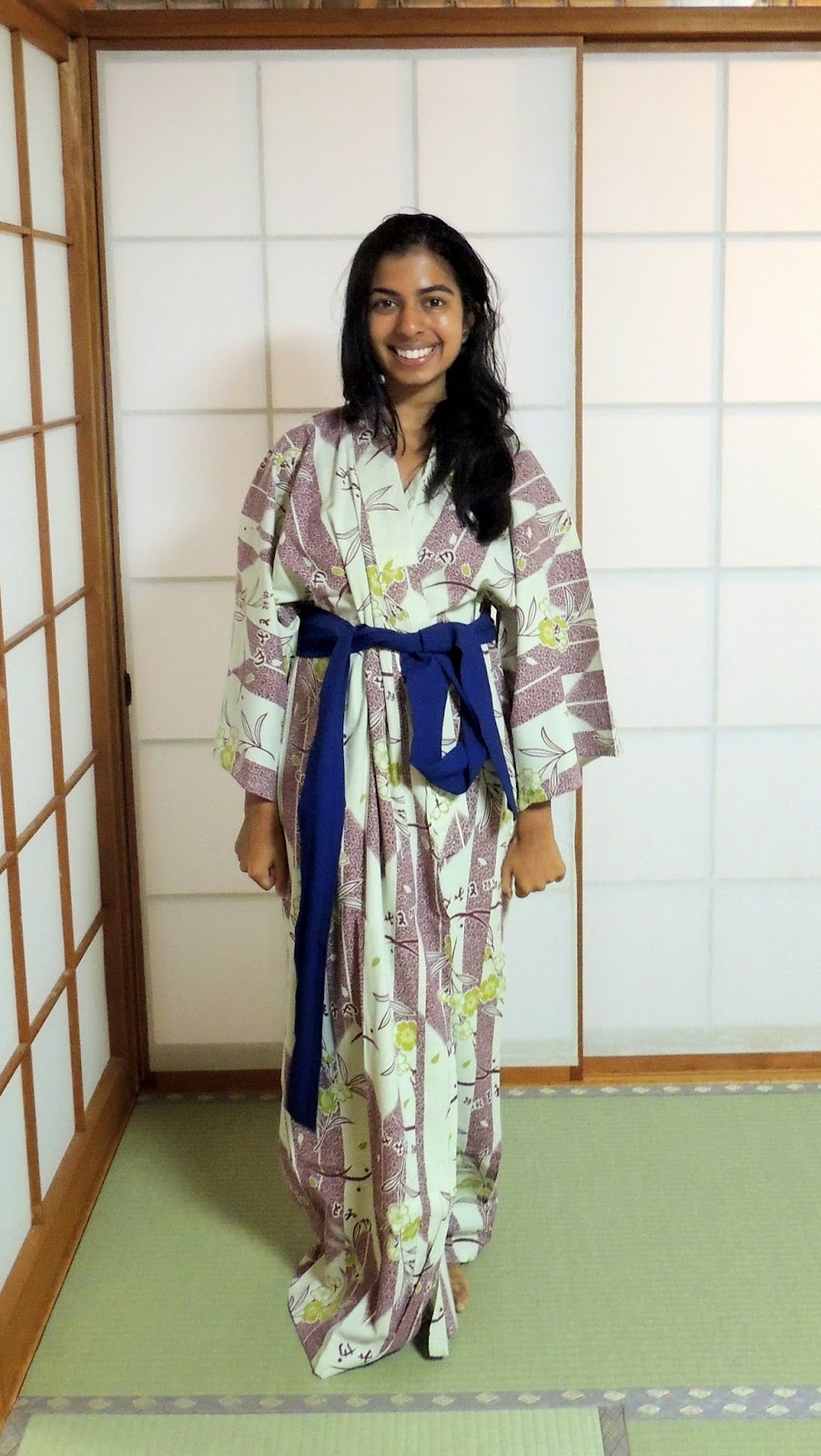
| Yukatas were provided for us at the ryokan. We could wear them anywhere inside the ryokan. |
![]() |
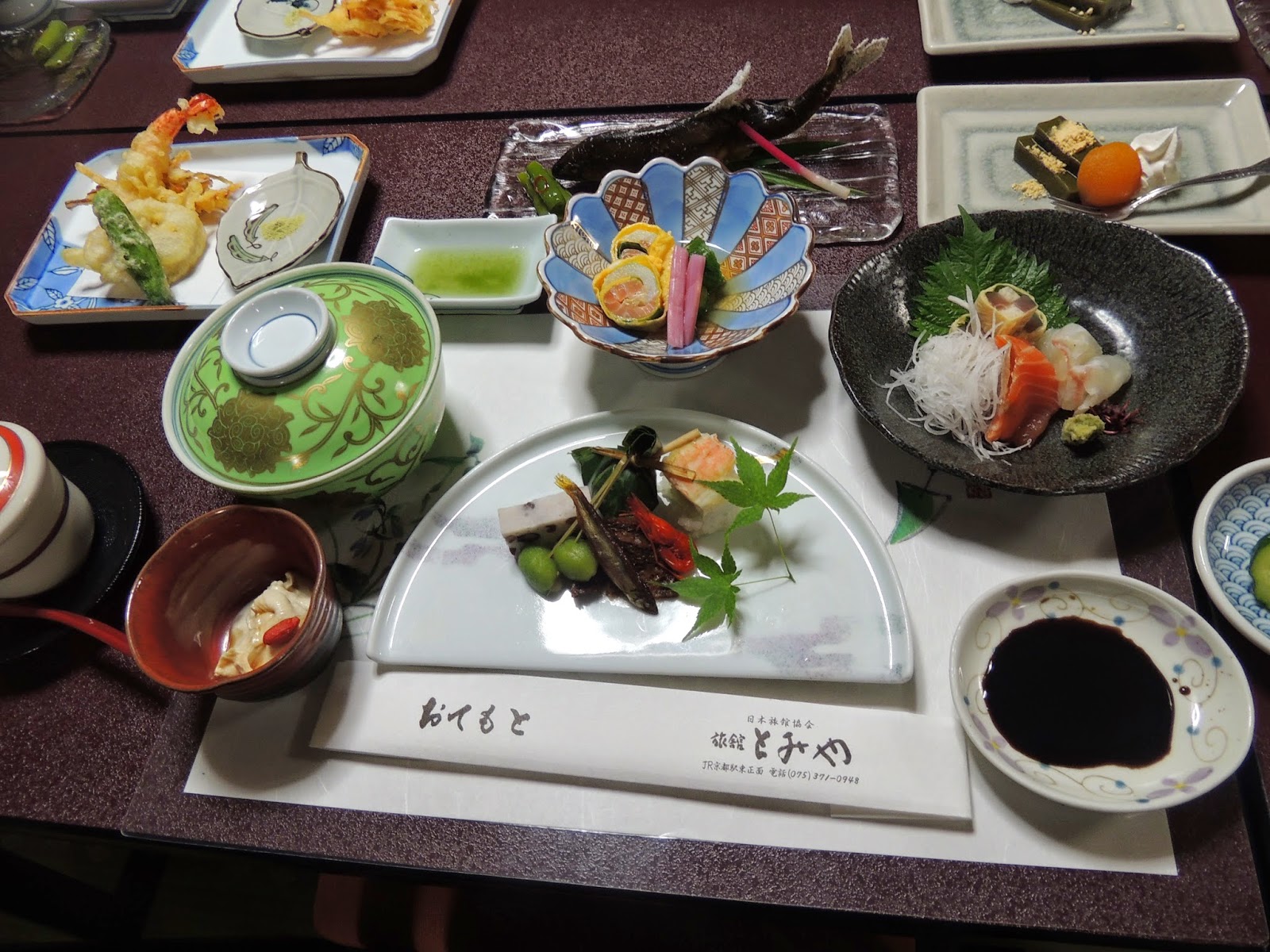
| Dinner at the Ryokan: traditional kyo kaiseki |