Day 14 & 15: A day in the life of a zen monk

An overnight field trip took us to Kamakura, a town of temples about an hour and a half from Tokyo. We stayed at the Engaku-ji temple, which is a Buddhist temple with about 25-30 practicing monks and several daily visitors.

Getas, traditional Japanese slippers worn by
monks at all times. 

After experiencing yet another delay caused by a train accident, we reached Kamakura in the afternoon and were shown our rooms. The first thing we were asked to do is change into geta, traditional Japanese slippers. We were then taken on a tour of the temple complex. The monk who was guiding us told us to walk in two lines with our hands placed on our stomach. The idea was that our arms shouldn’t swing on our side. On the tour, we saw the daily life of a monk. The monks eat, sleep and meditate in one room, which is common to many of them. There is no concept of privacy and everyone does things in the presence of other people. Everything was built the traditional Japanese way in an attempt to preserve tradition. All the rooms had tatami flooring, including our living quarters. The food was cooked using firewood (we were told that was helpful during the 2011 Fukushima disaster when electricity became temporarily unavailable). The temple complex was pretty huge. There was a zen garden, multiple buildings, preserved relics and places of worship. I don’t think we saw all of it.
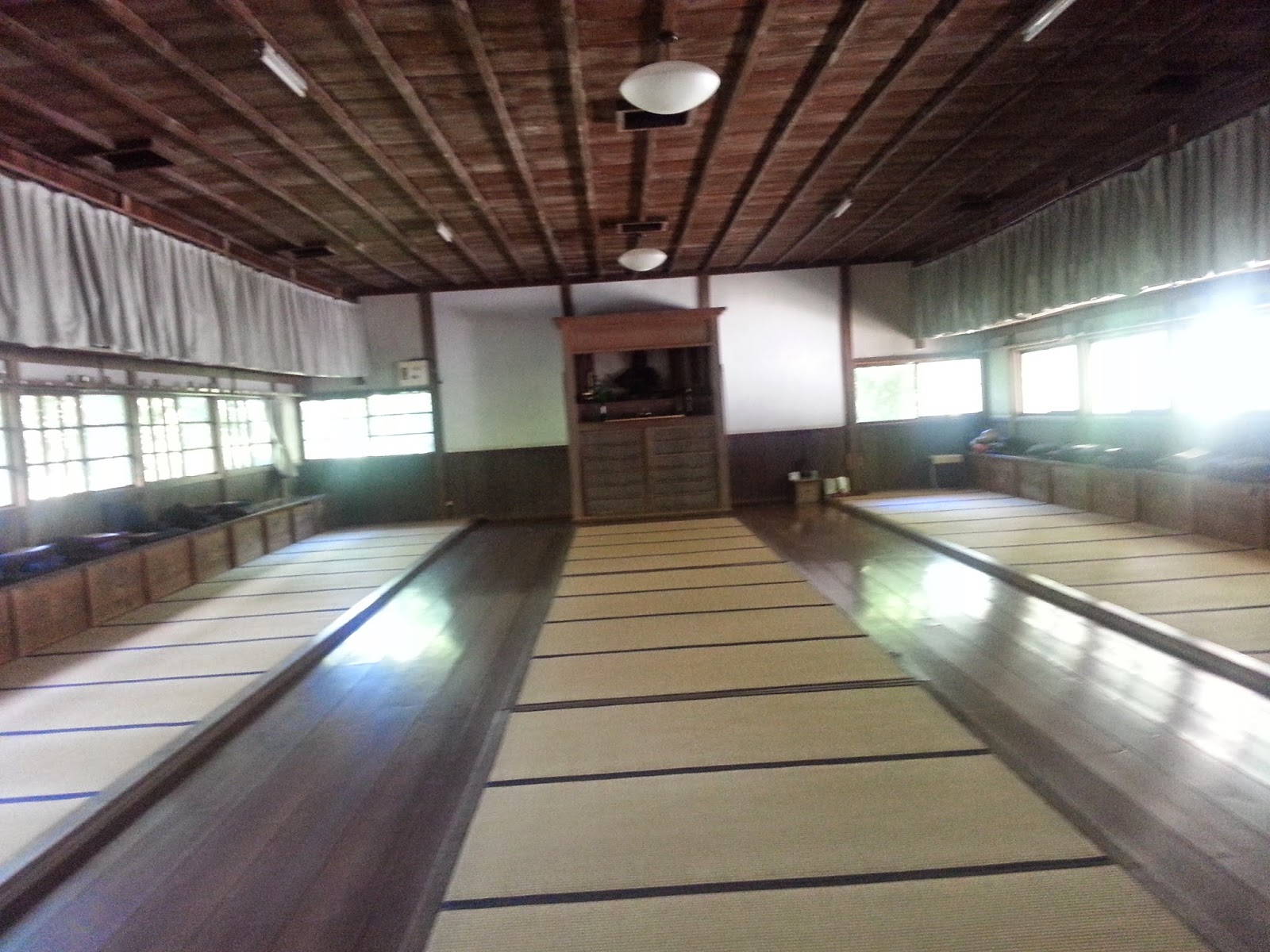
The visitors quarters, where we meditated and ate. The
boys also slept here. 

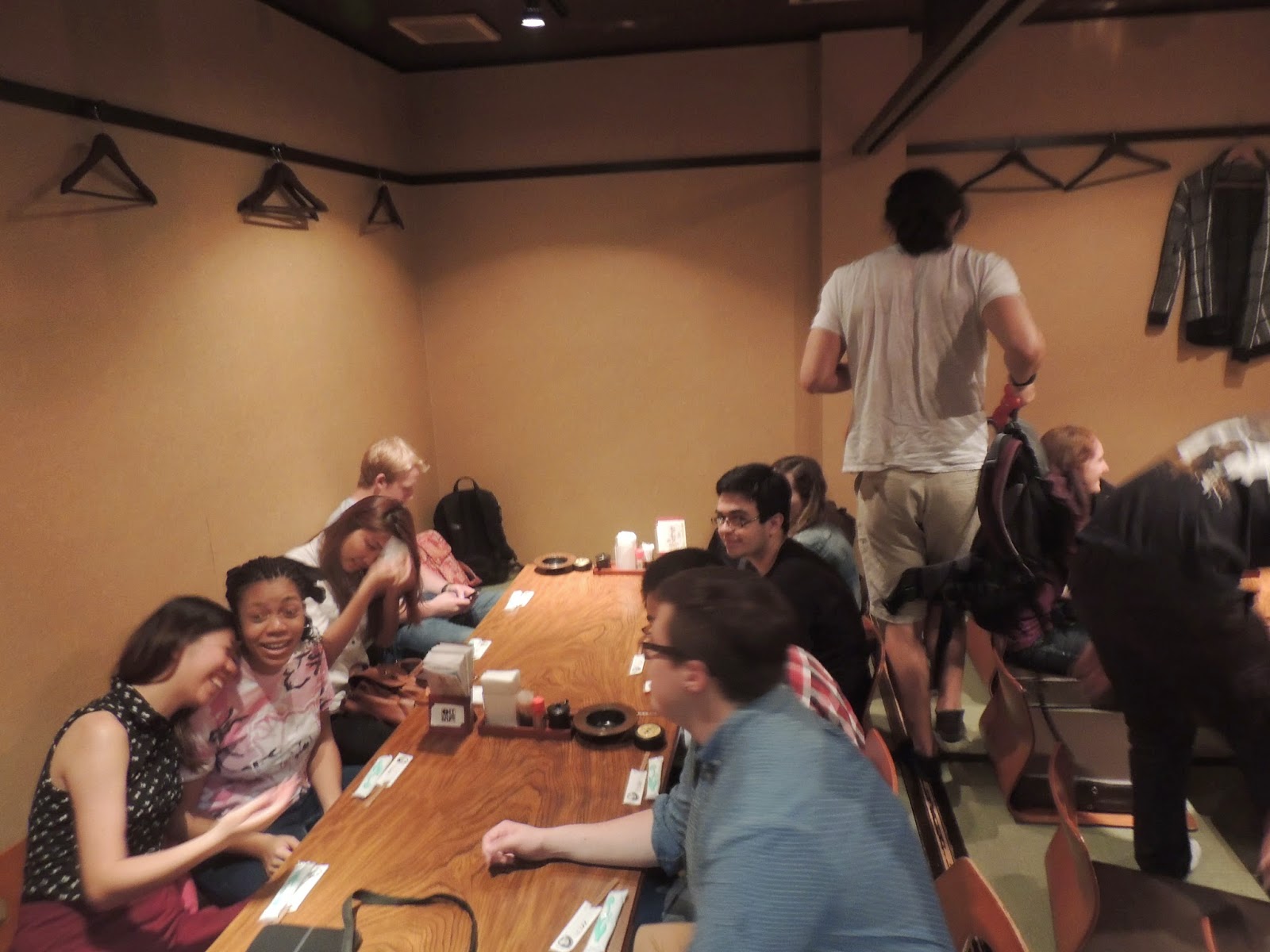
After the tour, we went back to the visitor’s quarters (which was to be the place where we spent most of our time) to eat. Their eating rituals are very interesting. The men and women sat in two rows facing each other and wooden tables were placed in front of us. Two monks came and served the food. We were first handed three black bowls of different sizes wrapped in white napkins with chopsticks and a tiny handkerchief. We had to unwrap the napkin and place the chopsticks and three bowls next to each other on the table with minimal noise. Then, the two monks started serving the food. They would extend their hand for the bowl, which is when we were to bring our hands together in gratitude and then hand our bowl to them. They would fill the bowl with food and when we wanted them to stop we had to slide our hands together. For dinner, we had rice, miso soup and pickle. The rice was traditional Japanese sticky rice with seaweed in it. The miso soup had lots of vegetables in it. The pickle included a radish that we were asked not to eat right away. All the food was vegetarian, which is a Buddhist tradition. We started eating after everyone had been served. (It took a while for everyone to be served because each of the three dishes were served one by one, which meant the two monks going down the row of wooden tables thrice.) Just before we started eating we were asked to place a few grains of rice in front of our bowls on the table. These would be collected later and placed on the roof for the birds. The food was delicious and surprisingly filling. The monks came back twice for re-fills and we were repeatedly told to finish every bit of food that we took. We had to eat in silence and hold the bowl in our left hand while we ate with our right.

After we finished we were asked to wipe our bowls with the radish and then eat the radish. A kettle of hot water came around, with which we had to fill one of our bowls. We then cleaned the other two bowls using the hot water. The water would be transferred to the second bowl in which the first bowl would be cleaned. We had to drink this water and whatever remain morsels of food were left. When they meant finish your food, they really meant it. We used the little handkerchief to clean our chopsticks and wipe our bowls dry. We wrapped the bowl back to the form they’d been given to us in and put them on shelves behind us. They were to be used for breakfast the next day.

We were instructed to go take a bath. The women went first and had 25 minutes to use the communal bath. The communal bath is another Japanese tradition, in which you wash yourself with soap and water first, using a hand shower, and then you get into a hot tub of water (which also includes other people) in which you soak to relax. This was my first time using a communal bath and it was weird at first for all of us. But it turned out to be a really fun and relaxing experience.
After the bath we went to do zen meditation.We were told some general guidelines about posture (sitting up straight with crossed legs) and focusing our mind on our breathing (count your breaths). The monk then made a loud song by banging two bricks together (it made us all jump the first time) to mark the start of our meditation. We did 10 minutes at a time. He would end each session by ringing a bell and then banging the bricks together. I think we spent about an hour and a half doing several 10 minute long meditation sessions, but I’m not sure, because another thing about Zen Buddhism is not having too many clocks around. In the middle of meditation, we were served hot tea and a sweet which tasted like chalk with sugar. The last 10 minute session was an outdoor session in which sat on the deck of one of the little cottages of the temple complex. It was next to a zen garden and we could hear the frogs in the water croaking as we meditated.

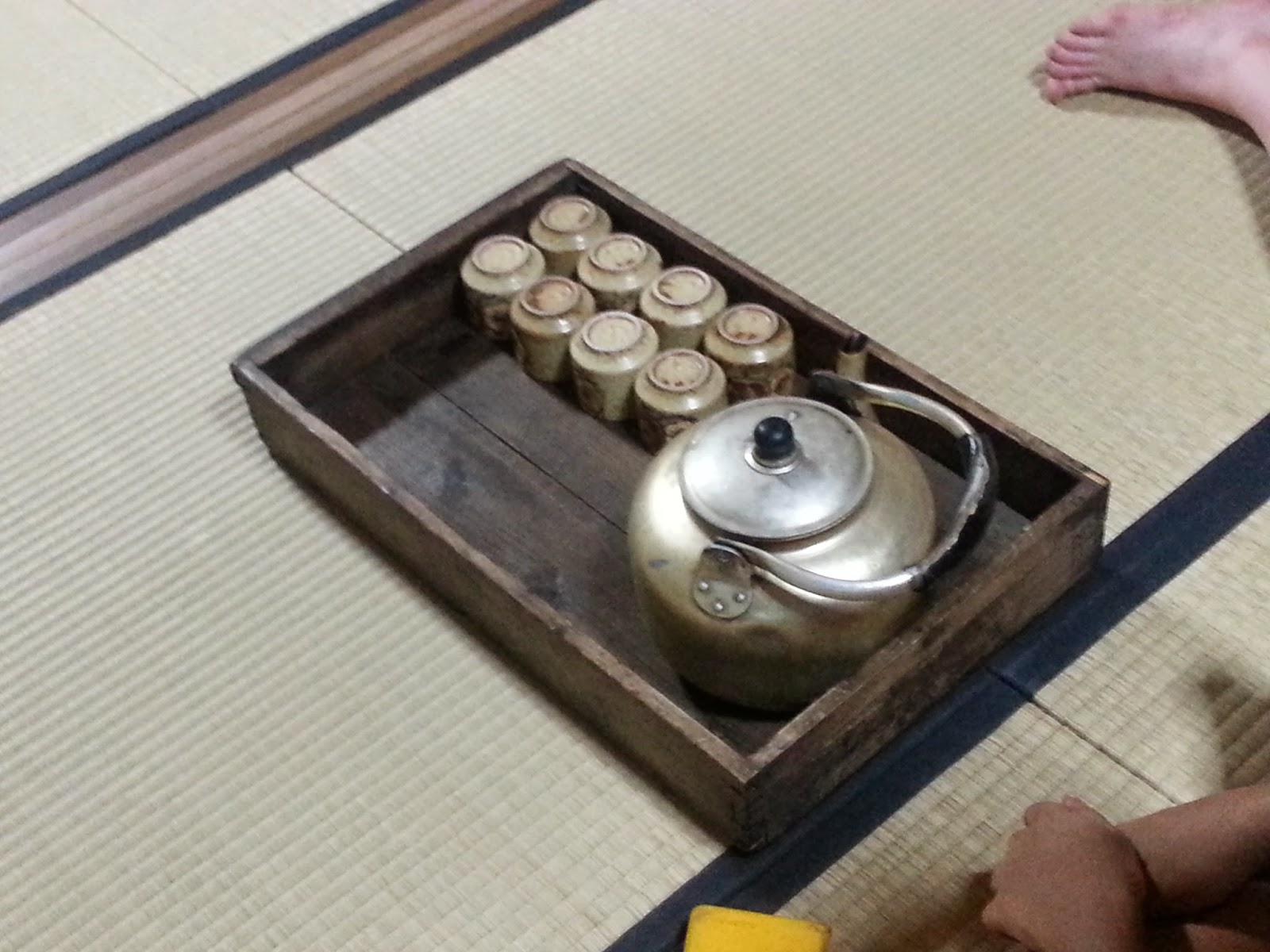
Instead of water, we drank cold green tea

At 9 pm, it was bed time. We asked for water and were told that drinking water wasn’t safe, so they’d have cold green tea sent to our room. I learnt later that replacing water with green tea is fairly common. The next morning we were woken up at 4 a.m. for chanting. We were handed sheets with Kanji characters on them and taught their english pronunciations. We chanted for a few minutes and then did more meditation. This time, it was easier to focus, and my legs didn’t hurt as much as they had sitting cross legged the previous night. Breakfast was served at 5:30, which included plain rice porridge. To be honest, I couldn’t eat much of it. The eating ritual was the same again and we ate in silence.

The Zen garden by which we meditated at night

After breakfast, we had to do our share of community work by cleaning. Some of us cleaned dishes, some cleaned the living quarters and others swept the courtyard. We were thankful for half an hour of rest after that. We went for a second tour of the temple afterwards. While we were sitting next to the same zen garden by which we had meditated the previous night, my friend explained to me the Chinese origin of zen buddhism and its spread in Japan. A Zen garden is composed of rocks and water. Rocks in chinese culture represent permanance while water represents impermanence. But the two concepts are two sides to the same coin and are not diamterically opposed to each other. A zen garden embraces the complementary nature of the two.

As a part of the tour we watched a short film about the monastery. Several new monks arrive at the monastery every spring. But many of them are turned down because some of the monks who show up just do so to get food and shelter. The temple likes to ensure genuine interest of monks in Zen Buddhism. They also like to see perseverence, which means that monks are expected to not give up if rejected once.

Meeting with the abbot

After the meditation we walked over to meet the abbot of the monastery. The abbot had a constant smile on his face and he looked very peaceful and unworried. His expression reminded me of the Dalai Lama’s when I’d seen him in Dharamsala a few years ago. We had a question-answer session with him. The session deserves a separate blog post. But some of the interesting things that came up were Buddhist belief in following the natural order of things and being mindful of nature, enlightenment and how it’s all about recognizing oneself, hardships of life in the monastery and how it prepares you for other hardships in life. I learnt that monks get to see their families twice a year. They typically spend about three years in training and then leave the monastery to go to their own temples. Another random fact about Buddhism is that Buddhists believe in ghosts and afterlife, and they think that even when a person dies, he or she continues to exist as a ghost.

Spending a day in the monastery taught me so much about Zen Buddhism. Although I wouldn’t choose such a life myself, I can appreciate those who do. Most of all, I admire the ability of these monks to distance themselves from modernization and technology (especially in an advanced country like Japan) and continue to preserve traditional culture. The control they have over their emotions and mind is incredibly powerful and very useful in real world situations. If these monks were to step out of the spiritual world to enter the life of an ordinary human being, they’d without doubt be much better and more successful at it.
Day 13: Roaming the streets of Harajuku

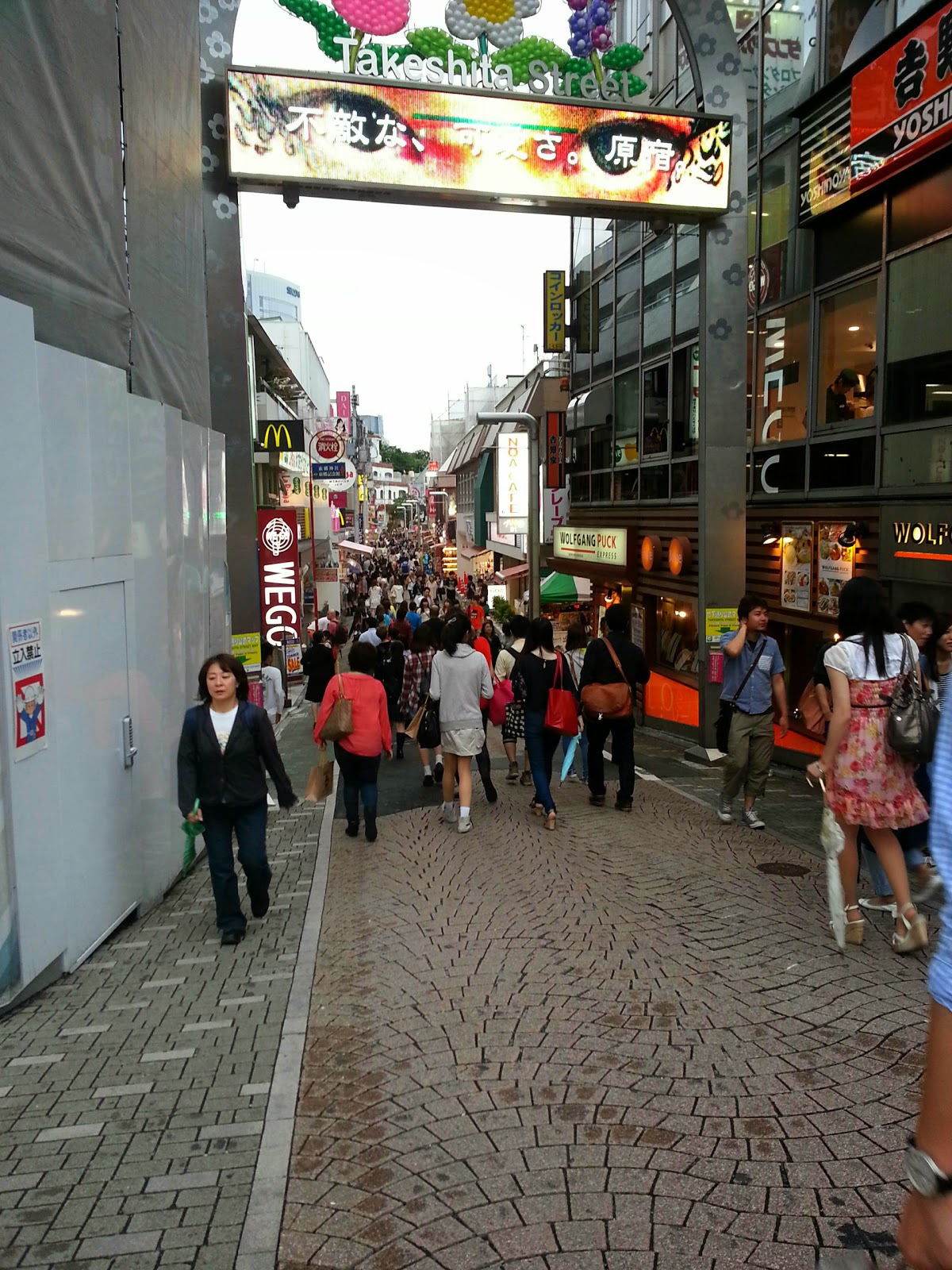
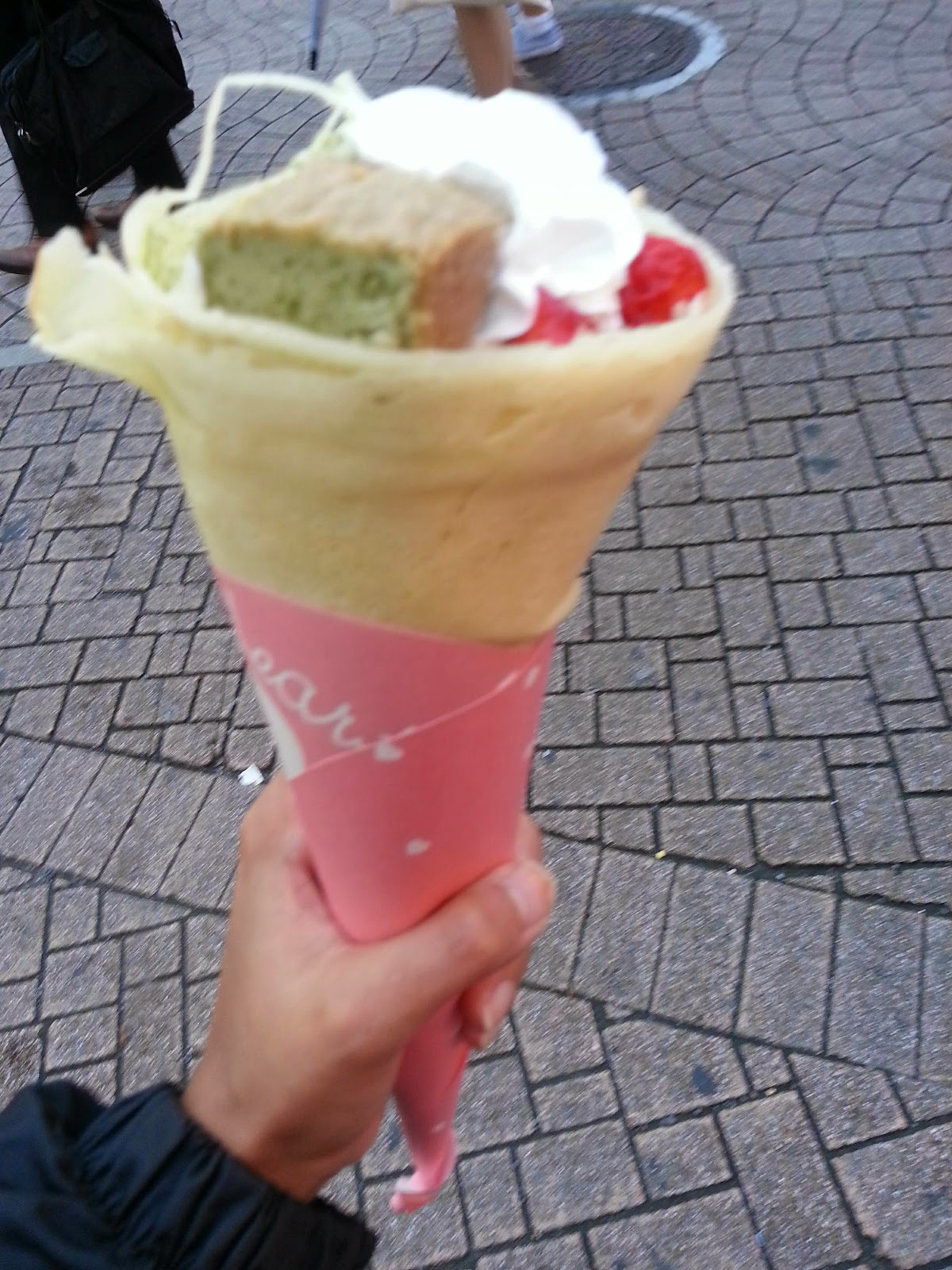
After a class on Tanizaki’s ‘Naomi’, which is a great noveI about the relationship between a 28 year old man and 15 year old girl, I made my way to Harajuku. Harajuku is a place near Shibuya known for its cheap shopping, described as a sacred street for teenagers by my host mom (I have never heard more squealing and ‘kawaii’s in my life). It was a nice place to walk around. I noticed lots of foreigners there. Crepes were a popular food item being sold there. After walking past the third crepe stall, I felt the need to try one and bought the highly recommended macha cheesecake and strawberry crepe. It was heavenly. 
Harajuku’s Takeshta steet-known for its cheap shops
My beautiful crepe-the highly recommended macha cheescake and strawberry with whipped cream
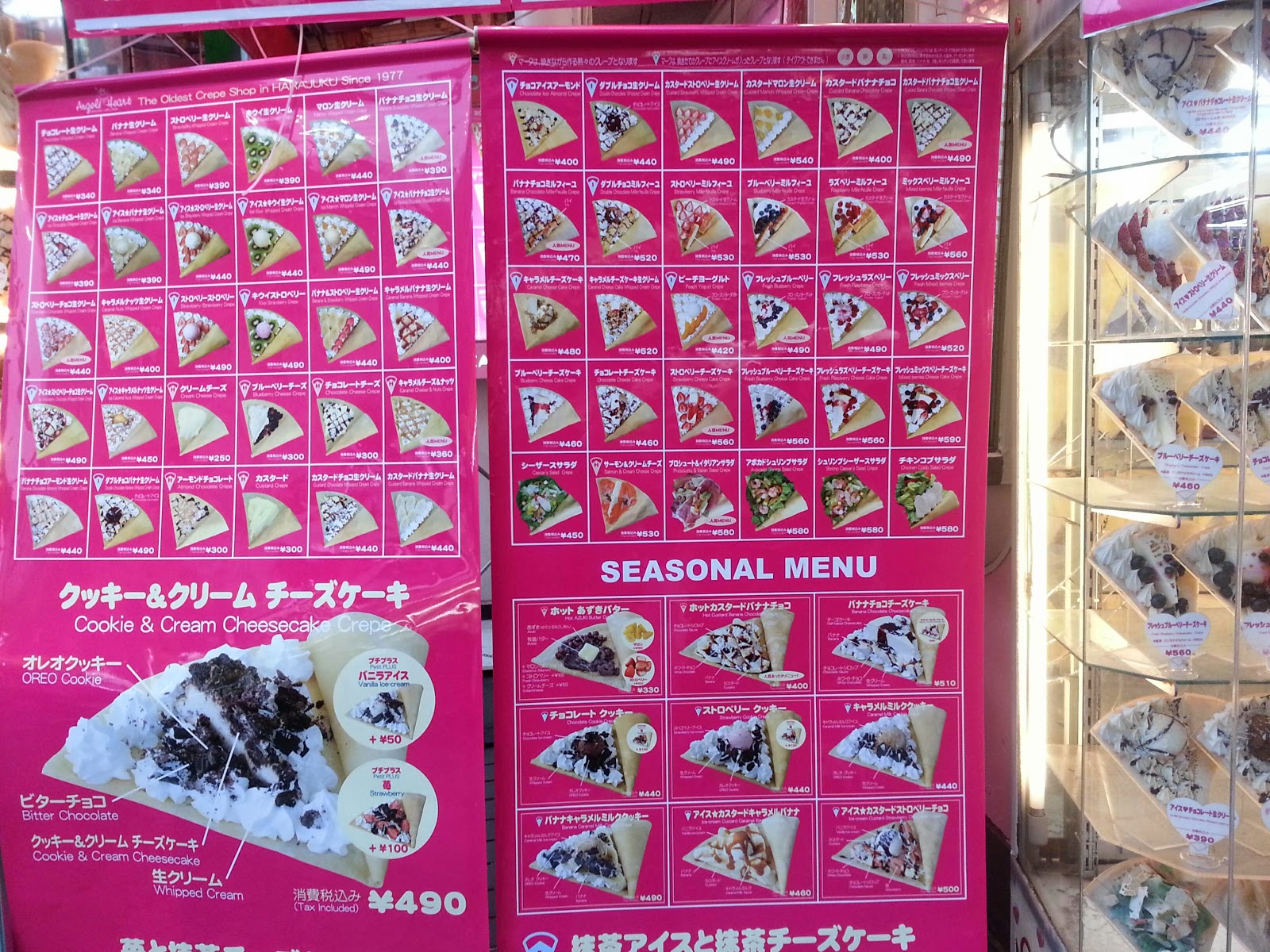
The crepe menu at Angel Heart, the oldest crepe shop in Harajuku
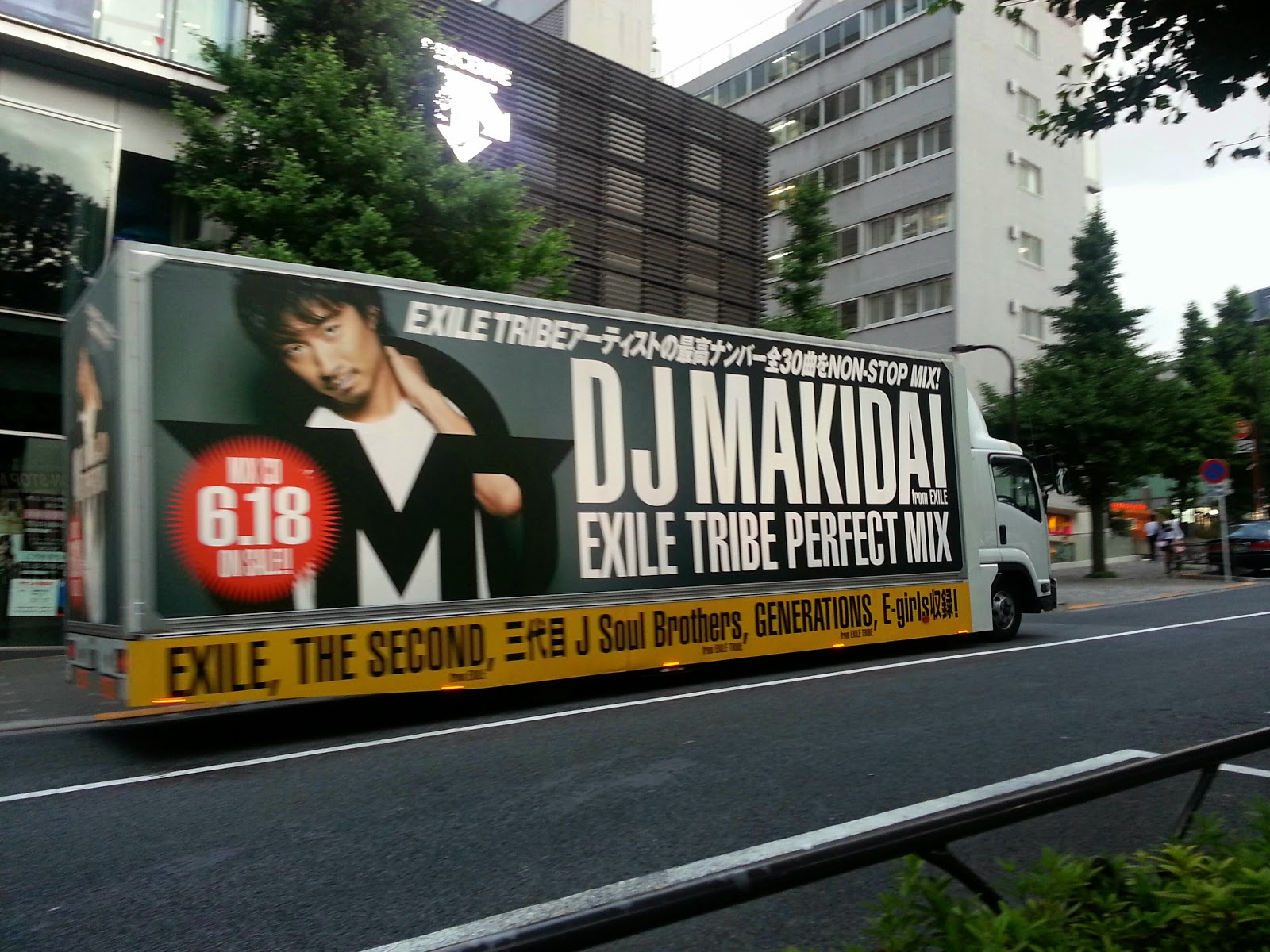
In the Hirajuku area, there were several trucks which drove by with music blaring from them. On the main street, I saw a caucasian man outside the train station playing music and trying to make money. The area was really lively and I heard an unusual amount of english and hollywood music.
A passing truck at Harajaku with blaring (and really good) music
I later went to Yoyogi park nearby which is connected with a Meiji shrine. The park was huge. Once inside, it was so quiet and peaceful.
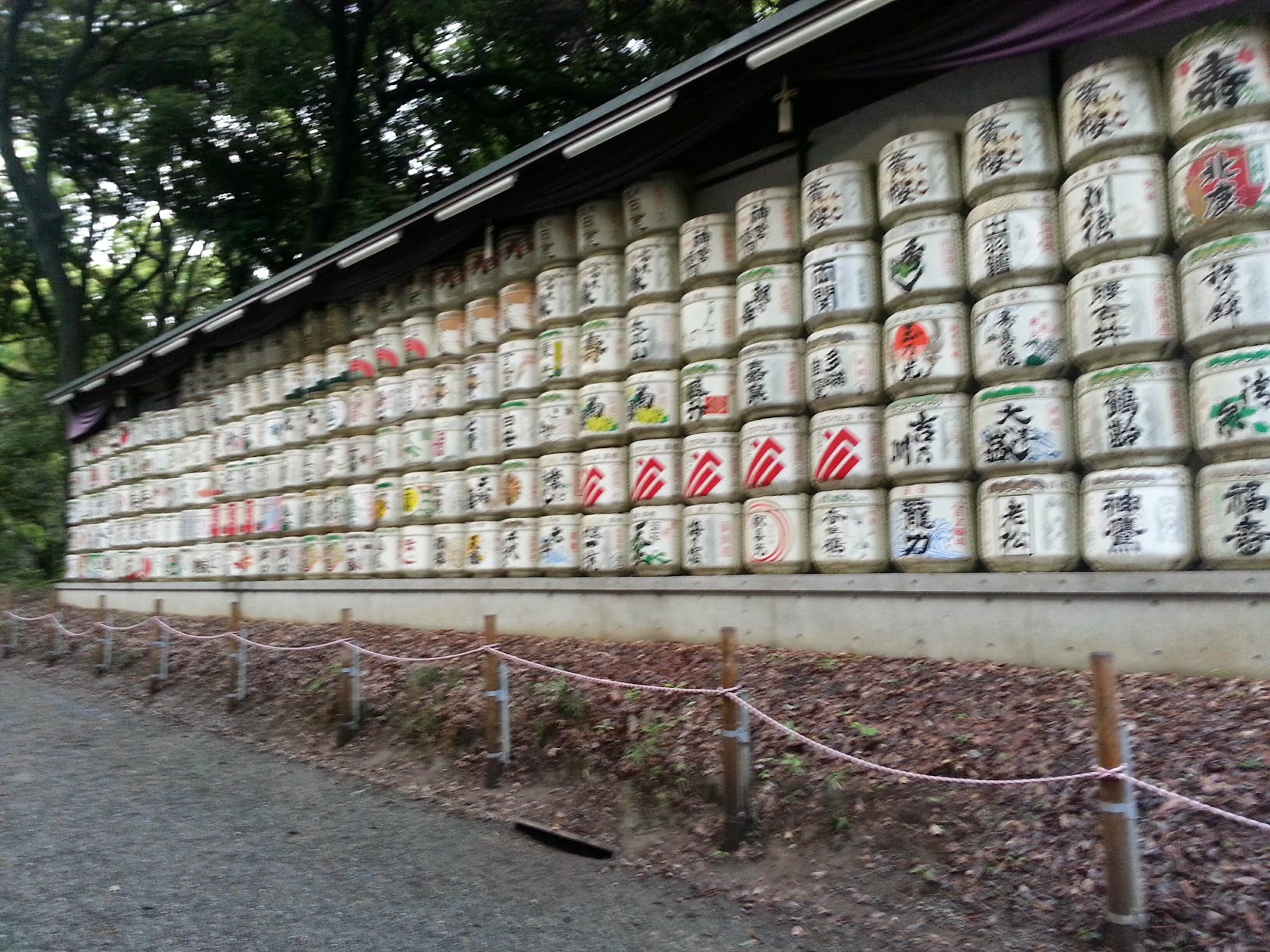
Barrels of sake near the Meiji Shrine, representing the sake offered to enshrined dieties on an annual basis
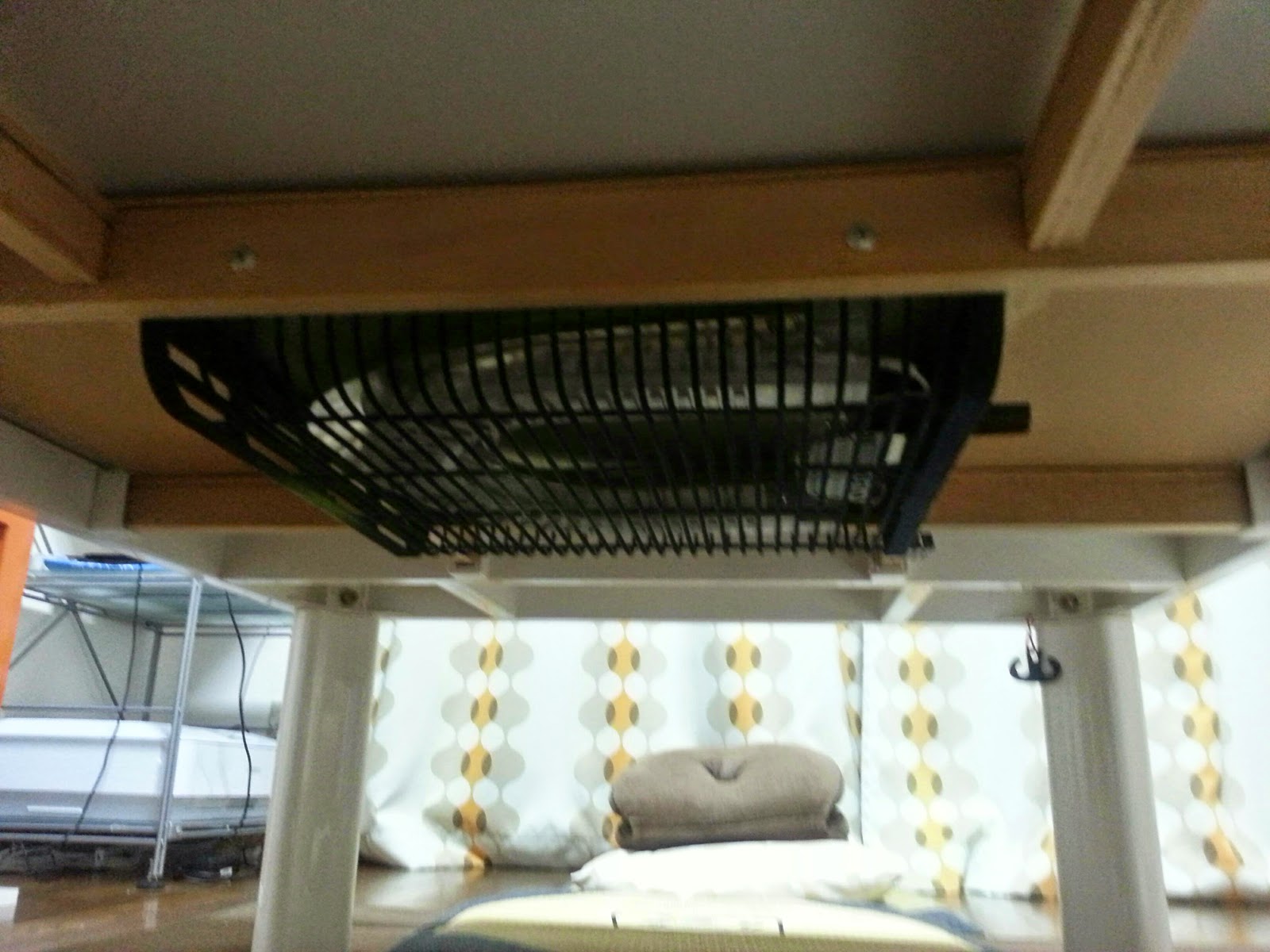
I discovered the secret of the kotatsu today. Kotatsu is a low japanese table with a heater below it. People put their feet under the kotatsu in winters to warm their feet.
I also wore a hokairo today. Since it was chilly and random parts of my body hurt, Kaori-san handed me a hokairo which is a little cushion with a sticky substance on one side. It is stuck on an undershirt and provides warmth to your body for up to 10 hours. My body ache disappeared. Japanese technology continues to amaze me.
The heater below the Kotatsu, used to warm people in winters. 

Day 12: The Wrath of Local Trains

The commute back and forth from Waseda University was the highlight of my day. Despite taking the same route to Waseda everyday, I somehow ended up in the train going in the opposite direction. I realized that soon enough and got on the right train. Then, while changing trains at the next station, I was feeling adventurous and tried getting off at an unfamiliar looking exit. But the doors of the exit machine where you tap your card slammed on me and the guard nearby redirected me to my usual exit.

But what made the train commute a highlight was my return journey. I left Waseda at 5 pm. By 5:20 pm I was at Ikebukoro where I had to take my third and last train. I took my seat in the train which was already there and started playing tetrus on my phone. At 6 pm, the train still hadn’t moved. There were frequent announcements being made in Japanese and after each one, some people would get out of the train and leave the platform. At this point, I was tired of Tetrus and left my comfortable seat in the train to go find an english speaking officer at the station. As I walked around the platform, I found that the doors for entering the platform for this particular train line had been locked and a police officer was making an announcement using a mic. There were huge crowds all around and officers were hanging out little tickets to people, presumably for different routes that they could take instead of taking their usual route home. I finally found an english speaking officer who said that there had been an accident somewhere along this train line and I would have to take another route home, one that took double the time. I was upset at already having wasted so much time sitting and playing tetrus on the train and now I had to spend another 40 minutes on the train. In any case I took my free ticket and tried to convince myself that it would be fun to take a different route home and see a new scenery through the window of the train. But when I got to the platform I realized that it was peak rush hour and there was going to be no scenery for me in a train stuffed with people. I was right. Two trains passed me by and they were so full that I didn’t have the courage to get on them. There were police officers employed to push people into the train and ensure that the doors shut. I didn’t feel like I was among human beings when I saw the way people were pushing themselves into the train. I got on the third train and sure enough, it was stuffed. I couldn’t turn even to look at the screen which displayed the name of the next station. The only way for me to know which station we were stopping at was to keep my ears open and wait for the announcement.

People were clearly tired and frustrated and I admired their resilience in doing this day after day. It also occurred to me that I was experiencing one of Japan’s rare train breakdowns and seeing the way the Japanese dealt with it was interesting. They immediately informed people and started redirecting them. Infact, when I was taking the longer route home, there was another brief delay and it came up on the screen of the train. The trains run by Japan Railways (JR) have a screen which shows any and all delays that are occurring on their trains. Today, there seemed to be three delays on the JR Line, reasons being passenger injury, door inspection and cable problem. I should know, considering how long I spent in the train today.

While I was in the train being crushed by people around me, I thought about how easily people in the train could steal my wallet or my phone from my bag without me noticing. But they don’t. And I’m grateful for that. Japan is one of the few countries where I can stand out as a foreigner and still be relatively unworried about being pick pocketed.

By the time on the last train, my frustration turned into a sort of empathy for the millions who ride trains like this everyday. It was 8 pm by the time I got home. My 75 minute commute had turned into a 180 minute commute. I later learnt that the train breakdown had made the news on TV. Although I am thoroughly exhausted right now, this was definitely a worthwhile adventure.

Apart from the train adventures, I watched the Japanese Movie called “The Neighbor’s Wife and Mine”, which happens to be Japan’s first sound film. It was interesting to see how expression and action was used far more in the movie than sound and dialogue. But the sound affects of the film played a big role in the film and were used in turning points, unlike movies today in which music and sound is perpetually present. The movie showed life in the suburbs of a writer in the 1930s. Although life wasn’t nearly as fast paced as it is now, westernization and modernization had started to occur already.

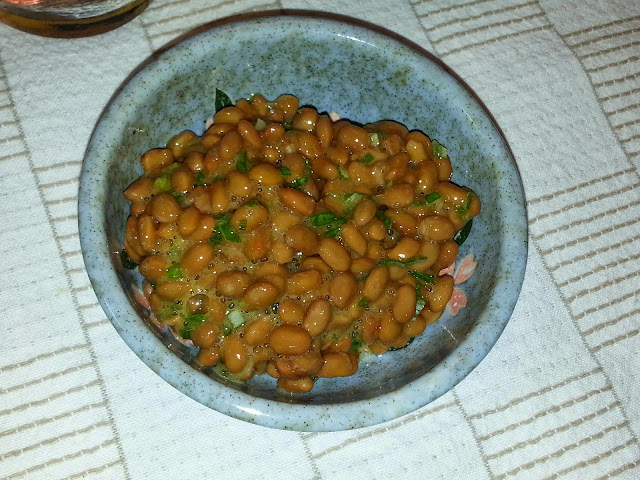
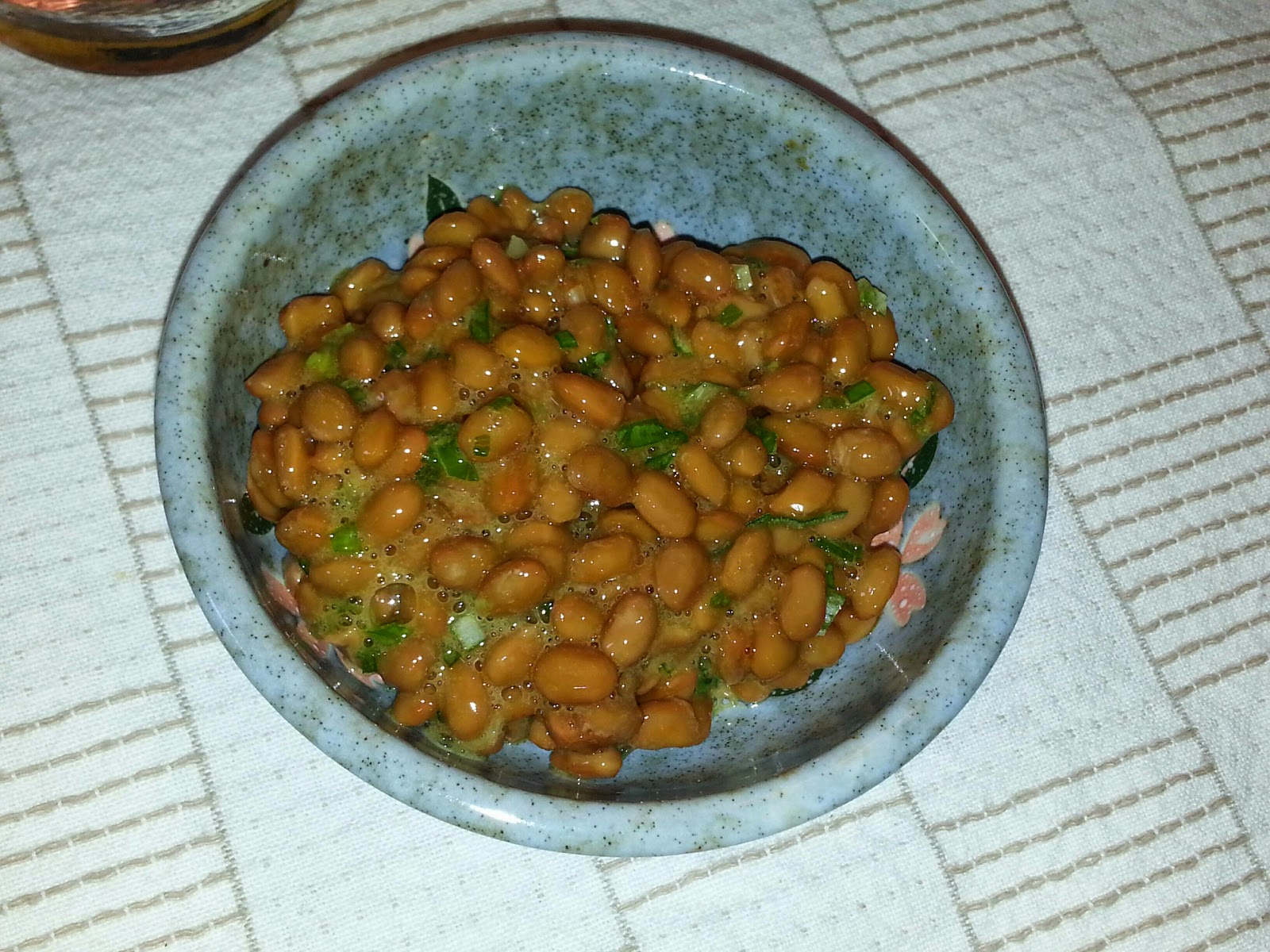
For dinner, I ate natto, which foreigners generally hate and what the Japanese consider soul food. Its fermented soy bean eaten with rice. Although I’m not particularly fond of the smell, I’m indifferent to the taste. To be honest, I don’t taste anything when I eat natto. Kaori-san made it with Japanese mustard and mixed it with soy sauce, as its traditionally done. We then ate it with rice. The challenging part was trying not get the slime (yes, natto is VERY slimy) everywhere. After putting natto and rice in your mouth, you are required to wave your chopsticks in circular motion in an attempt to cut the slime. We also ate daikon radish and pork in a kind of soy sauce, which tasted amazing. Kaori-san told me that Japanese dinners are meant to traditionally hold a bowl of miso soup, rice and three other vegetables or meat dishes.

The infamous natto

Day 11: Looking for the unique

My classmates organized a screening of Howl’s Moving Castle before our regular class time. Howl’s Moving castle is a popular animated film of Miyazaki. It was about an 18 year old girl who was cursed and became a 90 year old woman. She ends up in a Castle that keeps moving and belongs to a wizard called Howl. Although it seemed like a typical Disney movie about curses and princes and love in some ways, it was quite different in its twists and turns. To be honest, only the ending was typical and cliched where (spoiler alert!) the bad characters give up or turn over to the good side and random objects are kissed by Sophie (the protagonist) and turn into human beings who had been cursed. The rest of the movie was fairly unexpected in its twists and turns and I had to concentrate more than usual to understand what was going on.

Due to lack of time to eat at a proper restaurant I once again picked up lunch at the convenience store. I picked up what seemed like a salad at first, but then the lady at the counter heated it up and when I got it back it had some kind of broth (I think it was kimchi) and pieces of pasta floating in it. Not only was this my first time encountering instant pasta which can be cooked under a minute, but also I had never imagined eating pasta with kimchi broth. As if that wasn’t enough, I purchased coffee later in the afternoon, again at a convenience store. This was the kind of coffee which is sold in little pre-packaged cups and is usually cold. I bought a cafe latte. The coffee tasted great for something that had been packaged atleast 24 hours ago, but more than that the packaging fascinated me. Instead of having a single lid from which you directly sip the coffee, there were two lids, one made of plastic and another of hard paper. The one made of plastic didn’t seem to be removable. It had a little hole in it for a straw. I think the reason behind the double lid was that if the coffee spills out when you punch a hole with your straw on the second lid, it won’t spill outside the cup but will just get trapped in the space between the two lids. Apart from the two lids, I found it really cute (or kawahi as the Japanese would say) to see a straw neatly folded on the side and stuck to the cup. When I opened it, I found that the single straw was made of two different materials. I think they were both plastic but the lower part of the straw was transparent and the top half was white in color. The top half was slightly thicker than the lower half. I’m not sure behind the science of it, but knowing the Japanese, I’m sure there’s some very practical and logical reason behind it.
The food I eat here surprises me on a daily basis.

While walking from my classroom to the train station, I decided to take a different route and got lost in what seemed like an apartment complex. My non existent sense of direction does not help when I’m in a foreign country. Anyway, while walking through the apartment complex, I realized that it looked very much like any other apartment complex in a metropolitan. It could easily have been an apartment complex in a posh area of New Delhi. Such similarities that I often see between Tokyo, Singapore, New Delhi and other cities make me realize how the world is increasingly sharing culture and lifestyle. When I go to a new country, I often go expecting something completely radical and different. I rarely find a huge difference in the appearance of a place. Even the lifestyle is increasingly similar. But the difference lies in areas such as Akihabara of Tokyo, hawker centers of Singapore and the bazaars of New Delhi, which are representative of a sub culture or a unique trait of the country. They are the places where the locals go for a specific purpose and these places generally don’t exist everywhere in the world. My new plan is to abandon the usual sight seeing, since its anyway impossible to see everything and it usually doesn’t teach me more about the culture. I’m going to start being more picky about the places I go and choose places which I know will surprise (or shock) me.

Day 10: Failed attempt at Japanese conversation

We discussed a fascinating book called Sanshiro by Natsume Soseki in class. It’s a coming to age book about a boy called Sanshiro who moves from a village to Tokyo and undergoes transformation.

After class, I met a friend at Takodanababa. We went to Mr Donut. Everything on the menu was in Japanese so I tried asking the lady at the counter the name of the teas listed on the menu. There were 3 teas listed and she named two of them. So I tried asking her the name of the third tea by saying “san teas?” (san is the number three in Japanese and I was hoping to make effective use of my newly acquired japanese number skills). As soon as I said that, she smiled, nodded and said “san teas? hai!”. It took me a few seconds to realize that she was going to order 3 teas for me. So I gave up and pointed to a picture on the menu, which turned out to be some sort of grape juice or soda.

My friend who has now been in Japan for 2 months shared some of his wisdom with me and told me about the concept of butler cafes, which are similar to maid cafes except that they’re angled towards women. He also told me about the ‘ramen burger’ which is a burger with ramen noodles inside it. Fusion food at its best.

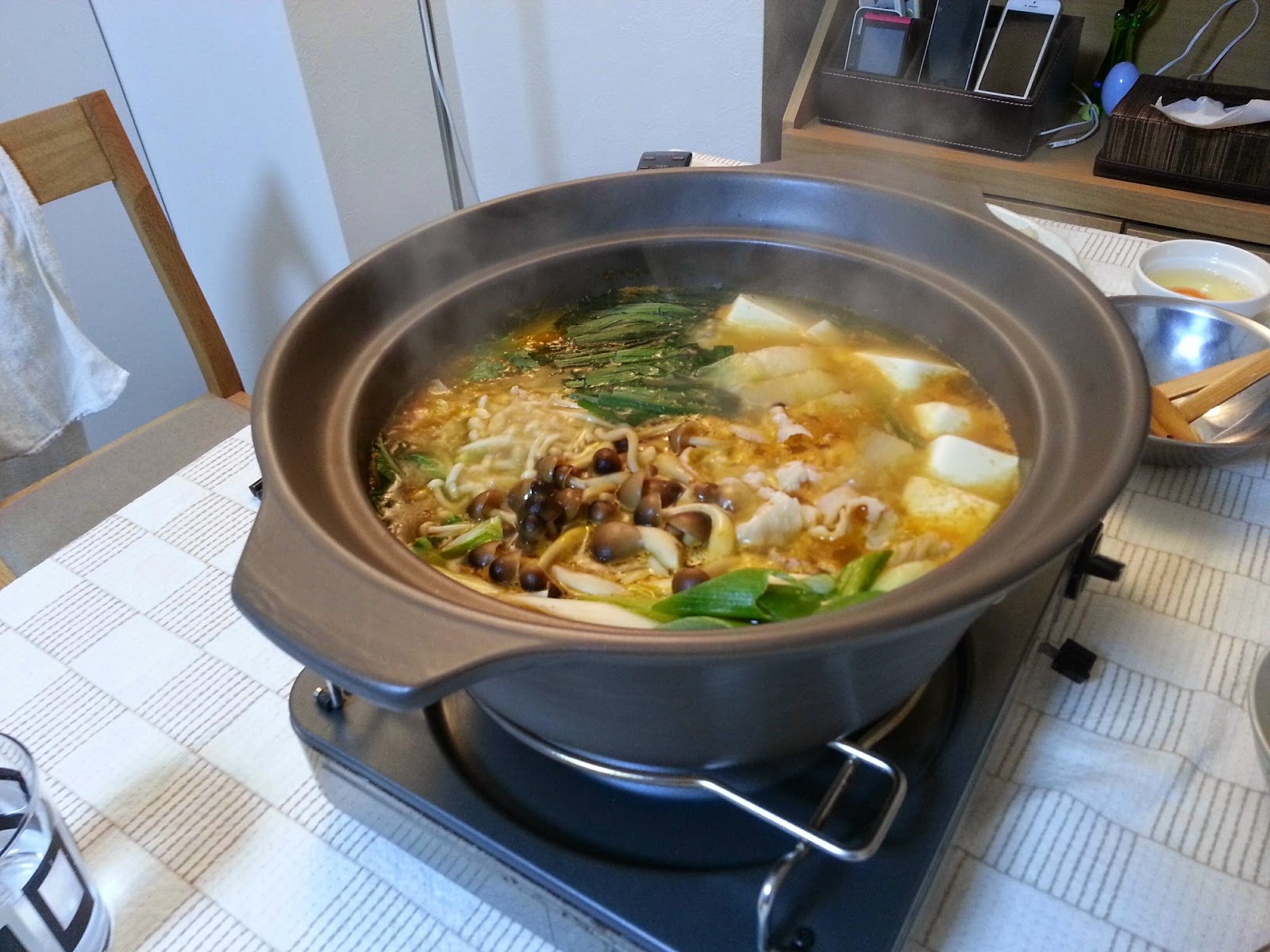
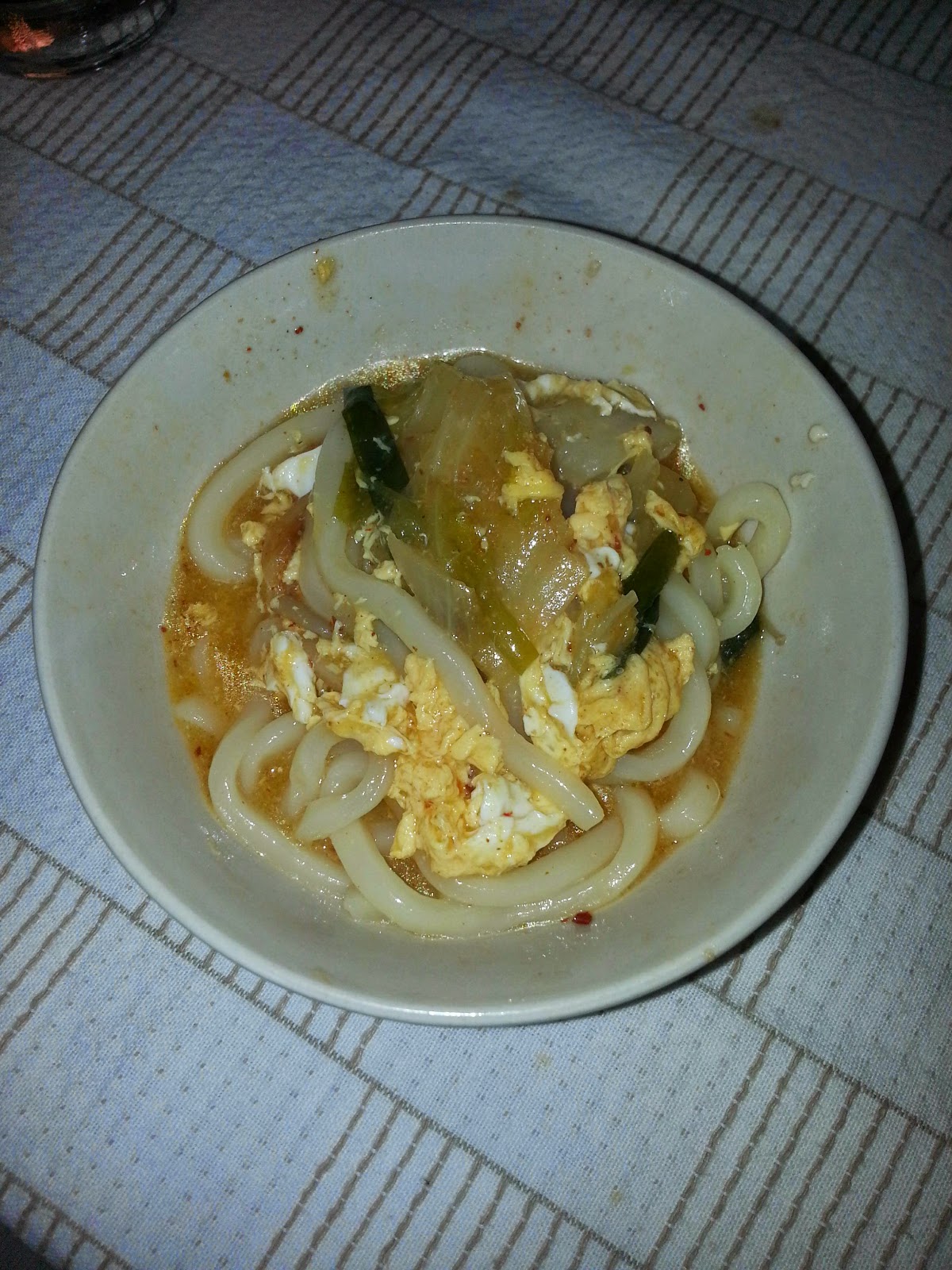
For dinner, Kaori-san cooked kimchi nabe with udon noodles. Nabe implies a hot pot dish in which you put a variety of meat and vegetables and eat them hot out of the pot. Kimchi nabe is a hot pot dish with the broth made of kimchi.  In the end, when we were done eating the meat and vegetables, we put udon noodles, a thick kind of noodle, in the hot pot and added egg to it. After it was cooked in the hot pot for a few minutes, it was a delicious blend of egg, the kimchi broth and udon. As I mentioned in my earlier post on sumo-wrestlers, this is a kind of dish regularly eaten by sumo wrestlers to bulk up.

Kimchi Nabe
Udon noodles with egg and leftover kimchi broth

Day 9: Sushi and a trip to Kawagoe

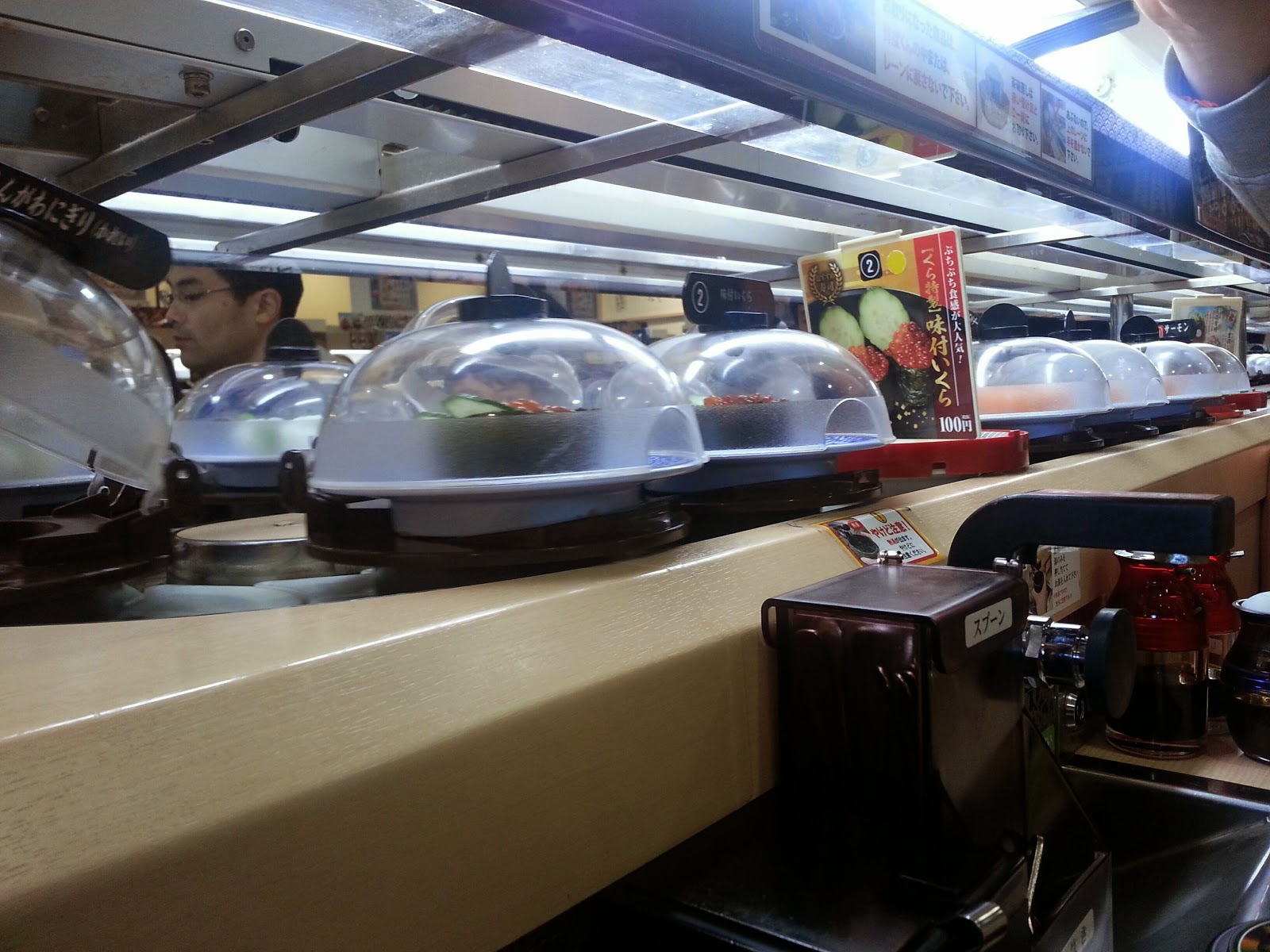
The sushi conveyer belt. Grab whatever looks good! 
A sushi brunch was in order. This was my first time eating sushi in Japan. We went to one of the conveyor belt restaurant where you can grab any plate you want and you’re charged per plate. Although I’d tried sushi before, this was my first time trying so many different varieties. In addition, I had ramen and egg pudding, both of which were heavenly, as cliched as that may sound. Aside from the conveyor belt, there was a little screen besides our table using which we could order specific sushi or other food dishes that we wanted. The ordered food would arrive on another conveyor belt which was above the sushi conveyor belt. As we ate sushi, we were to keep disposing the plates in a mini-chute like thing which was besides the table. The plates would be counted through some automated system and we would be charged accordingly. Its amazing how such restaurants have minimized manual labor. Even at the entrance of the restaurant there was a machine which we had to get a ticket from for the waiting. In other places I’ve been to in India and Singapore, there is generally a waiter who stands at the entrance and takes down the names and numbers of people who are waiting for seats in the restaurant.  So basically, it was possible to go through an entire meal without interacting with a single waiter. 
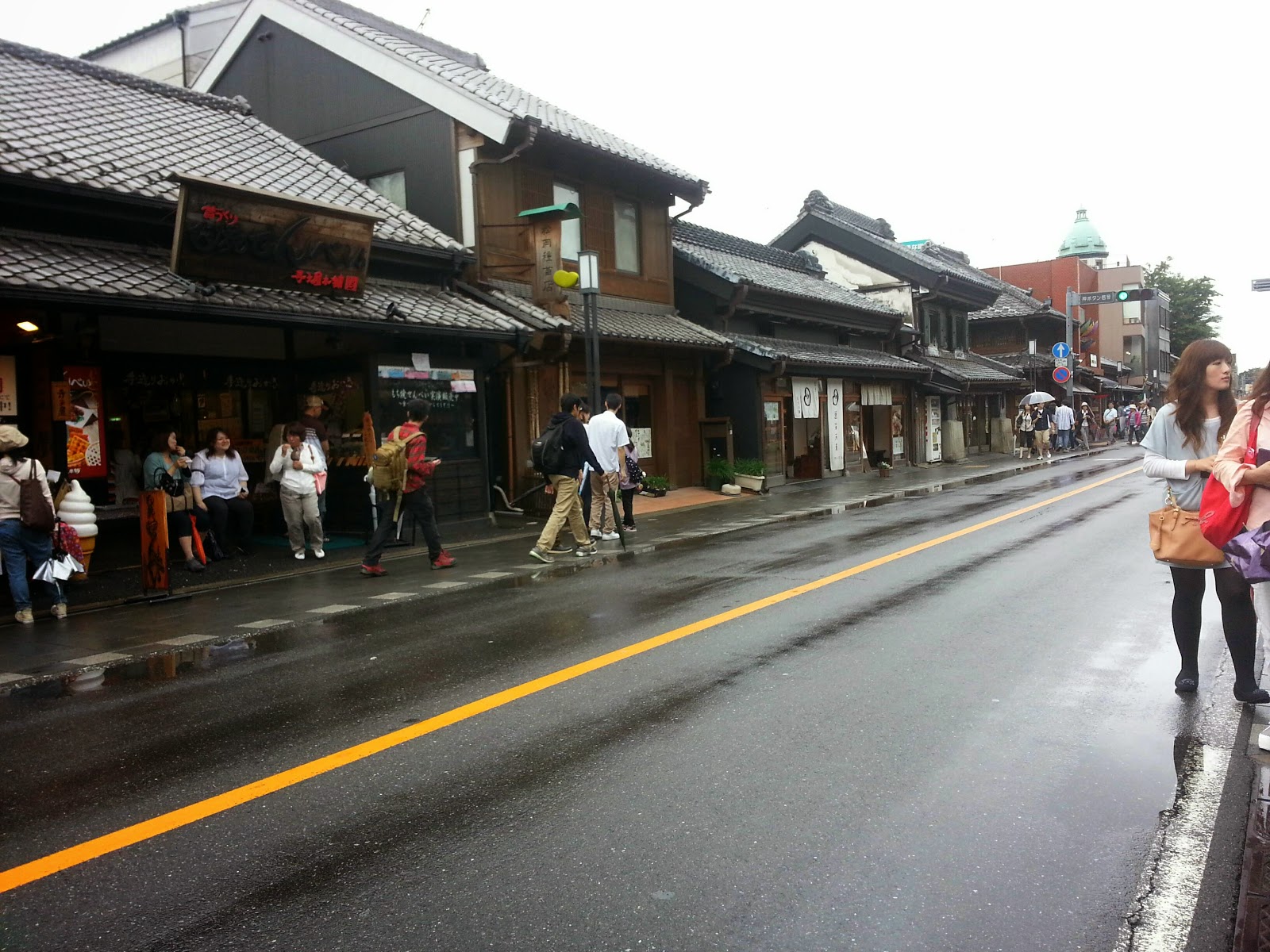
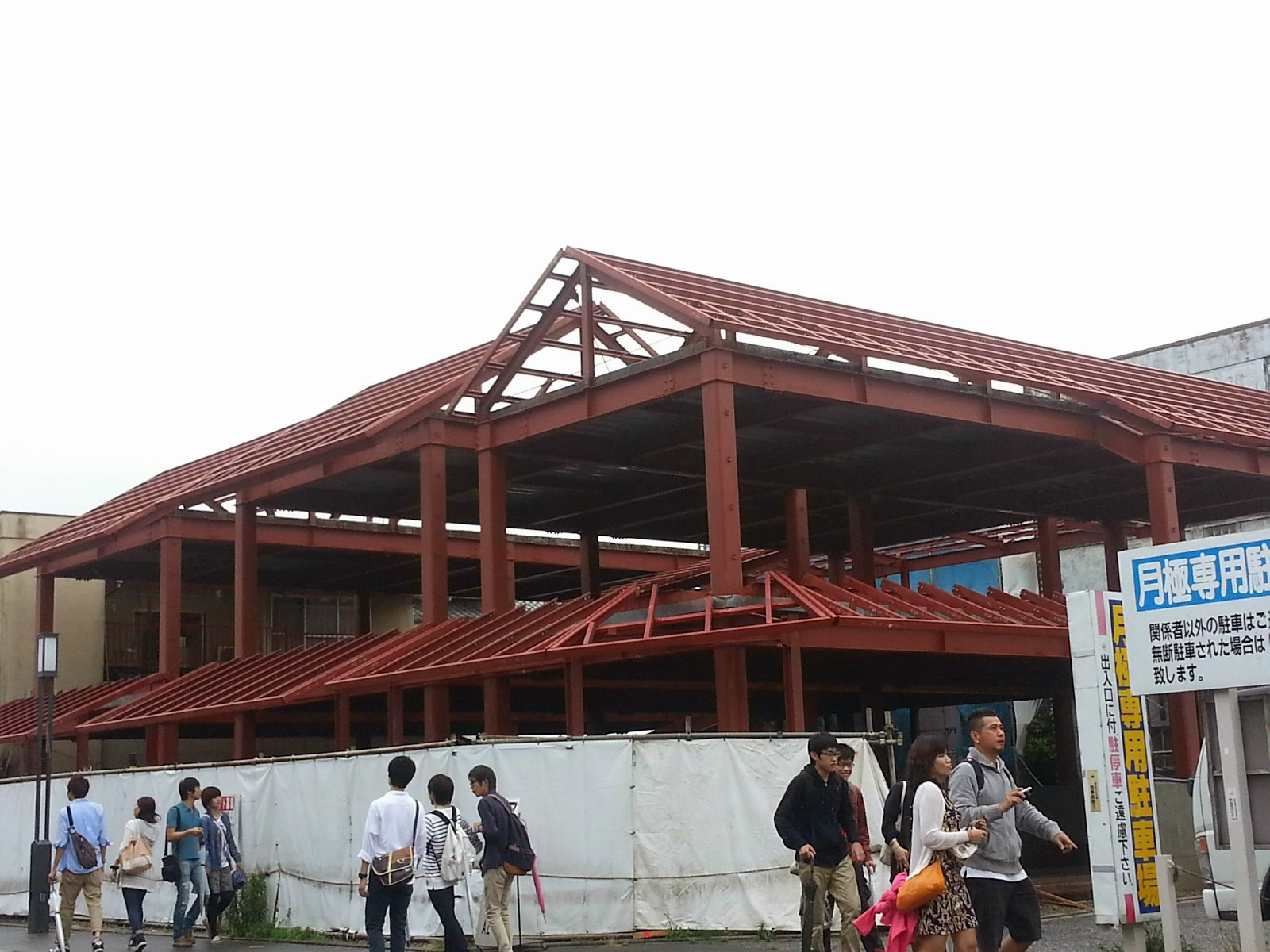
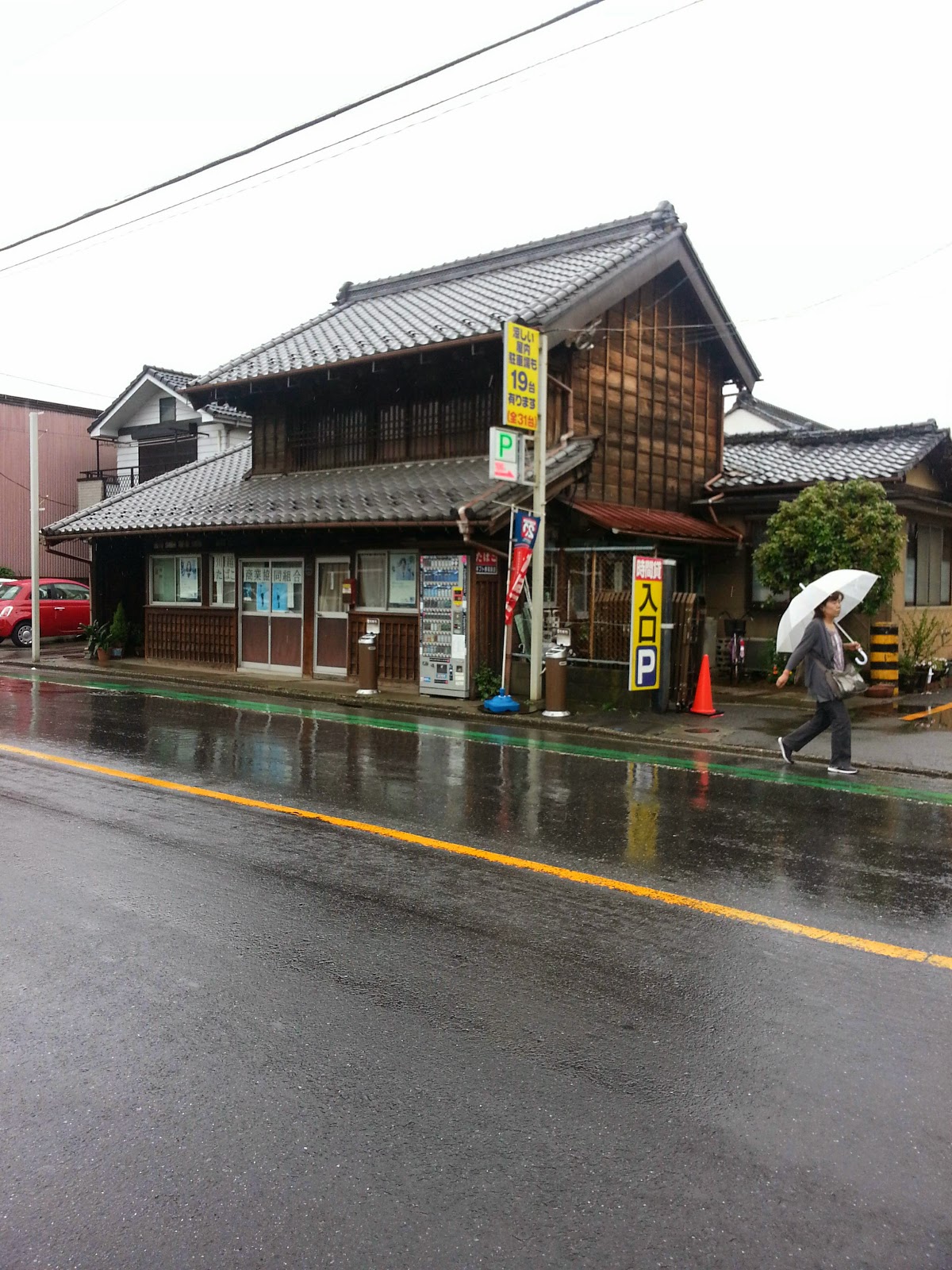
Masaki-san’s father came with us and drove us around in his car. We went to Kawagoe, a small town in the Saitama prefecture known for its traditional architecture. Having only seen Tokyo, I didn’t know much about what traditional Japan looks like until today. Kawagoe was not affected by fire or natural disaster which is why it remains as it was in the olden days. We walked around looking at the small shops selling traditional Japanese sweets. Although many houses are modern and rebuilt, most are quite traditional.
The main street of Kawagoe
A house being rebuilt in Kawagoe. I was told that looking at the structure, the house will continue to have a traditional look when rebuilt. 
A traditional looking house in Kawagoe
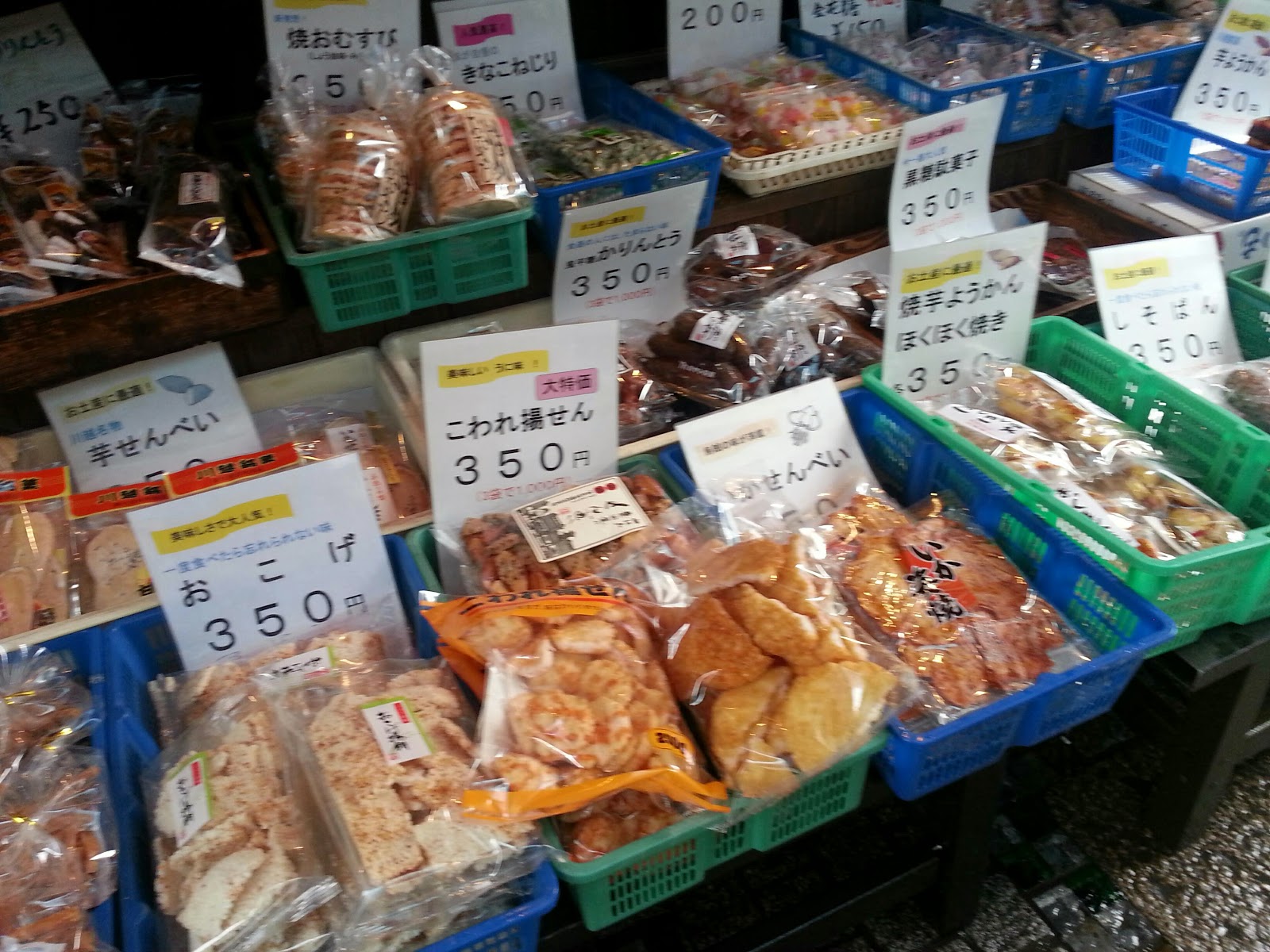
Japanese sweets being sold in one of the alleys of Kawagoe

Day 8: A typical Saturday

Mostly a chilled Saturday with the family, but we had our little adventures.
We lazed around all morning, eating and watching television. In the evening we went kimono shopping for Kaori-san who is taking kimono classes and needed one for it (yes its not easy to tie a kimono and taking classes to learn is not unusual). I learnt that there are casual and dressy kimonos. They cost a fair bit and its takes 20 minutes for an expert to tie a kimono. It has several accesories to it which are necessary to complete the outfit and cost additional money. People buy different kinds of belts to complement the kimono. The concept is similar to that of a saree wherein people buy different blouses to wear with the same saree. A kimono is normally stiched depending on the buyer’s size and body dimensions, but used kimonos are sold as well which can be bought at a cheaper price.
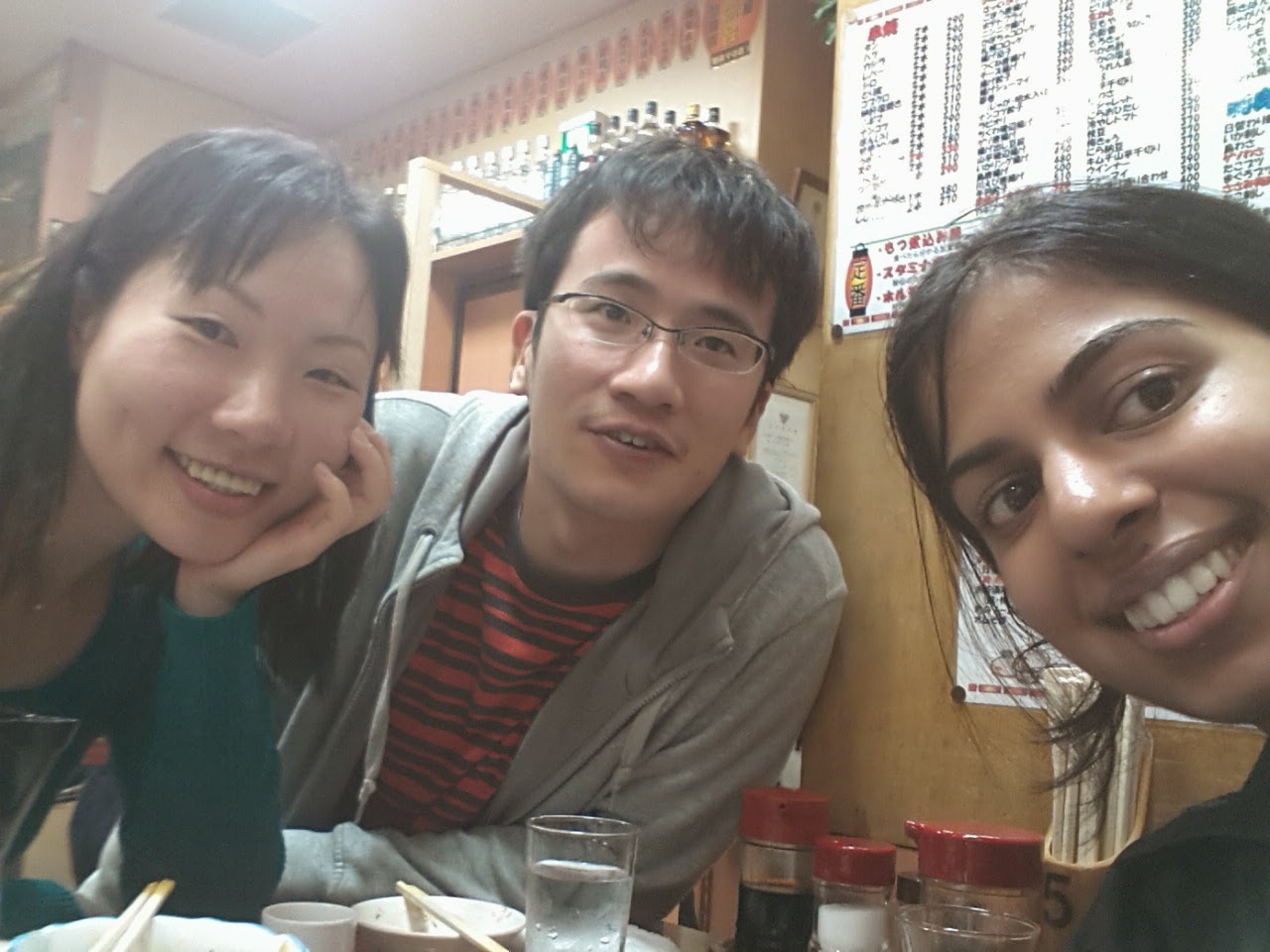
Kaori-san, Masaki-san and me at the Izakaya 
Later, we went to an Izakaya for dinner and drinks. An Izakaya is a sort of restaurant cum bar where people come to drink and eat. It was the loudest place by far that I had come across in Japan. Many people were already quite drunk and chatted with their friends. Many people go to Izakayas after work, and Japanese people frequently socialize here. I couldn’t help but notice that there were very few women in the Izakaya. It was quite different from a regular bar, where drunk people often create a havoc and men hit on women. In the Izakaya I went to, people kept to the groups they came with. 
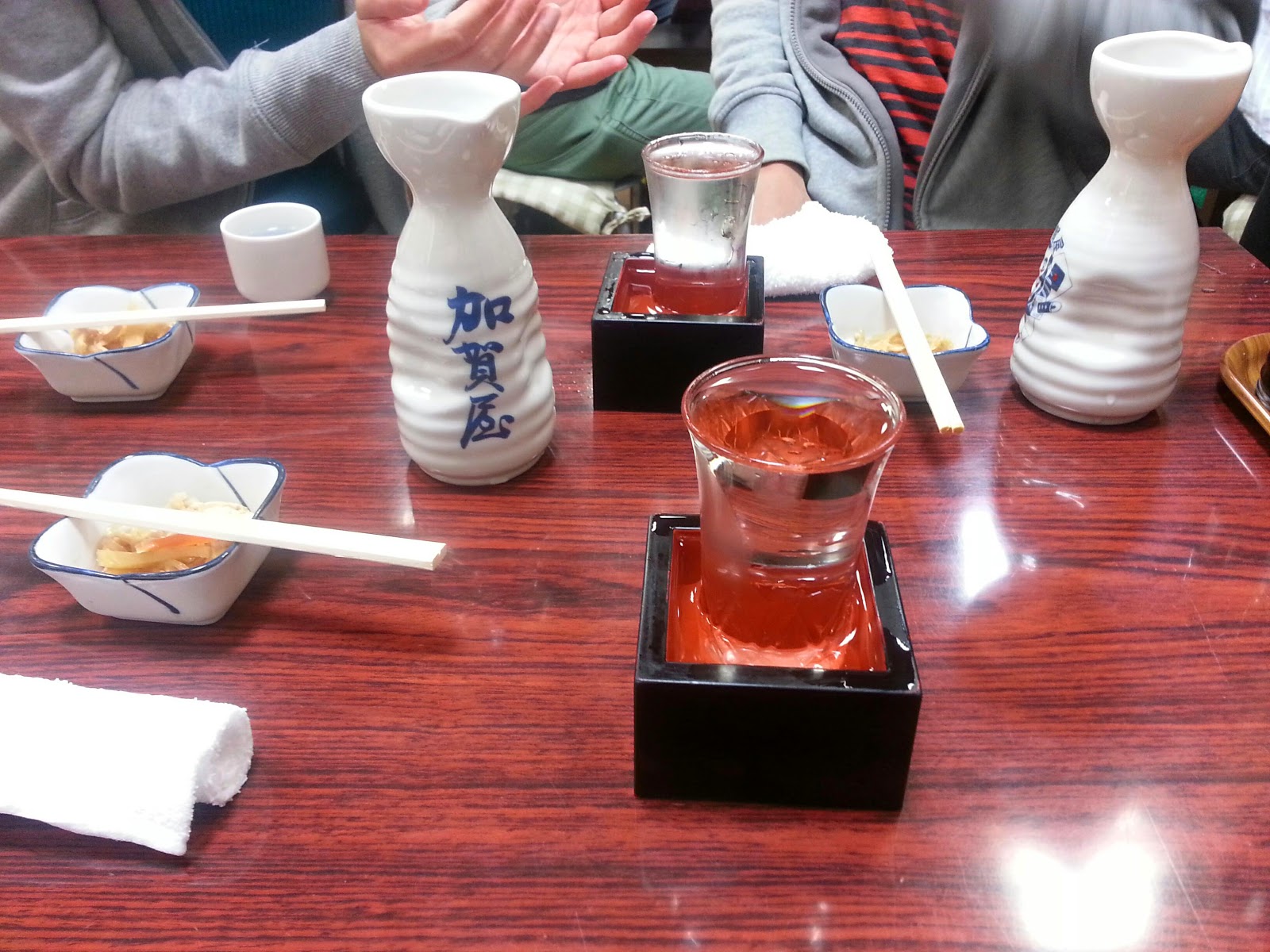
We ordered some sake (Japanese rice wine) and shared some local dishes. It was such a fun experience! 
Cold sake is served in the little black box which is also filled with sake. It is meant to show hospitality and generosity. 
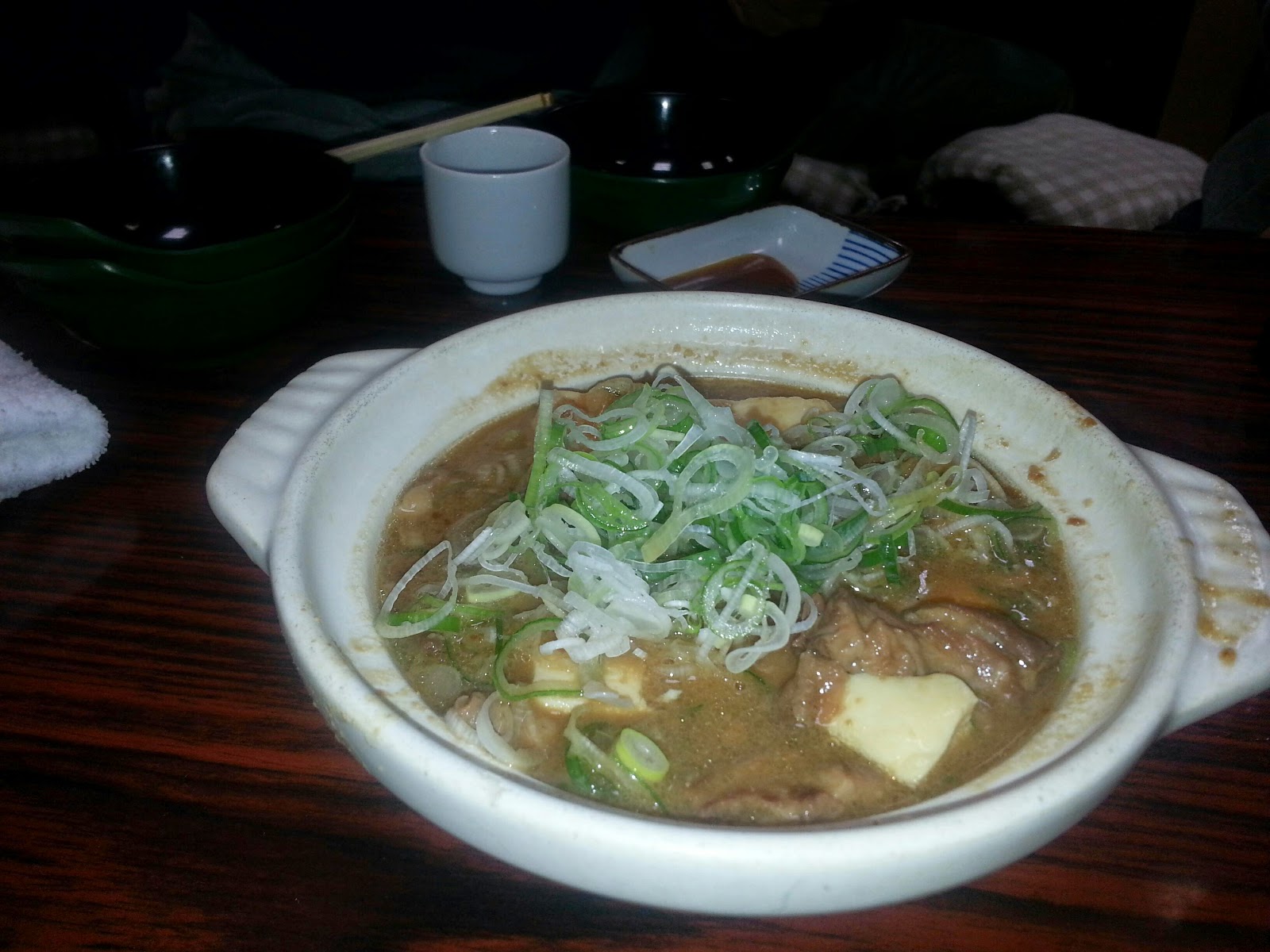
Motsuni-pork gut with tofu-a food popular during the world war when people didn’t want any body part of animals to be wasted. 
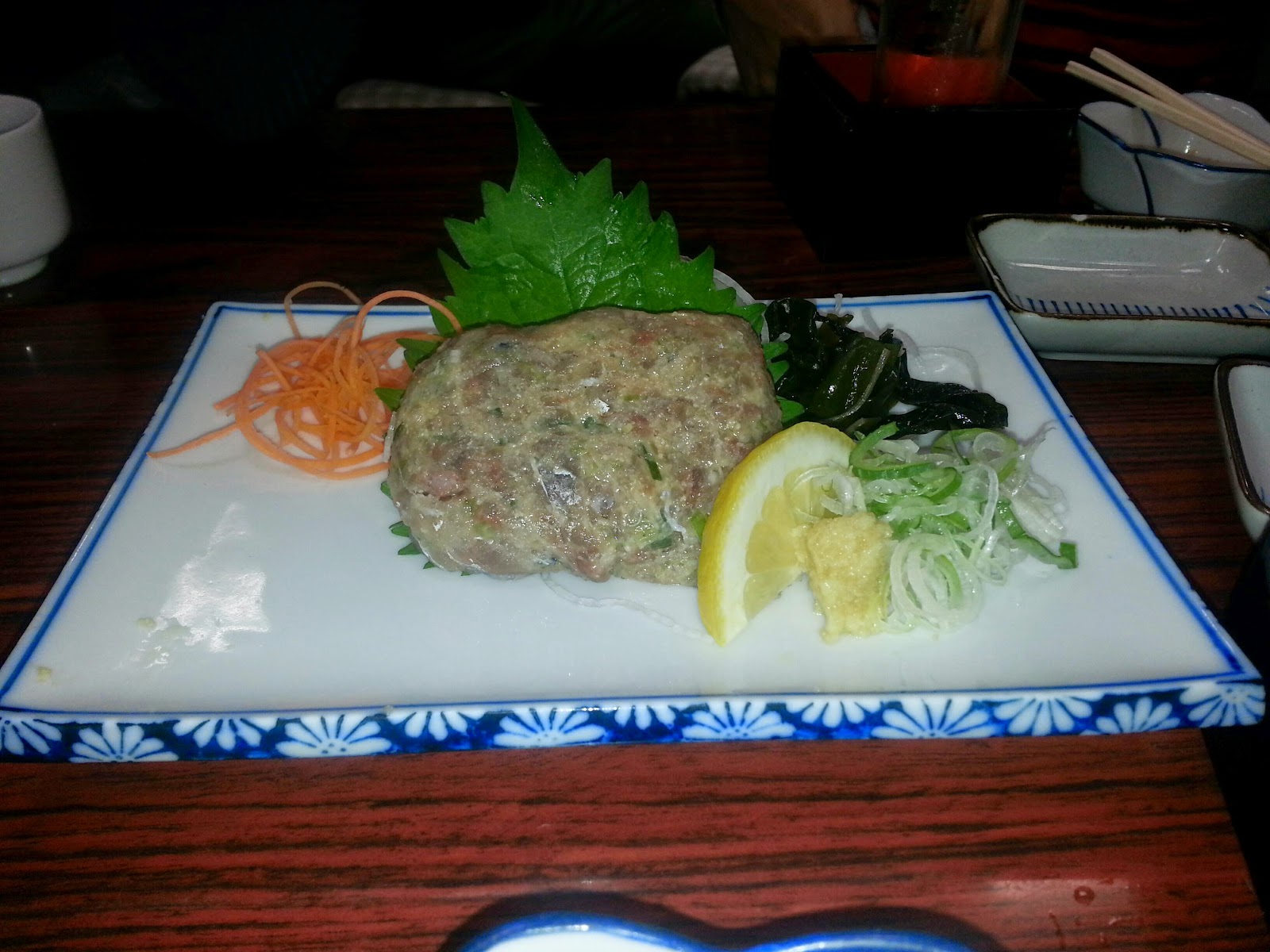
Namero-cold fish with vegetables. 

Day 7: Through the eyes of a tourist

A poster at the Ryogoku train station

I went to Edo-Tokyo museum and Asakusa on a field trip with my class.

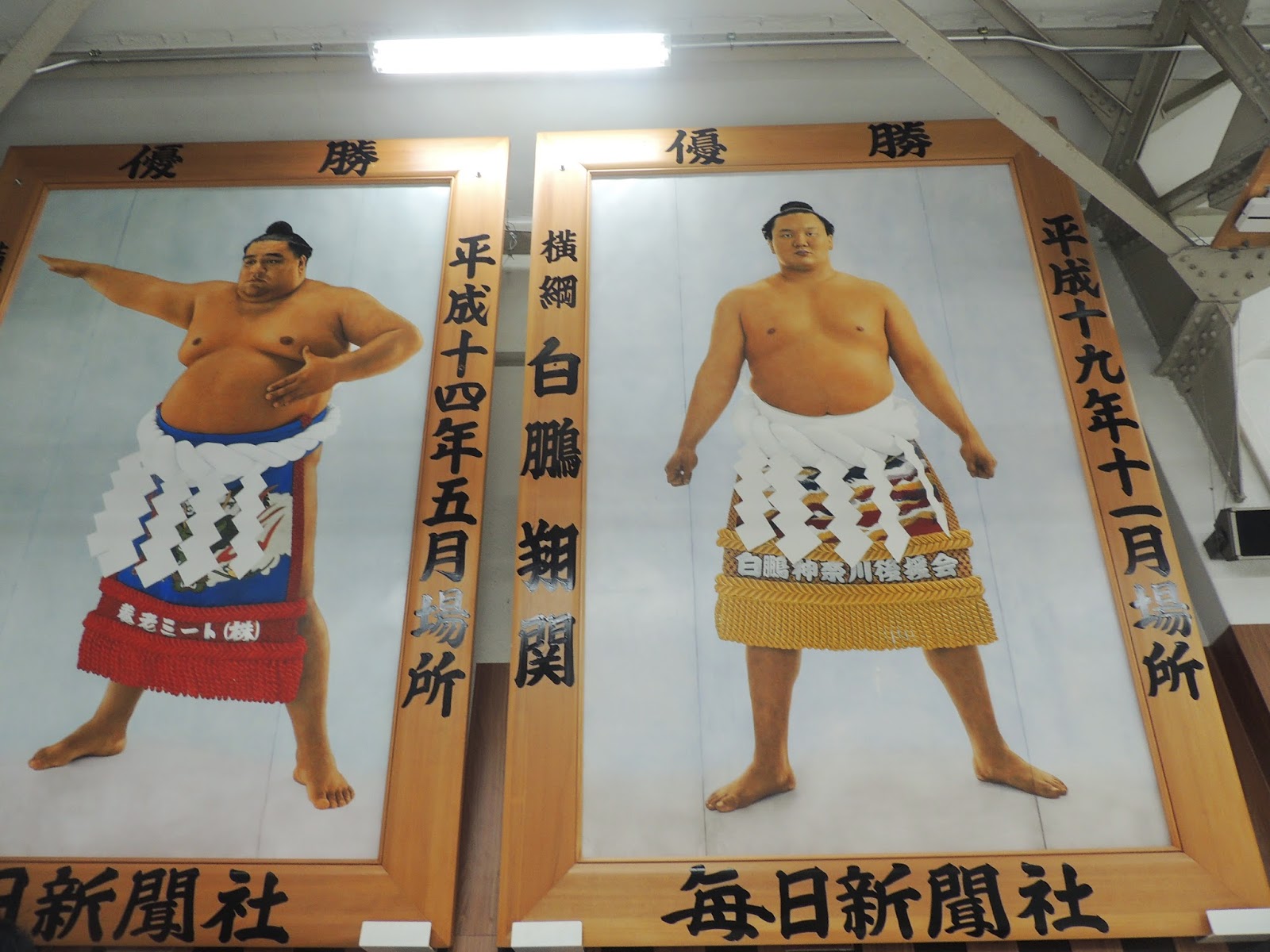
Edo-Tokyo museum traces the history of Tokyo to the Edo and Meiji period when Tokyo was Edo. The museum was located in an area called Ryogoku which has quite a bit of sumo wrestler activity (rings, restaurants, etc) and the building of the museum resembled a crouching sumo wrestler.

After learning about life in the Edo period and modernization during the time of the world war, we went to lunch to a place where sumo wrestlers often eat. The traditional food that sum wrestlers eat to bulk up is called ‘chanko-nabe’, a hot pot dish. But since we aren’t sumo wrestlers and don’t have the capacity to each 20,000 calories a day, we ate another type of meal, which included fried chicken, soup, rice and salad, all of which were delicious. The restaurant had a very traditional decor. The waiters were dressed traditionally and we sat cross legged on the floor in a tatami matted room. We ate sherbet for dessert. It was a lighter and more fruity version of ice cream.

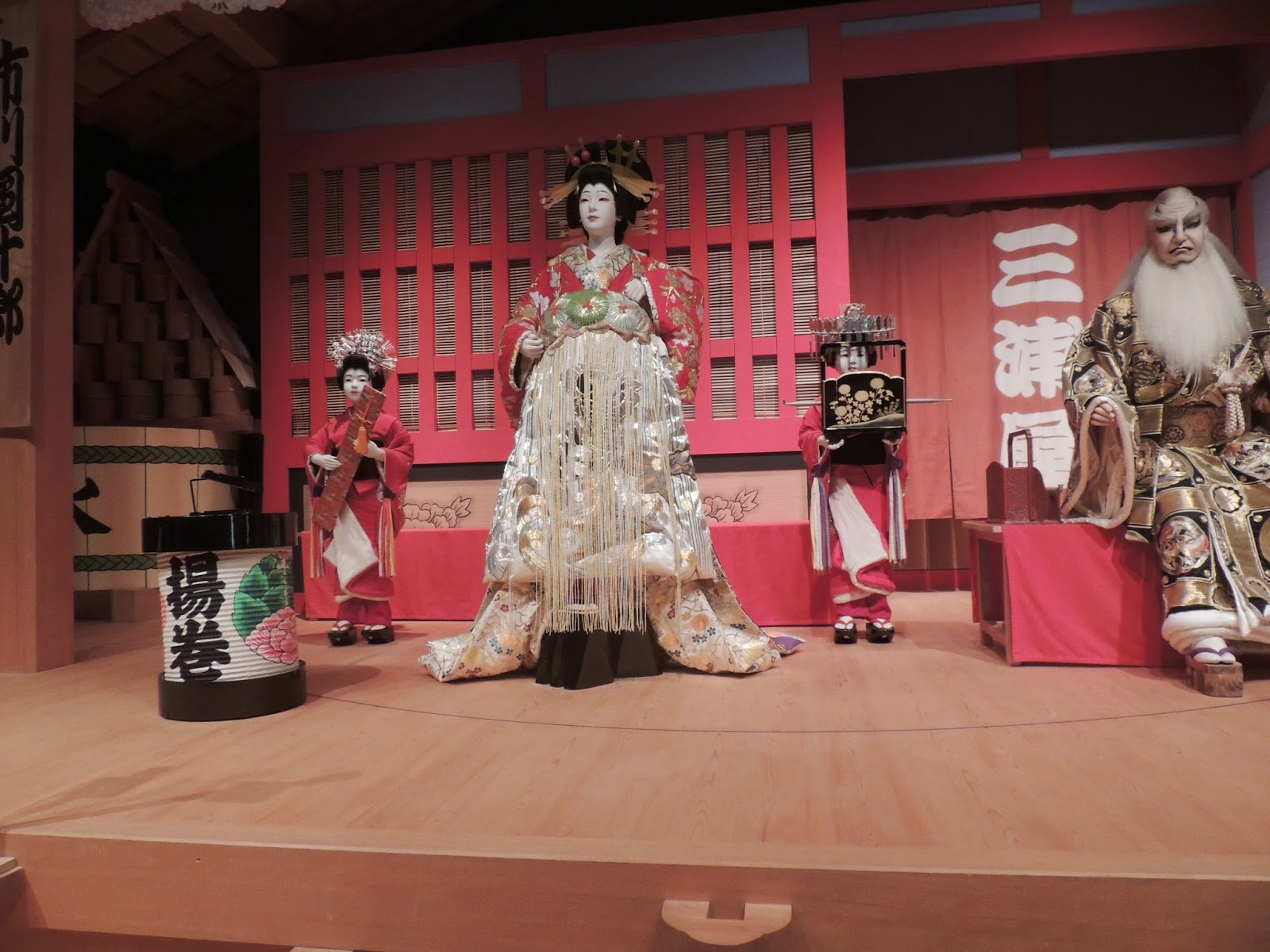
A display of Kabuki, a kind of Japanese theater at the Edo-Tokyo museum. If you look carefully, you can see a circular line on the stage. That is actually a moving staging of sorts which rotates when its time for the actors to end the scene. Kabuki was known for its innovative effects. 
A sumo wrestler lunch
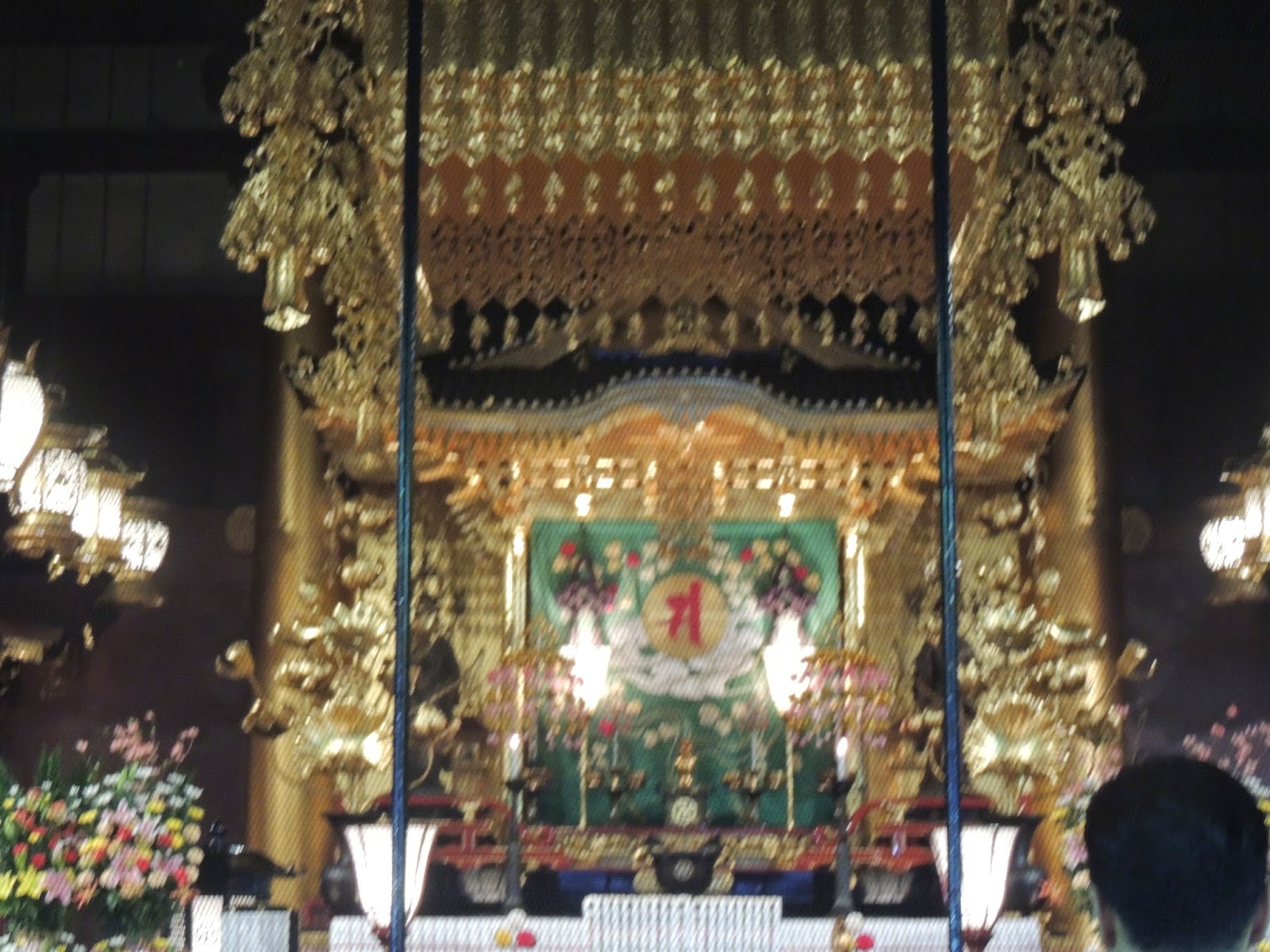
The Senso-ji Temple

 After lunch, we took the train to Asakusa which is famous for its Senso-ji temple. The temple was very beautiful with gold carvings and idols. Apart from the temple, there were little shops and restaurants on the side, and it was fun to wander around the area despite the rain. Asakusa had some very distinctive sweets. I tried a sweet with red bean paste inside a sort of bread. There were colorful ice creams available of some very exotic flavors, like yam, green tea and chestnut.

Both of these were fairly touristy places and I saw quite a few foreigners in the areas, which also meant that a fair number of people could speak English. Nevertheless, I tried speaking Japanese while asking for directions. 

I came home for dinner and ate a dinner of niratama and sashimi. Along with sashimi, I tasted a very strong flavored leaf called aojiso, which I could only take one bite of. Kaori-san introduced me to J-pop, short for Japanese pop music. It sounded very much like Hollywood pop and even though I couldn’t understand the words, I liked it. Apparently, it is quite normal for Japanese artists to make cover albums in which people sing songs written and originally sung by someone else (as long as they have the permission). 

The rain was a lot worse and I was exhausted by the end of the day, but I was very impressed to see that life didn’t stop for anyone and nobody complained about the rain. Infact, while walking to the train station in the morning, I saw a women in full office wear running to make it in time for the next train despite the rain.I guess the weather isn’t a good enough excuse to be late! I also saw a man dressed in a suit on a bicycle  holding up an umbrella with one hand. I stopped feeling sorry for myself after that. Resilience at its best. 

Day 6: Welcome to the Future

My day started with the beginning of Tsuyu, the rainy season of Japan. Unlike Singapore or Delhi rains which come and go at random, the rains in Tokyo are continuous and not too harsh. Its been raining all day today but the intensity of rain isn’t enough to keep people from going about doing their usual things. Of course the large number of umbrellas in the street slow people down, but the Japanese have learnt the most effective ways and means to avoid crashing into the other umbrellas. From lifting their umbrellas up to inclining in to the side, it comes naturally to them and they do it as they walk around on the wet streets.

After a class about Western influence on Japanese architecture, I wandered around the Shinjuku area of Tokyo. Shinjuku is one of the many “centers” of Tokyo. The Shinjuku train station is the busiest train station in the world with over 3.5 million daily commuters. Remembering my recent visit to Shibuya and its similarity to Times Square, I didn’t expect to see anything radically different. I was so wrong. First of all, it took me 20 minutes to find my way out of the Shinjuku station. I had expected it to be crowded, but not so big. There were different train lines converging at Shijuku, and restaurants and stores clustered near the platforms and ticketing stations. Once I was out of the train platforms, English signs nearly disappeared and I was left to depend on my intuition. When I finally walked out of the train station I found myself among a number of high rises, all of different shapes, sizes and colors. The roads were narrow as they are everywhere in Japan, but somehow space didn’t seem to be such a huge problem given the large entrance courtyards of skyscrapers. Pavements changed color frequently and with every turn I took, I felt like I was stepping into a different area altogether. As I walked around, I tried to look up to see how tall the skyscrapers were, but my umbrella would interrupt my view, and I could barely see the roofs without getting rainwater in my eyes. When I reached the area of the Tokyo Metropolitan Government, I just didn’t know how to feel. I had never seen any area as upscale or developed as this one. Not only were they buildings tall, but they were of the most unique shapes and were made of varying materials. At one point, I crossed a circular courtyard with a line of statues bordering it. I felt like I was in the future. The ginormous buildings and exceptional architecture felt like something the world I knew isn’t quite ready for. I later found out that the annual budget of the Tokyo Metropolitan government is more than the national budget of India, which is sad for India, but explains so much about Shinjuku. After walking a little further, I hit the entertainment area of Shunjuku, which included shops, restaurants, etc. But even this wasn’t comparable to anything I had seen before. It was unbelievably lively for a weekday evening. It went beyond just lanes and alleys into the main streets.

At around 6 p.m. I went back to the Shinjuku station, hoping to experience some of the rush hour crowd at the busiest train station in the world. Near the ticket counters, there were people walking in all four directions and somehow managing not to crash into each. Occasionally, people in a hurry would run across the platform. I dared not stop to take a picture, because if I did, someone from behind would crash into me. The platform, where people were waiting for the train to arrive was so packed that not everyone was able to fit into the first train that arrived. Many people had to wait for the next one. The number of people who came out of the train at Shinjuku station in order to transfer to one of its many lines was also so huge, that the train would nearly be empty in the few moments before commuters leaving from Shinjuku entered the train. When the doors shut, a girl’s backpack got partially stuck in the door due to lack of space inside the train. It was not so bad once I was inside the train, but I think I got lucky, considering that 6 pm is just the beginning of Tokyo’s rush hour.

This is the first time I’m seeing the better parts of a city after seeing the more depressed parts. After seeing the tightly fitted houses and stressed lifestyle of Tokyo, I hadn’t expected to see such a contrasting better half. I plan to go back again to take another look. I haven’t quite digested Shinjuku yet. I also intend to re-visit Shibuya. I may have been wrong about it.

Day 5: Geek Paradise

The commute from home to the university is definitely getting better. I didn’t get lost a single time and the commute didn’t feel as long and tiring either. I got to Waseda early today so that I could meet up with some friends and go to lunch to a proper place instead of eating another konbini lunch in the classroom. I ended up eating gyudon which was once again delicious. I was impressed to find an option of takeaway when I was choosing my food on the vending machine.

After an interesting class about fictional stories of young aspirants wanting to enter the Japanese entertainment industry , I headed to akihabara with my classmates, which is an area of Tokyo popular for its anime, manga, electronic stores and maid cafes. It is a geek paradise and was full of young teenagers and men who hung out in DVD shops and electronic stores. The buildings were painted with popular anime characters, none of whom I was familiar with. There were also a surprising number of sex shops in the area, one of which was a six storey building selling different kinds of sex accessories on each floor. Nonetheless the atmosphere was amazing and I had a great time walking around and spending some time inside one of the gaming arcades.

The most interesting part of today was a visit to a maid cafe. Maid cafes are places where waitresses are dressed up as maids and they put of dance shows for customers. It isn’t exactly what you’re thinking, although there sure were quite a few men in there. Maid cafes are more just built on the idea of recreating the feeling of coming home to great service and being taken care of (customer is king sort of thing). When I walked into the maid cafe, I was surprised at home bright and pink it was as opposed to the dark and dingy room I had imagined it would be. Waitresses spoke to us in a girly tone and said more than necessary when they took our order and delivered our drinks. The show was just one maid dancing to what sounded like a Japanese pop song.

I came home to a Japanese curry dinner, which is apparently a popular meal in Japanese households. I also tried ankoro mochi for dinner, which is basically mochi inside a red bean paste of sorts. It looked like chocolate, but tasted nothing like it.

With respect to moving around and living in Tokyo, things are definitely getting easier and more familiar. But with each new piece of information, I realize how much more there is to learn about this culture. I won’t say I love Japan or I hate it. I just don’t know it yet.