Day 42: Weeding the Rice Paddy and an Onsen Experience

Today we went to the rice paddy. It was wet and muddy. There were frogs everywhere, tiny ones though. My legs were muddy upto my knees (we don’t wear boots or any kinds of shoes in the rice paddy). Celso and I were given machines which we pushed along the rows of rice to pull out the weeds. It was difficult at first to walk in the mud and quite tiring to push the machine. But it got better. Sayaka-san told us that the key is to walk slowly. The weeds wouldn’t come out if we simply pushed the machine forward, so we’d have to push it forward and then yank it back to uproot the weed properly. Our legs got some bug bites and my feet got a bit torn from the stones in the mud, but I didn’t notice it until afterwards. Sayaka-san told us that the rice should probably last her all year and amounts to about 250 kgs in weight. She said that the rice is sowed in May and harvested around September. She holds a ceremony every year in which she invites neighbors and friends to sow the rice paddy with her. Harvesting is usually done with a machine. The rice tastes really sweet and fresh when eaten in September, not just in the countryside. 
Weeding in the rice paddy

Washing my muddy feet in a narrow canal that runs besides the rice paddy
After lunch I was reading and fell asleep in a rocking chair. There wasn’t much work in the afternoon and Celso told me some of his fascinating travel stories. 
In the evening, we went to an onsen (Japanese hot spring). This was my first onsen experience, which is shameful considering that they’re sprinkled all over Japan and I’ve been here for over a month. The onsen wasn’t dramatically different from what I expected. It is similar to a public or communal bath in which you first wash yourself and then get inside the large hot baths. The water, however was different and it was interesting to learn that different onsens have different kinds of spring water-some contain iron, and other minerals as well. People spend quite some time (hours) in the onsen but because the water is so hot they can’t spend too much time continuously inside the water. So they get out, take a cold shower or just sit around, and then come back to the hot bath. There was also a spa in a small room right next to the hot baths. Sayaka-san told me that Japanese people take baths everyday (as opposed to other countries where people take quick showers), which means that they must spend considerable amount of time everyday in their bath tub. Onsens are particularly popular among old people. The onsen was pretty cheap. It cost 300 yen per person (~$3). So I guess it isn’t too hard for people to go there on a regular basis. 

Apparently it is bad to eat right after a hot bath (something to do with blood circulation). So after waiting for  half an hour (which we spent on grocery shopping), we went for ramen and ice cream. I got an ice cream sandwich from a convenience store. It tasted really good. It was cookies and cream with azuki inside (red bean).  
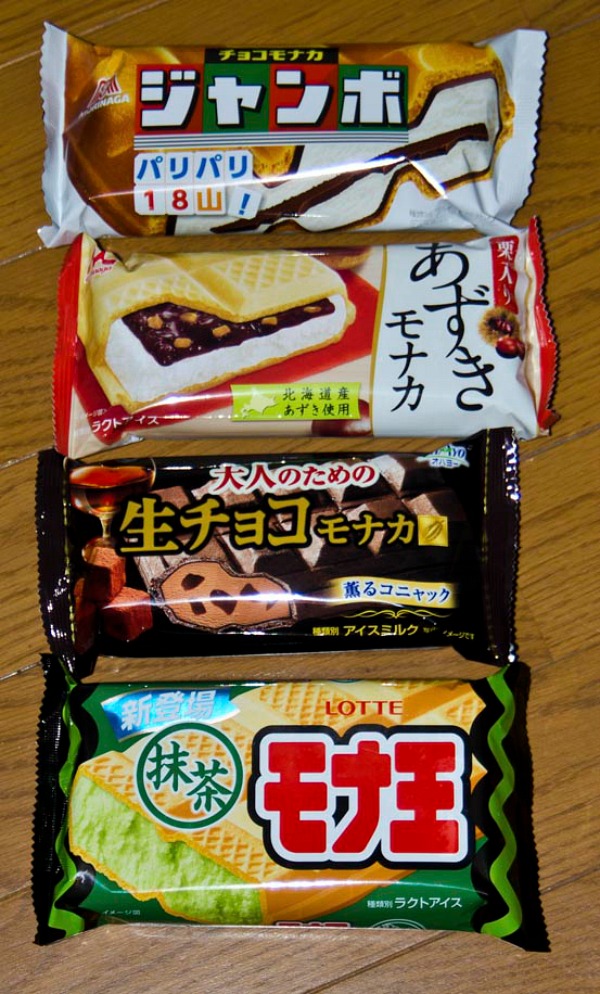
Ice cream sandwiches found at convenience stores in Japan. The one I ate was second from the top.
Source: 
www.foodbeast.com 

Day 41: A Rainy Day and Gyoza Dumplings

It was raining today. So we didn’t go to the field today. 
Instead, I spent the morning in the house cleaning and doing other household chores. Cleaning the glass window sills was one of my tasks and it was a surprisingly tedious one. 
After lunch, I walked down to the bus stop to pick up Celso, the other wwoofer. I didn’t recognize the bus stop so I ended up walking much longer than I had to. The bus stop was literally just a stand with a list of bus timings on it. Celso is Portugal and is currently on an around the world trip. He has the funniest stories. 
In the afternoon, I helped dry the dishes and put them back in place, after which we all went grocery shopping. We biked 5 km to the local market. A lot of the ride was uphill and quite tiring. But the view was beautiful and biking is always fun. At the supermarket, we discovered that fruits were quite expensive, which is surprising considering that this is the countryside. 
Sayaka-san treated us to ice cream at the konbini! I chose a sort of green tea ice cream with red bean and mochi on top. 
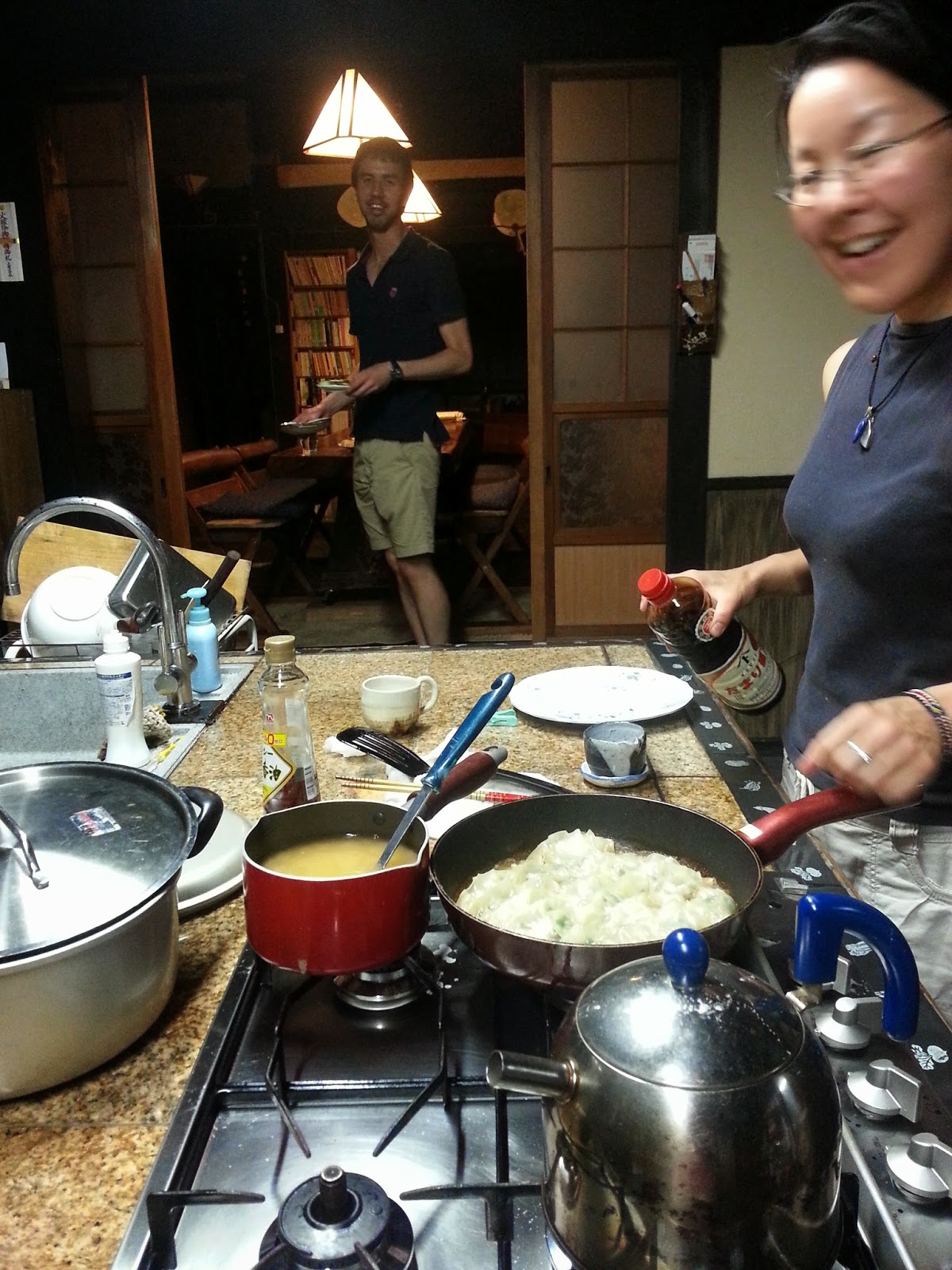
In the evening, we made gyoza dumplings together. That was quite fun. Sayaka-san also taught me how to wash rice. I learnt that sushi rice is a bit different from regular rice, because sushi rice has vinegar in it to make it stickier. I also learnt that Japanese authorities in Paris have actually regulated sushi restaurants and certify the good ones because of the large number of bad quality sushi restaurants in France. 
Cooking dinner: Sayaka-san, my host on the left and Celso, my co-wwoofer in the background

Our beautiful and delicious final product: Gyoza dumplings! 

Day 40: Bugs, more weeding and cleaning

I left a part of my window open last night which resulted in what seemed like hundreds of bugs dancing under the light of my room. I didn’t want to sleep with them, so I carried my comforter into the main house and slept in one of the rooms there. 
I felt much more at ease today. For breakfast, I ate the delicious thick Japanese bread that I’ve been conveniently ignoring for milk and cereal over the past five weeks. I took the recyclable plastics out before I started working in the field. 
To my surprise, I’d gotten better at weeding already and was able to pull out weed more efficiently and quickly. One big achievement was that I was able to use the big spade. I learnt that one can identify a plant by its leaves and I learnt how to identify the potato. The leaves of all these different plants still look the same to me though. It was still tiring and I felt quite hungry after two hours in the field.
We ate spaghetti for lunch today, with lots of home grown vegetables. I ended up sleeping after lunch again. 
After lunch, my task was to dry laundry and vacuum the house. I felt exhausted and sleepy and was really slow at most of it. My body hurt, especially my legs. Nevertheless I got through the vacuuming, and later the mopping. The bucket here used for mopping is really interesting (it looks something like this). It has a pedal which you press down. Two bars inside the bucket come close together as a result. The function of these bars is to squeeze extra water out of the mop. Sayaka-san told me how to mop the right way. She mentioned that I need to apply a fair bit of pressure. She said the same when I was washing dishes later at night. While brushing my teeth, I found myself applying for pressure to my teeth. 
I unfortunately can’t tell the difference between the city air and the “fresh country air” as many people say, although its a little bit cooler here. Its certainly quieter and greener. I’m learning to tolerate bugs better. Today, I accidentally touched a dead frog stuck to one of the mops. I was freaked out by the slippery texture of the frog’s skin, but I recovered as Sayaka-san buried the frog’s body in the soil. 

Day 39: Learning basic farm tasks

I started the day at 7: 30 a.m. After a breakfast of cereal, goat milk (!!) and a banana smoothie, my first task was to take out the burnable trash. There are separate days on which the burnable trash and recyclable plastics are collected. All the residents of the area leave their trash in a little enclosure which is just about 100 meters away from my host’s house. I was also asked to put up the sign board for my host’s café by the street, which she opens on some days.
Next, it was time to go into the field for some farming activity. Sayaka-san told me to wear rubber boots, full pants and a full sleeve shirt. We started at 8:30 and went on until around noon.I was first asked to pick some plums that had fallen on the ground so that Sayaka-san could make plum jam later. They were all half eaten and when I asked why that was, Sayaka san told me that birds had eaten them. Later, I watched her make jam and it was surprisingly less dense than the kind I buy in the market. Apparently, there is a chemical called pectin that is used to make jam thicker. Sayaka-san uses no preservatives while making jam. She only uses sugar. 
My second task at the farm was to put composting material in this little black container (about 2 or 3 feet tall) which stood in the field. It was circular and black. I put the composting material (banana peels, seeds, etc.) in the container and was told to cover it with some soil. I had to use a digger for that. I’d always seen laborers using that and thought it was very heavy and tough to use. But it wasn’t actually too hard. 
My next task was weeding. Weeding was tough. First, I learnt how to identify the weeds. I was surprised to learn that the little green plants which I often admire as greenery are actually weed. There were all kinds of weed-small ones and large ones. The smaller ones were much easier. Some were so tough that I’d fall back trying to pull them. There was two tools that I could use. One was a small one with sharp steel lines curving downwards, to grab the weeds by the roots (see picture below). These could be used around plants. Then there was the bigger tool, which was the size of a spade. It had to be slammed on the soil sideways and then pulled back. It was hard. I ended up using the smaller one most of the time. Weeds have to be removed so that they don’t take up the nutrients from the soil. They grow all the time in every season and are what keeps farmers the busiest. 

The smaller tool used for weeding

After some weeding, I plucked purple-reddish herbs growing in the field called shiso. That was much easier. I had to pick the big leaves so that Sayaka-san could make shiso juice later. All this while I had to be careful to not hurt my back by bending too much. I was told that it’s better to sit on your heels while doing weeding or plucking as opposed to bending your back down in standing position. My feet started to hurt after some time, since I wasn’t used to sitting that way for long periods of time. 
After I finished plucking the shiso leaves, I had to do some more weeding and plucking beans. I was asked to remove some nets from the field which had been used to separate some plants earlier. My gloves, clothes and boots were all soiled by the time I was done. 
We finished farming around noon and took showers. We ate udon for lunch and then rested for two hours. I was pretty tired by now and fell asleep. 
Sayaka-san normally spends half a day in the field and the other half in the house doing maintenance tasks or household chores. So after lunch, I had mostly lighter work. Sayaka-san asked me to wash the boots which were very muddy. It was unexpectedly tiring, partly because I was still tired from farming. After I was done washing about ten pairs of boots from all the mud of the field, I was asked to help out with the kitchen. I stirred the plum jam mixture for a few minutes (which was basically rotating a handle that would push through the jam through the sieve and leave the seeds behind), and then I helped Sayaka-san dry dishes and put them back in place. It was around 5 p.m. by the time we finished.
I was exhausted and ready to retire. We ate dinner at 6. I noticed that Sayaka-san has more vegetarian food than meat. She says it’s because she has some many vegetables growing in the field that veggies are more accessible to her than meat for her. She doesn’t sell any of her veggies in the market and the farm produce is for self consumption (which includes consumption by her guests as well).  
Over dinner Sayaka-san told me that she started her guest house and farm three years ago and has hosted about a 100 WWOOFers since then. She said that WWOOFing is apparently popular among Europeans and Americans. In Japan, there are quite a few Taiwanese WWOOFers as well. Most WWOOFers are travelers in their late 20s or early 30s. I will be joined by another WWOOFer later this week and the guest house will have some overnighters next weekend. For now, the two of us are by ourselves. 
All this while, I’ve been sitting on the deck of the house and I’m watching the clouds change color as the sun sets. It’s beautiful. I can’t actually see the sun, but the clouds are fire red now. They were orange a few minutes ago.

Today was pretty tiring, and I think it will take me a few days to get used to this lifestyle and work. I don’t know what the future or outcome of this experience will be, but one thing I’ve learnt from my first day of farming is the literal meaning of getting your hands dirty. 

Day 38 continued: Organic Farming in the Kyoto countryside

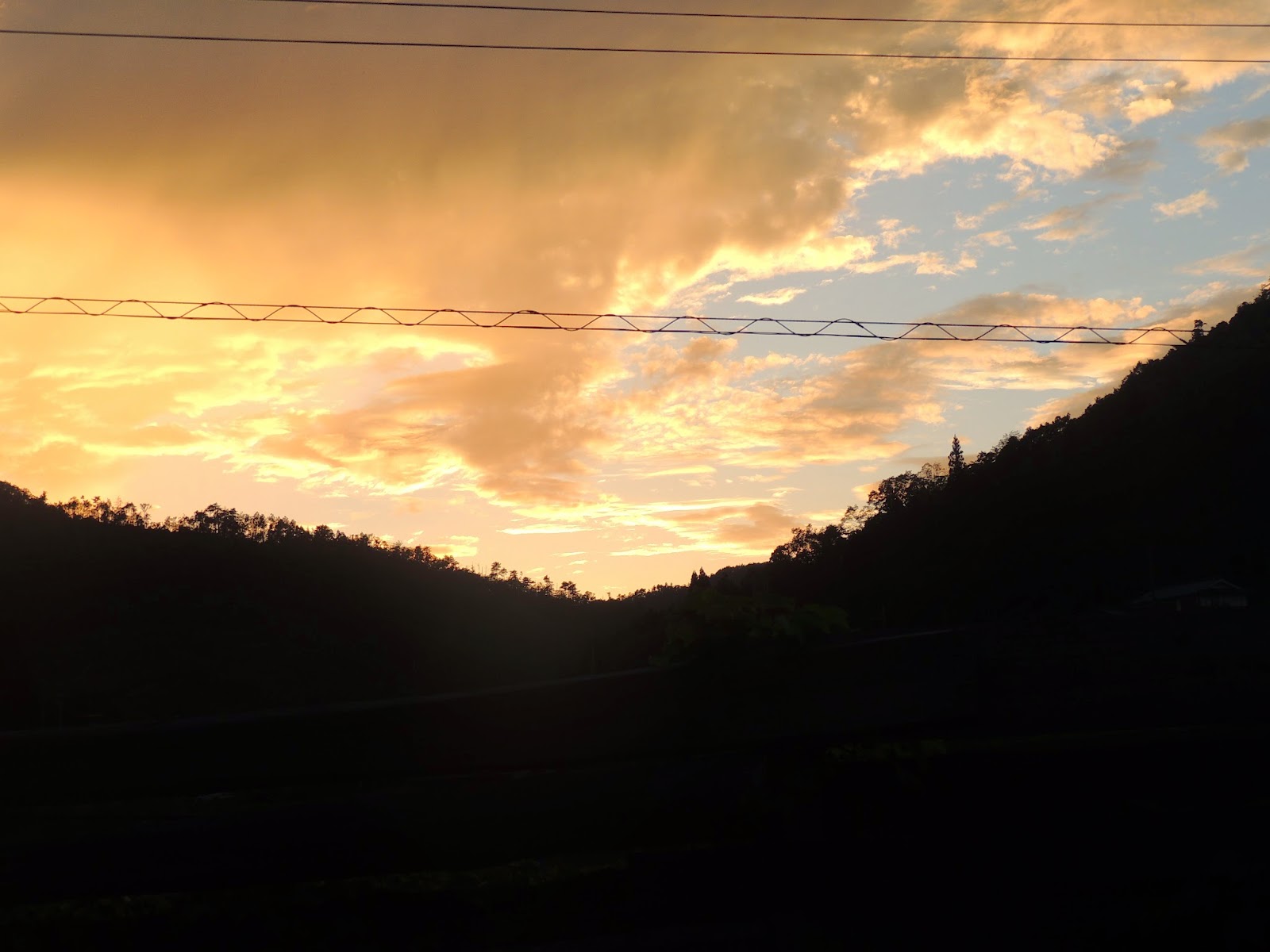
For the next two weeks or so, I will be organic farming at a small town about 2 hours from Kyoto. I found the farm through an organization called WWOOF (World Wide Organization of Organic Farmers) which operates in many different countries including Japan. The concept is that farmers can host travelers or volunteers who agree to help out at their farm for 4-6 hours everyday in return for food and accomodation. The volunteers are called WWOOFers. WWOOFing during can range from one week to several months. I decided to do WWOOFing partly because it gives me an opportunity to experience the Japanese countryside, partly because it saves on travel costs, and partly because its something I’ve never done before and is bound to push me outside my comfort zone. Japan seemed to be a great place to do WWOOFing for the first time, considering how safe it is and also how hospitable people are here. The organic farm I chose is in a town called Ayabe (population~15000 people). It is near a city called Fukuchiyama and is equidistant from Osaka and Kyoto (but more inland unlike Kyoto and Osaka). The farm is pretty far away from civilization. I don’t see any convenience stores or anything nearby. My host picked me up from the train station and it took 25 minutes on the road from the train station to get here. There’s a bus which runs from the train station to my WWOOFing location, but it only runs 5 times a day, and doesn’t run on Sundays. At first, the town looked fairly populated and developed, but then we drove into lush greenery and the main town was far behind. This place is close to the river as well as the mountains. It’s like those pictures that kids draw of the sun between the mountains and a river flowing in the foreground. Infact, I saw the setting sun here and it was beautiful. The sky was flaming red. I’ve never seen such a beautiful sunset before. 
A view of the sunset from my host’s house


My beautiful room for the next two weeks
Sayaka-san, my host runs a guest house called Furumaya and has her own organic farm on the side. Having studied in the US, she speaks fluent English. She was also a round the world traveler at one point and still continues to travel (especially to Africa) as a volunteer for Doctors without Borders. She loves to cook and lives on her own, with frequent visits from her parents. Sayaka-san welcomes foreigners who are interested in seeing the Japanese countryside. There aren’t many English speaking people in the countryside, so she stands out that way and is one of the few people here who is able to communicate with foreigners. 
I am the only WWOOFer here for the next few days and I have my own room, which is besides the main house. It’s a square shaped tatami room with the most amazing view. There are some bugs and insects here, but they seem quite harmless.

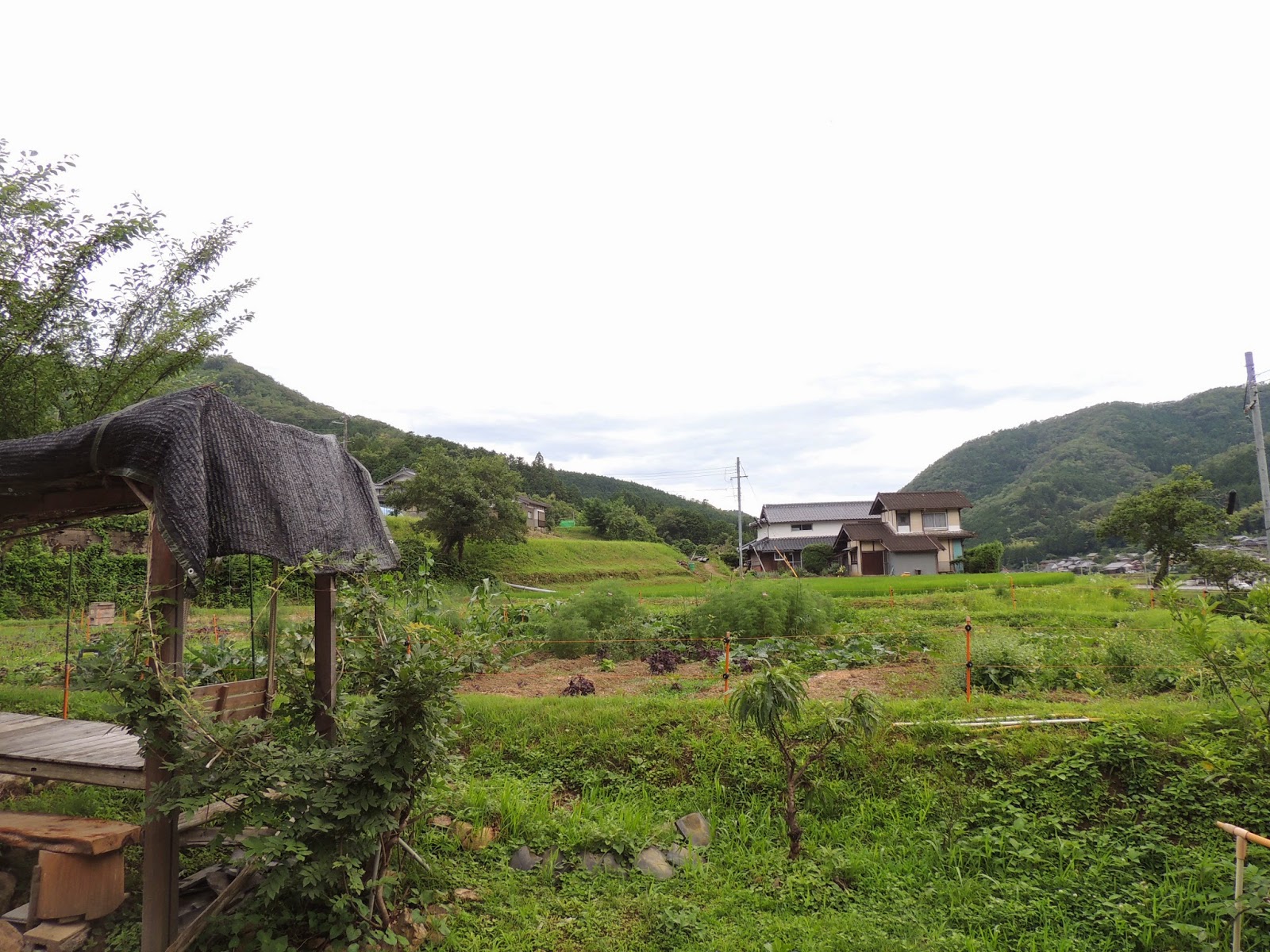
Part of the farm where I’ll be working. The one in the picture is a vegetable garden. 

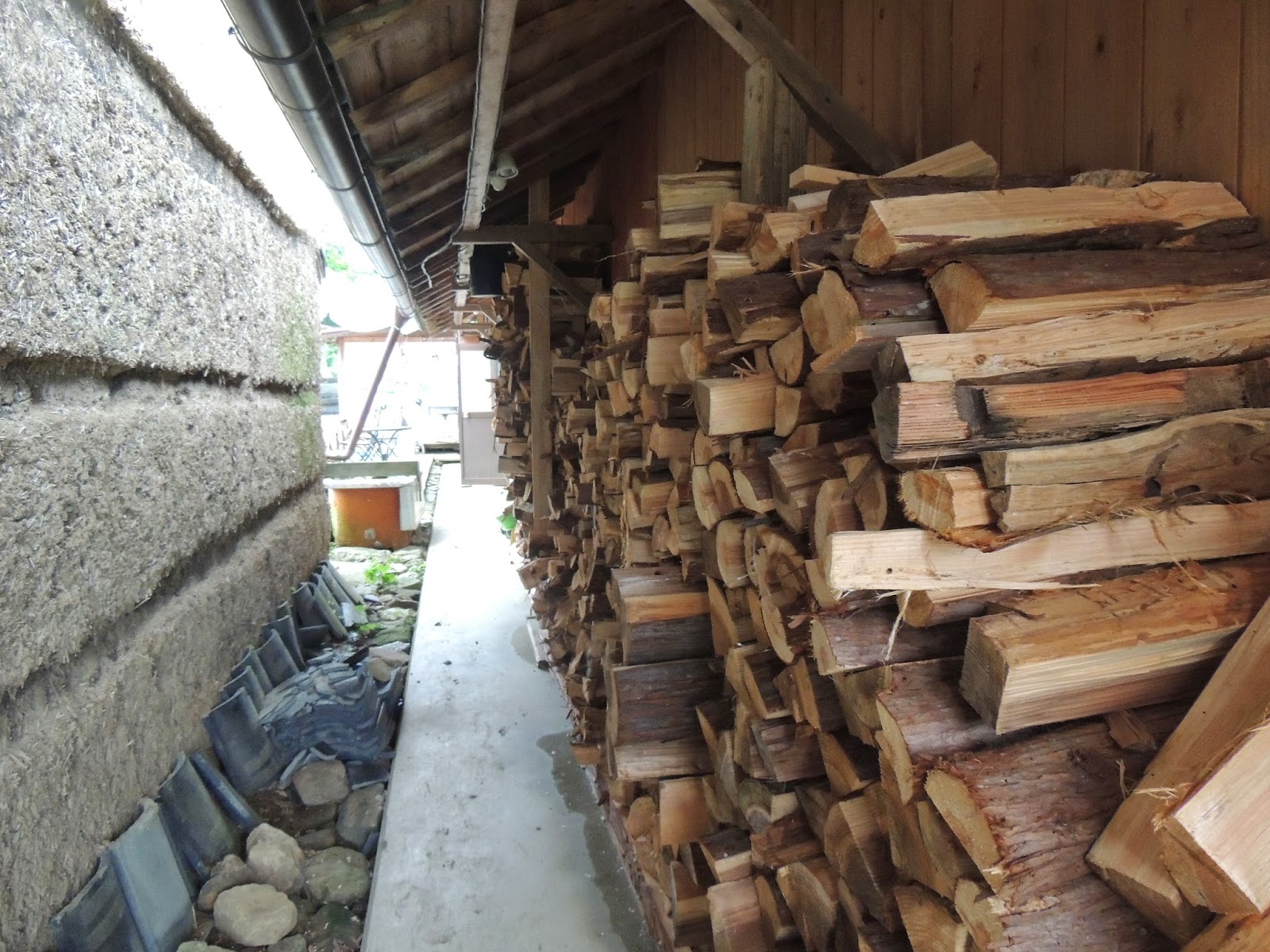
Wood used as firewood in the winter and for carpentry

My tasks involve things like laundry, washing dishes, folding towels, etc. as well as things on the farm, which I’ll find out about tomorrow. As of now, it doesn’t seem too difficult, but its certainly physically taxing.I have only done tasks inside the house so far, but even they have involved a fair bit of moving around, certainly more than I’m used to in Singapore. 
Sayaka-san is really friendly and said that she chose to start hosting WWOOFers so that she could spend time with backpackers and also introduce some foreigners in the Japanese countryside, which is rare as of now.