Procrastination is Good

I’m procrastinating. I convince myself that I haven’t blogged for a while and I must immediately do so. I  remember not thinking about my blog for weeks at a go. But when loaded with presentations, projects and the headache of packing, my blog seems more important than ever.

I think of the books I need to read, and the Japanese language classes I need to take in preparation of my study abroad in Tokyo. I know that in 24 hours, when I’m officially done with the projects and presentations, I will forget the books and classes, because I’ll be walking around the dorms looking for friends to talk to. I know that the Big Bang Theory and Mindy Project will take precedence over everything else, even if I have to start repeating old episodes at one point. All the education talks and courses that I’ve listed down for the three weeks at home will be conveniently forgotten when I reach home, and I will instead stalk all my facebook friends to see what they’ve been upto all year.

The long hours in front of the screen will give me a headache. The sitting will deprive me of my appetite. The laziness will make me drowsy. The lost hours will make me guilty.

That sounds pretty bad right? Well, it isn’t. When you fight against procrastination and win, you sometimes wish you could go back to procrastinating once in a while, to letting your mind wander and not doing anything particularly productive. But your brain is fine tuned to always do something that stimulates it, and something that makes your conscience feel good about time well spent. There’s always something better and more productive to do, but at one point, you have to stop and let your brain do nothing for once.

Just another 24 hours before I can close those nudging powerpoint and word documents on my computer and procrastinate other less important things. But right now, I have to go. The powerpoint is calling me.

Experiential Learning at College Dorms

I am not going to tell you that living in a college dorm teaches you to resolve conflicts with your roommate and neighbors. I am not going to say that you learn to be more independent and take care of yourself. I am not going to say that you learn to swallow bad food. You already know that.

Atleast now you do.

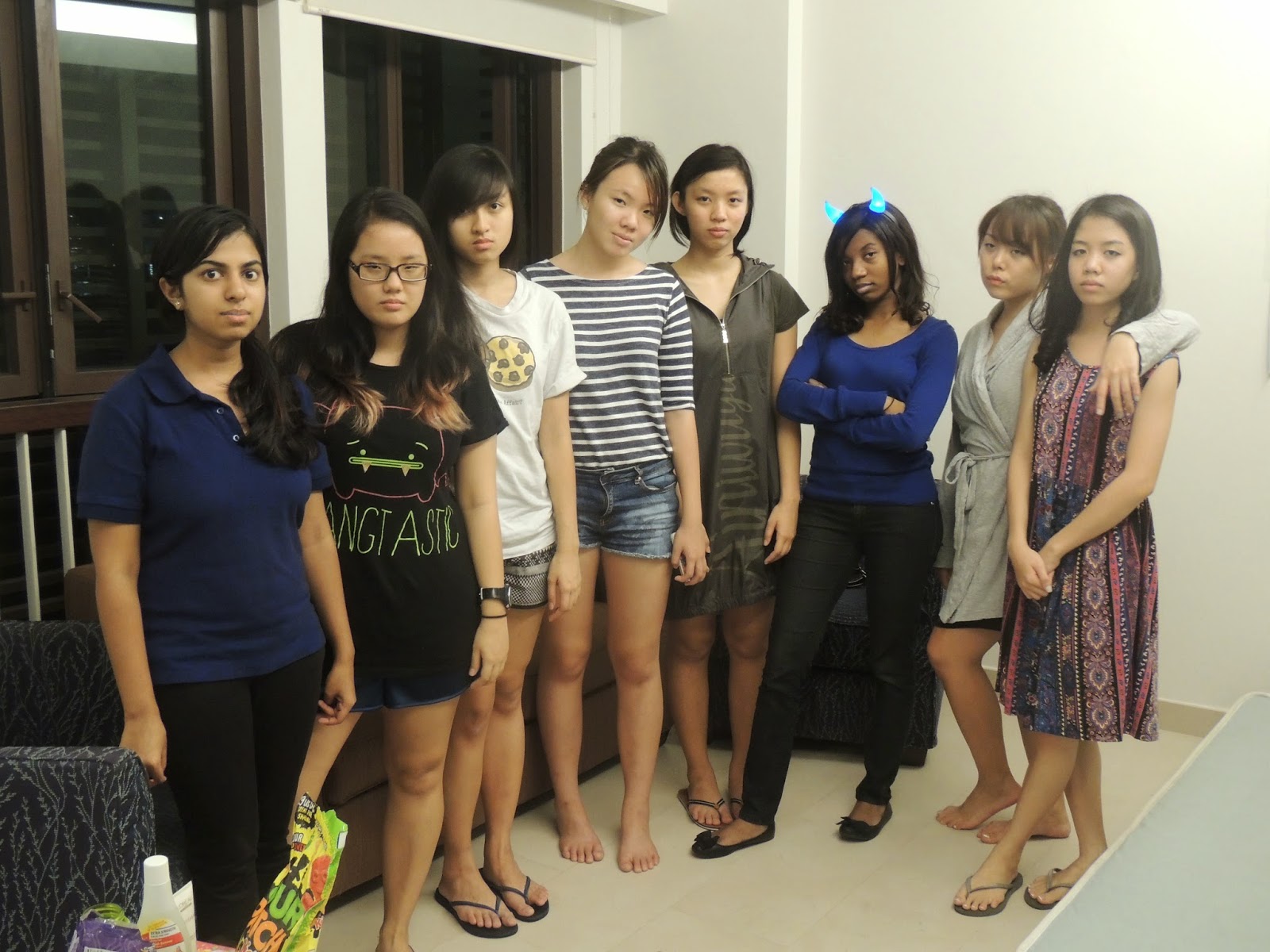
My suite mates and I trying to be serious. It was hard. 

What I am going to tell you is that college dorms teach you to talk no matter what you’re doing. You’re surrounded by people your age who you didn’t know until you the age of 18. There is so much about their life that you want to know about. You want to hear all their travel stories and what they’re learning in their art history class. They’re all amazing people and you want to know all of them. Of course that’s difficult, but you try nevertheless. So you’re constantly talking-when you’re brushing your teeth, taking a shower, cooking, working on your final paper, eating in the common dining hall or taking printouts in the library.

Outside the kitchen on a weekday night. A passing hello or
a philosophical discussion on Plato? 

They  teach you to ignore that facebook post about free food in the kitchen or board game night in the common lounge. There are too many things to do, including the essay due tomorrow, and you have to make choices. You’re going to feel FOMO (fear of missing out) at first and think about the lost opportunities. After a while you’re going to shrug and say “oh well, next time”. Because there is going to be a next time. This is college, not the real world. You have four years and there are going to be many more zumba classes and movie screenings to go to.

An anonymous gift found outside my room door. Perfect
timing, I was so hungry. 

They teach you to smile at people and say a cheery hello no matter how terrible you’re feeling on the inside. Although you really just want to walk past them and pretend you didn’t see them, you look at them in eye, smile and wave as if your life is absolutely fine. Of course, the cheery waves and beautiful smiles you get in return often make you feel better and you forget the reason you were so upset in the first place.

They teach you to not be such a control freak about your daily schedule. So you ended up spending an hour at the water filter talking to that girl who lives down the hallway. You may not be able to hit the gym today, or maybe you’ll have to compromise on your sleep tonight. But that’s okay. Not knowing how you’re going to end up spending your day is one of the best parts about college.

The student run cafe on a Sunday night. It’s nearly impossible
to spend less than an hour here. Believe me, I’ve tried!

They teach you to ignore people who push you to the edge. There are going to be those who make you want to switch classes or dorm rooms. You’ll probably realize that switching classes or dorm rooms is a tedious procedure and you don’t want to go through it. You end up bearing with that person for a year. After a while, they stop affecting you, because you stop caring. Who knows, you might even end up being friends with them.

College dorms are so much more than shelter to sleep and store your stuff. They’re experiential learning at its very best.

Hate turned Love

Think about your best friends. Done? Now think about what your first impression was of them.
If you are anything like me, chances are that it wasn’t love at first sight. I have rarely instantly liked the person who I end up being best friends with. Infact, I initially really disliked a lot of my current best friends and may have said some not so nice things about them. Most people who I hate at first sight are the ones who I end up becoming good friends with later.
Also, people who I love at first sight are those who I eventually end up really annoyed and irritated with. I find myself trying to recall why I liked them so much in the first place. Haven’t you had those moments when you look at your friend and wonder why on earth you’re friends with this ridiculously unbearable person.
Until recently, I was absolutely bewildered by this weird trend all my friendships seem to take. But then I realized that I’m perfectly normal and its actually expectations at play. When I hate someone, I expect absolutely nothing from them. They can ignore me and insult me and I wouldn’t care. When I love someone, I expect them to be ideal people whom I’ve dreamt up in my foolish head. The hated ones always turn out to have a better side to them which surprises me, and the loved ones have bad sides which shock me.
This new discovery influences much of my outlook of people and I end up being friends with those whose better side is only starting to show. I already know the ugly part of them. Now it is time to discover their beautiful side.
I guess its safe to say that I don’t believe in love at first sight. It has deceived me so many times. But hate at first sight? That’s a whole different story.

Dear Susan..

How are you? I hope Indonesia is all that you expected it to be.

In case you don’t remember me, I’m the young college student from Singapore you met in the Rainforest Bakery in Penang last month. The couch across looked cozy and you looked like a warm person. When I came up to your table, I had absolutely no intentions to steal you from your kindle. In fact, I had my own kindle in my bag. I had spent my last few days in Penang sight seeing with my friends, and I felt physically exhausted from walking around in the heat. I was not in the mood to converse, and had come to Rainforest Café looking for some quiet time, only to find opposite. And I’m so grateful for that. Talking to you that afternoon changed the course of my trip.

To be honest, I didn’t expect to hear a story too different from what I’d heard in the past few days from other travelers in the area. But when you told me such astounding stories from your work with victims of domestic violence back in Holland and your recent trip to Burma, I felt refreshed. For a few moments, I felt like I was living your life through your stories, and learning from your past.

Inspired by our conversation, I decided to spend my next three days in Penang in search of more conversation. I wandered around the streets of Georgetown’s Heritage city the next day by myself. Even though I had walked these streets before, I saw things I hadn’t noticed before, and I smiled at people more often. Sometimes I’d just wave at them, and sometimes I’d stop to talk to them. Every local and every tourist I met was very different from anyone I knew, and everyone had something new to say. As I learnt about Penang and Malaysia from the locals, I learnt about other parts of the world from other tourists in the area. I realized that although it isn’t possible for me to go every place I want to go, it is possible for me to hear from people who’ve been to these places.

So Susan, I thank you for teaching this young traveler that travelling is never really about seeing monuments and museums. Rather it’s about the people, who can take you miles away from where you are and show you so much more than your eyes can ever see.

Dear Malay Girl..

How was your day at the beach today? Did you meet anyone interesting?
I hope you haven’t been bothering your old mother too much with your child-like pranks. I could see that she was very upset about the fake snake you’d keep throwing at her in the ferry the other day. Sometimes, my younger brother and I troubled our mother like that too. I guess some things never get old, no matter how old you get. I was surprised to discover that you were 18 years old, not because that’s too old an age to play pranks, but just because you look so much older! I guess another thing that misleads me into believing you were older was that you were working at the food shacks. I meant to ask, do you like working? It must be nice to work with your family, and to also live with your parents, cousins, uncles and aunts in one building. But you seemed so excited at sunset the other day to be going home, that I wondered if you’d rather spend your day doing other things.
Oh and thank you for letting my friends and me ride with you and your family on your ferry. If it wasn’t for you guys, we might have had to spend the night with the monkeys at the beach! It gave us an excuse to get to know more about your life. And we got to see the fishing village near your home too, which was an amazing experience for us city people.  
Anyways, I just wanted to tell you what a fabulous and optimistic person you are, and that it was a real pleasure to meet you! You are one of those few people I’ve met who are happy with their lives, and if more people were like you, the world would be so much more content.  If I ever come to Penang, I’ll visit you at Monkey Beach. This time, maybe you could talk to me. If nothing else, I’d love to know your name.

The Unfortunate Demise of School

“I think there won’t be any school by 2028”.
I was at a startup conference in August, and we were all separated into groups as per our industry of interest. I was in the education group, and we were attempting to see the future.

Since you probably laughed at that last line, let me rephrase. We were attempting to do some scenario planning, which is basically an attempt to predict the future. We mapped out significant events that had occurred in the field of education for the past 15 years. Then looking at all these events, we started looking 15 years into the future to try to predict what it held for us. We talked about focal concerns-the education bubble, mismatch between skills provided by schools and skills required at the work place, equal access to education.
According to many of my group mates, the demise of school as we know it wasn’t too far away in the future. All our focal concerns for the future of education, all the problems being faced today about skill development, seemed to point to how dysfunctional our current concept of ‘school’ is.It certainly seemed like an idea not very sustainable for the future.
There are so many online sources of learning that the value of school as a source of knowledge will definitely reduce. So in some ways, the computer has already replaced the teacher.
More than that, we have a lot more knowledge than we did a 100 years ago. The speed at which we create knowledge increases every decade.There is so much to learn, that soon, it will be hard to pin down what exactly is the necessary knowledge required to be taught in school. After kids know how to read, write and add numbers, which way do you go? You could teach them science, math, the arts, business, or you could just try teaching them everything. The problem with teaching them everything is that there just isn’t an end to it.
An interesting perspective that someone brought up was “Fuel will run out and therefore getting to school will become impossible. Kids will have to be homeschooled”. Although it may seem too presumptuous, it’s not impossible.
Between expensive transport costs and reducing faith in the existing education systems, parents may just decide that school isn’t worth the 14 years of time and money. Given the kind of resources widely available through technology, parents may not need to give as much attention to their kids being homeschooled as they do now. And if the concept of homeschooling becomes more and more widespread, we may see communities beginning to get together and teach each other’s children according to each of theirs skills and expertise. It would be a mini and informal structure of school, governed highly by choice.
Eventually, I think school might come down to the basic elementary skills that are absolutely essential. After learning math, reading and writing, kids should be able to more openly explore, through games and online courses, subjects of their interest, and discover what their passion really is. Soft skills that are slowly getting recognized now, such as the ability to be a good communicator and leader, being a quick learner will be a part of the schooling experience. Extra curricular activities will be considered as important as academics, and parents won’t tell their kids to stop playing basketball and go do their homework.

I imagine that what we know as higher education today i.e. college, where we develop as human beings and try to achieve overall development and employable skills will come down to the level of school. Although we will be able to finish our formal education faster, learning will be a lifelong journey, since there will be more ways to learn than to just go to school or college, and all these ways will be affordable and less time consuming than our existing ones.
And considering how fast our world is changing, lifelong learning that continues after school and college will become a need. Knowledge will become obsolete so quickly that our jobs and livelihood will depend on a continuous learning process.

Although school as we know it may not exist in 2028, I envision our learning to be a lot more accelerated and effective than it is today. 

A Week of Experiential Learning at Yale-NUS

When you get a week without classes, and instead spend time researching with professors in your freshman year of college, you know you’ve been given a unique opportunity.
In case it wasn’t clear already, I was one of the lucky ones who got this wonderful chance!
All 150 freshman at Yale-NUS were given 12 research projects to choose from, spanning over diverse fields. I chose a project called ‘alternatives to fossil fuels’ and spent last week probing deeper into green energy with Professor Clarke and Professor Maniates, experts in the field of environmental science.
With the profs and 14 of my classmates, I got to visit a solar institute, a palm oil farm in Malaysia and an electric vehicle startup among other things. We learnt about the challenges in the technicalities of scaling solar energy, the possibility of palm oil as in alternate source of energy and the commercialization of the electric vehicle. All the field trips and discussions we had with the professors gave us new insights and different perspectives into the world of alternative energy.

At a palm oil refinery in Malaysia

An Electric Car at EV World, an electric vehicles company in Singapore
It was a bit incomprehensible at first, but I think that was part of the purpose-making us struggle and pushing us outside our comfort zone. Looking back, the challenge in trying to comprehend some of the technical aspects of my project was exciting. This week challenged my assumptions, and made me so much more aware of the complexities that I previously deemed simple.
Some of the other interesting week 7 projects were migrant nations, a project involving interaction with migrant workers in Singapore which made some fascinating discoveries about the plight of migrant workers, such as their disintegration with the local community and their socio-economic conditions. There was a trip to Banda Aceh in Indonesia to study the impacts of the 2004 Tsunami, which discovered that villagers whose homes were impacted by the tsunami thought of it as largely religious and spiritual and are averse to technology which might help them predict future tsunamis. A project on beauty researched beauty across cultures, and went about interviewing people on their dating and marriage preferences.

We had a symposium on the last day wherein all groups came together and exchanged their experiences and learnt a little bit about each other’s projects and epiphanies. It was amazing seeing everyone back together bubbling with new insights and exchanging stories about their weeks. It comes to show how being out there makes learning so much more exciting and conducive. 

College in all its Glory

On June 29th, 2013 I flew into Singapore, not knowing what to expect of college. I was going to Yale-NUS, a new liberal arts college in Asia, a collaboration between Yale and NUS.  All I knew was that it would be like something I had never experienced before. And that is exactly how it turned out to be. 

By July 9th 2013, I knew that Yale-NUS was a good place to be. It had an extremely diverse and talented peer group, the faculty was extremely approachable and involved in the student community, and the administration seemed to be much too efficient for their own good. And the best part was that this was their first class.  

The previous year, I had started college in my hometown, New Delhi. It had turned out to be following a system which I didn’t find myself getting much out of, which is when I had taken a leap of faith and dropped out. I wasn’t sure how much I’d get out of a liberal arts education either, but considering the attractive opportunities Yale-NUS was offering, I took a leap of faith again and clicked the accept button.

So here we were, 155 of us, the first students of one of the few liberal arts colleges in Asia. And everybody  fit. Two qualities that stood out among the student body were the ability to take risks and strong leadership skills. Most had a love for travelling and exploration. Everybody was very open minded and loved being challenged. The level of comfort and the similarity in wavelength which I would normally look for in friends increased exponentially, simply because every one of my classmates seemed like people who I could find that comfort level with. We all started finding people who we shared a profound level of connection with.

Our campus isn’t complete yet, which is why we moved into our temporary residence in NUS university town. Although at first I was a bit apprehensive about temporary housing, it turned out to be amazing. We all got single rooms, lots of common spaces and access to all of NUS facilities. Some of us thought of it as a lot more luxurious than our own homes! 

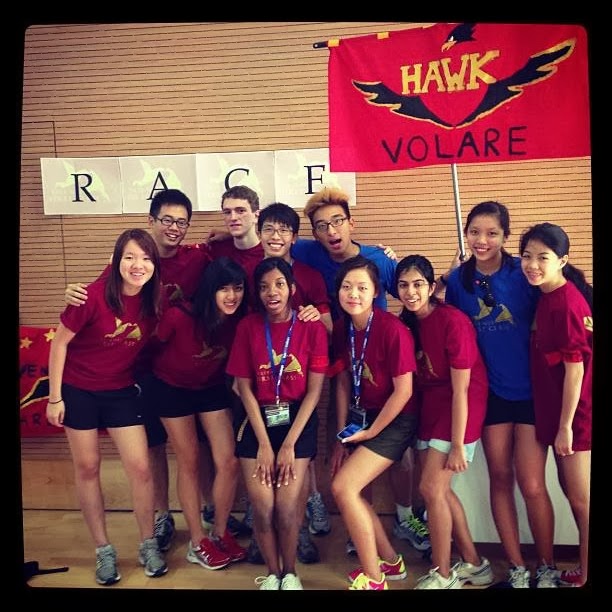
Our first week was called ‘Singaporientation’. It was basically an orientation week in which we got to know our classmates better and had an amazing race that involved going all over Singapore and discovering more about the little red dot. The residential colleges competed against each other in the amazing race.
My group during the Amazing Race! ‘Volare’  is the name of one of the three residential colleges at Yale-NUS 


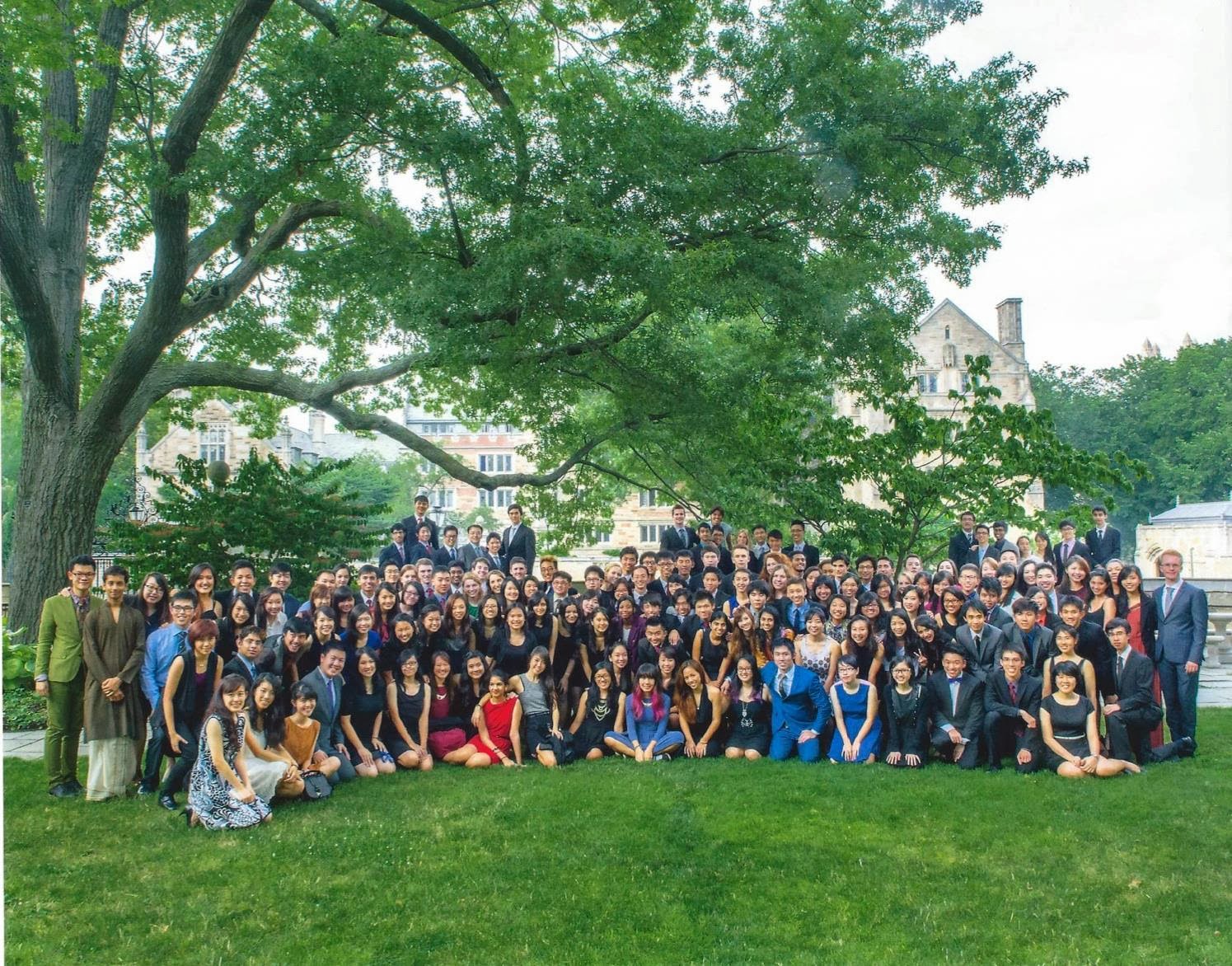
At the end of the first week, all of us headed towards New Haven together for a 3 week long summer immersion program at Yale in US. The idea was to get acquainted to the culture of residential colleges and learning as a community. We lived at Berkeley College, one of the 11 residential colleges of Yale. We spent one week each learning about sustainable environment, immigration and leadership. Our lectures were by several highly accomplished Yale professors, some of whom had received awards for their work and almost all of whom had written books on their research. Our weekends were usually packed with field trips which included a beach, shopping outlet, New York, Boston and a camping trip. The last day of the summer immersion was the cherry on the cake. We got to meet UN general secretary Ban Ki Moon, who addressed us at the UN headquarters in New York.
The first class of Yale-NUS in Yale’s Berkeley College during summer immersion at Yale

Apart from the amazing learning experience we had, we also got a chance to discover more about each other. By the time we returned to Singapore in August for our official first semester, we already knew each other reasonably well. We also had 12 dean’s fellows, who are recent college graduates from US and Singapore, who act as our upperclassmen and seniors, since we don’t have any. Having that comfort level with each other and guidance of the dean’s fellows played a massive role in a smooth sailing first semester, especially when it came to forming interest groups and seminar discussions.

Being the first class, we were in a situation where we had to create the extra-curricular life of the college. There were no student clubs/organizations before we began. Although we weren’t allowed to officially start forming clubs until the second semester, it’s hard to keep such talented people away from collaborating and forming clubs. So we started forming interest groups which didn’t have an official structure or outline, but involved people with similar interests coming together.

As for our academics, Yale-NUS has a very unique curriculum and class structure. Unlike most colleges, we have a common curriculum for the first two years with the same classes spanning a broad spectrum of arts and sciences for the entire student body.  After 2 years of common curriculum and some electives, we choose a major to pursue. We’re also required to work on a capstone project depending on the major we choose, which is uncommon for an undergraduate course.

In the first semester, we have four courses and one hour of lecture for each of them every week. All 150 of us attend the lecture, but afterwards break into groups of 16 people for 3 hour seminar discussions. These seminar discussions are facilitated by a faculty member, and are usually based on the lecture and readings that have been assigned to us for a week. So a typical Yale-NUS student’s day involves a one hour lecture in the morning and 2 seminar discussions later in the day, which last 90 minutes each. But here’s the best part. We have a 4 day work week. We get Wednesdays, Saturdays and Sundays off! The idea behind giving us so many days off and lesser lectures than seminar discussions is for us to be able to absorb and process the information that we are getting.

Initially, this system was new to a lot of us, especially those of us who had studied in an Asian education system (like me)! The seminar discussions were a radically different concept from anything we had done before. These seminars involved us talking more than the professor and challenging established views. There was a lot more freedom than before. Assignments and homework weren’t the same either. But we are now beginning to figure the system out and find ourselves more at ease with it.

As the semester progressed, I started spending more time outside college on weekends. Being new to Singapore makes it all the more exciting since there are so many places to explore. There’s always more food to try and another place to see. Being exposed to new things one after the other is amazing. Moreover, the diversity in the Yale-NUS student body always ensures that the people you are going out with are from more than one continent. Going out becomes a whole new learning experience by itself, and is suddenly more than just socializing or leisure. 
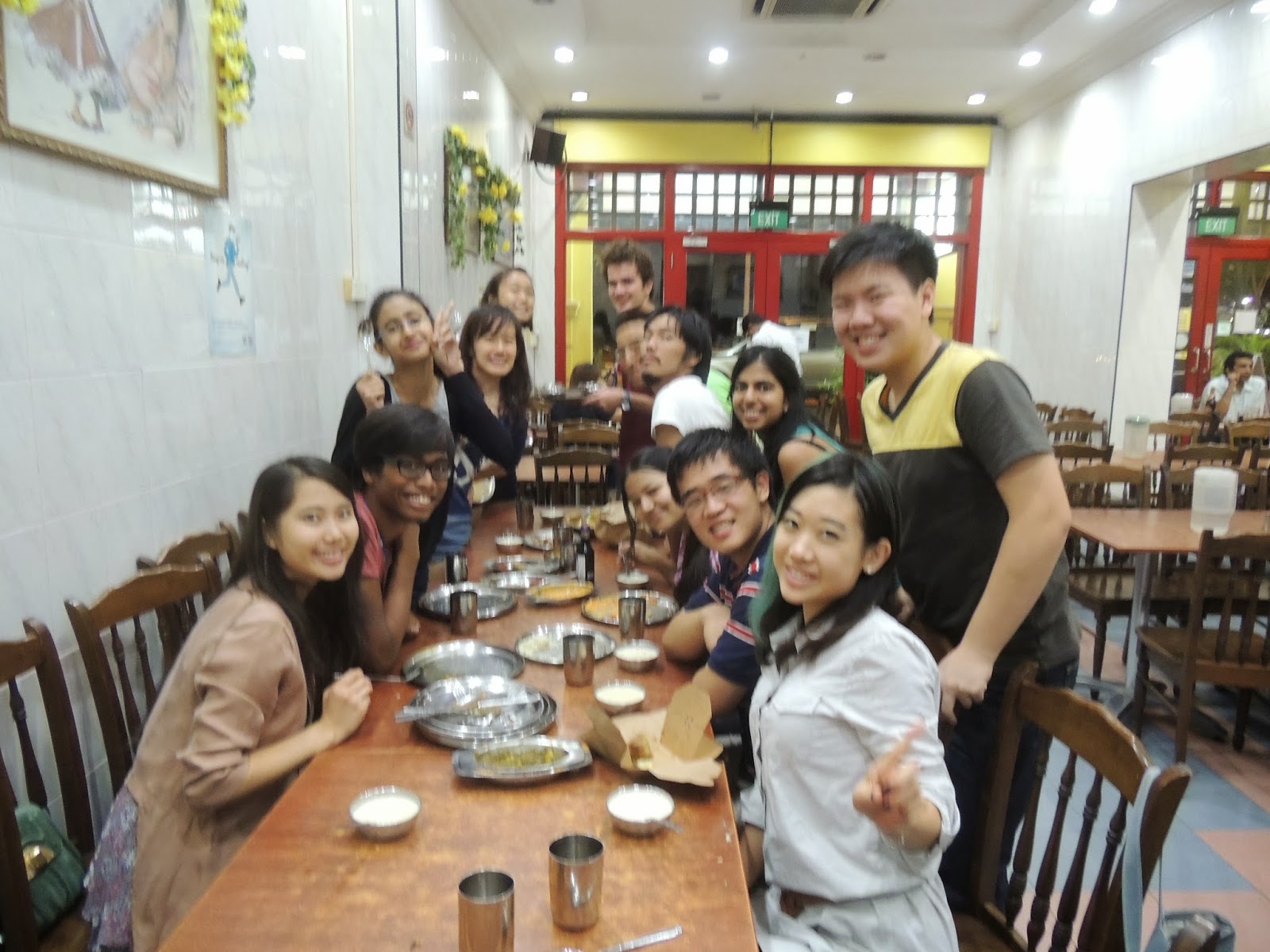
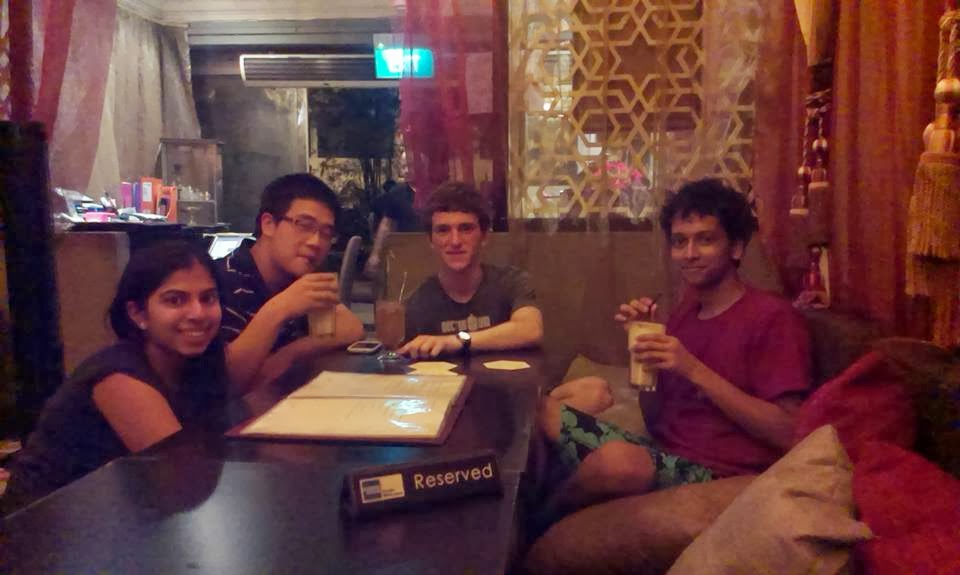
Spandana’s birthday at Little India

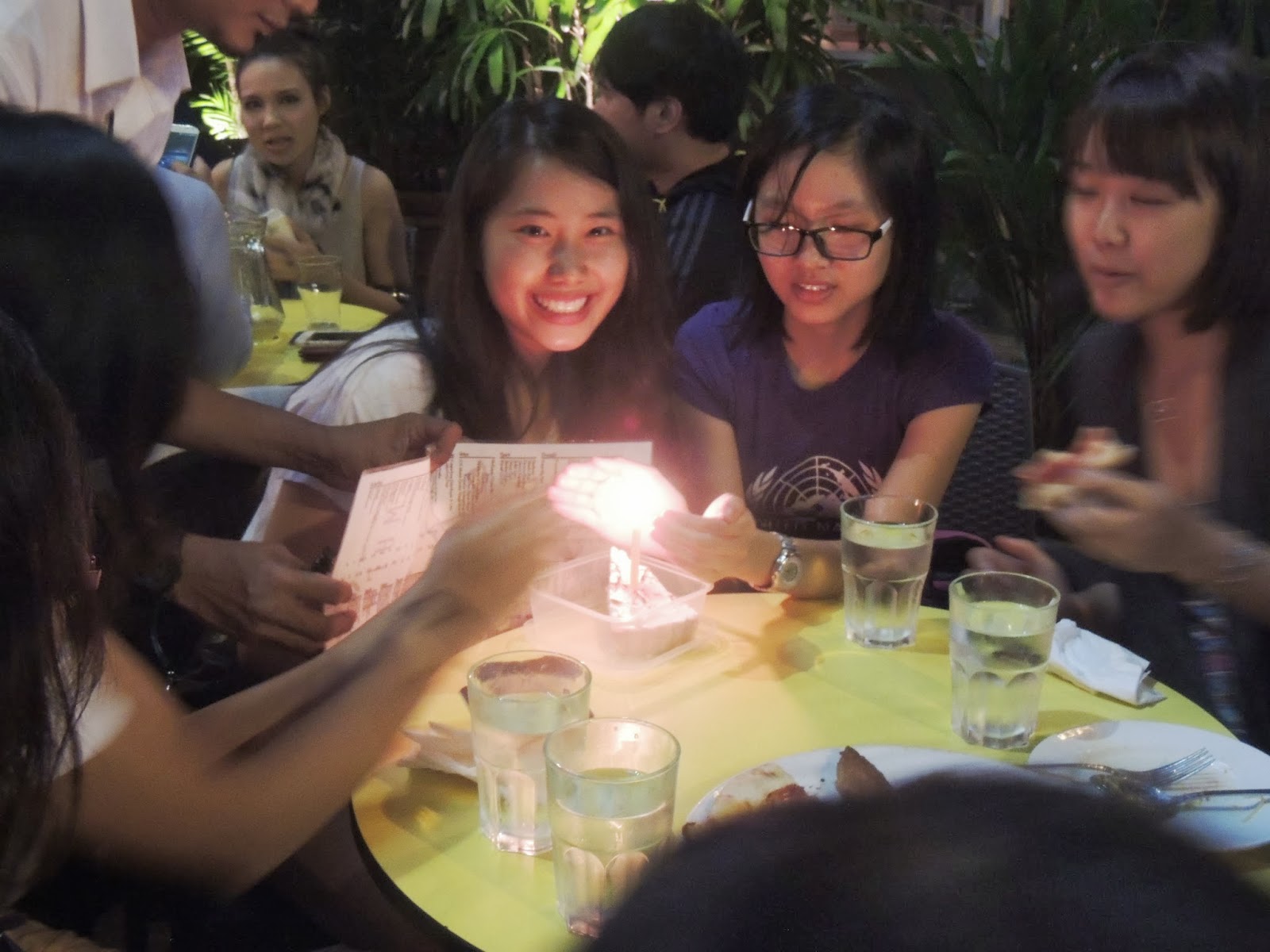
Liz turns 19! Dinner at Holland Village.
Late night coffee at Arab Street
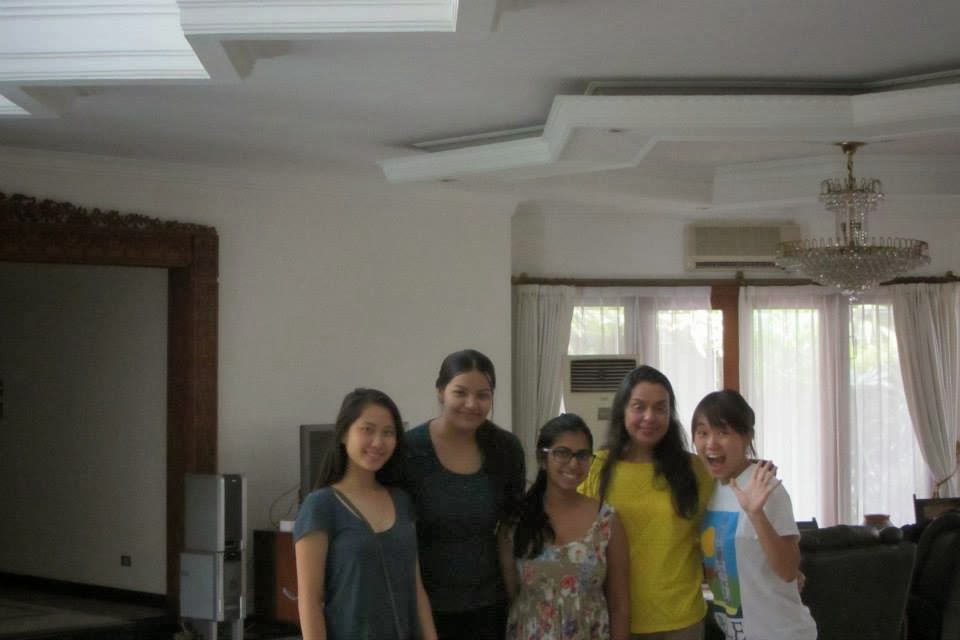
We finished half a semester two weeks ago and had a mid-semester break, in which I went to visit my aunt in Jakarta with 3 friends from college. It was great spending time with my aunt and uncle and introducing them to my new friends. We spent 5 days exploring Jakarta, shopping, eating, getting massages, reading and just chilling at home! This was my first time travelling with a small group of friends, and it was so much fun doing everything by ourselves and having the freedom to make our own plans. 

Visiting my aunt in Jakarta with friends during the mid semester break

After the mid-semester break, we had a week of experiential learning. Instead of regular classes, we were asked to pick from among 12 research topics and spent a week delving deeper into our topics along with a few of our classmates and professors. The week was full of mind boggling field trips and insights from professors, who were experts in the field and had been researching the topic for years. There were some international trips, and some which stayed in Singapore. 
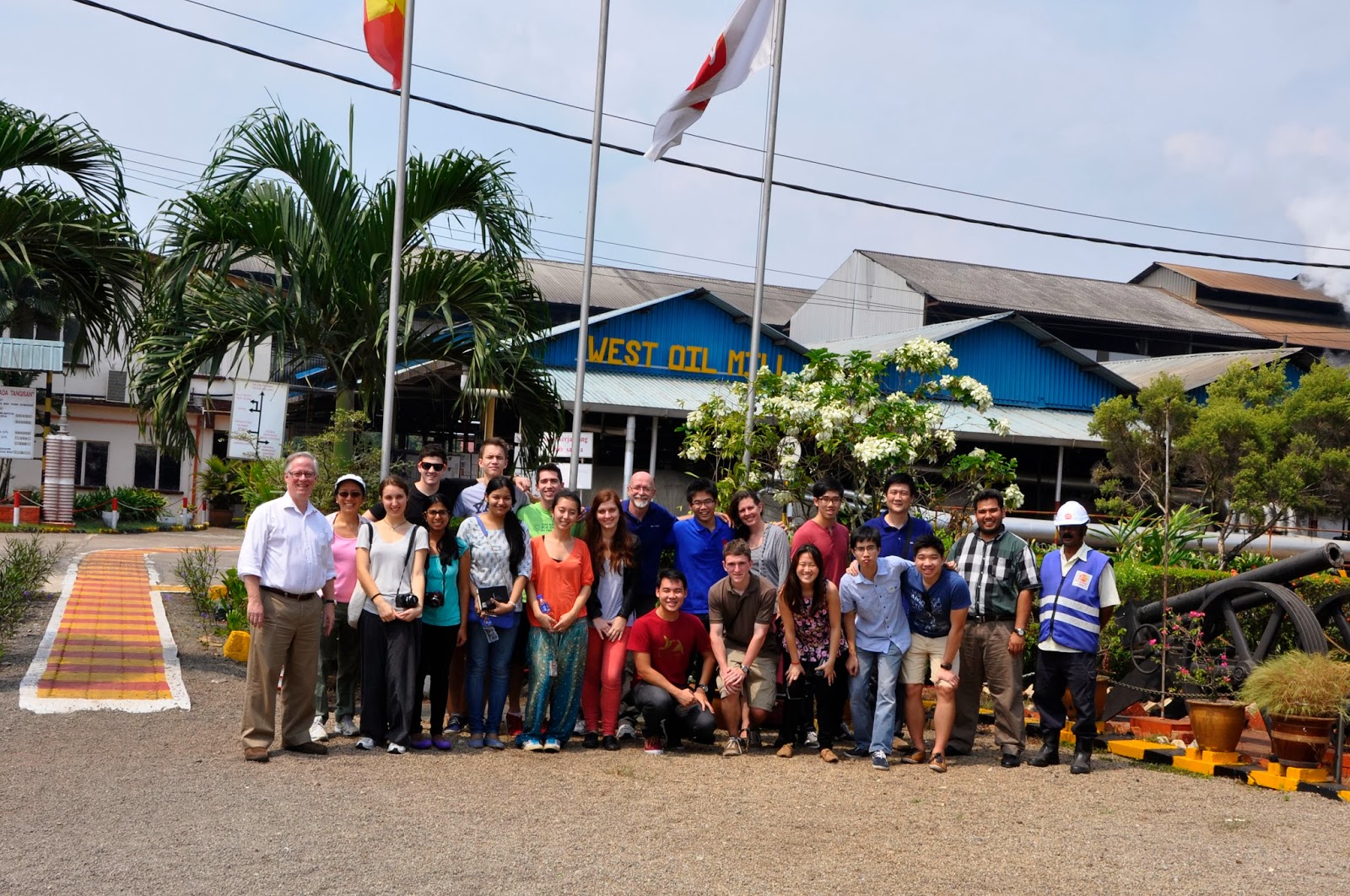
The alternatives to fossil fuels research group at a palm oil plantation in Malaysia
We are now through more than half a semester, and it is unbelievable how quickly these past few months have gone by. I’ve learnt so much already that it feels like a lot longer. What I especially love about being at Yale-NUS is that there is always something more to do as part of the first class. We’re the guinea pigs. Although that can seem quite risky, it is equally exciting. We get to define our culture, and establish a functional structure. If things don’t work, it’s our job to fix them. There is never a moment here when we can sit back, stop bothering about the rest of the college community and mind our own business. It’s always about looking at the bigger picture, and pushing for a vision to become reality.

So in a way, it’s more than just college. Its college in all its glory and a lot, lot more. 
Slow down people!

Most countries fine people for speeding. Sweden likes to do things differently. 
In 2010, Kevin Richardson entered into the Fun Theory Competition with a concept that rewards people when they adhere to the speed limit. It identifies cars driving within the speed limit at certain checkpoints and automatically enters them into a lottery. So every now and then, people get money for following the rules. 
This concept was implemented for testing in Sweden, and it turned out to be pretty effective. Check it out: